
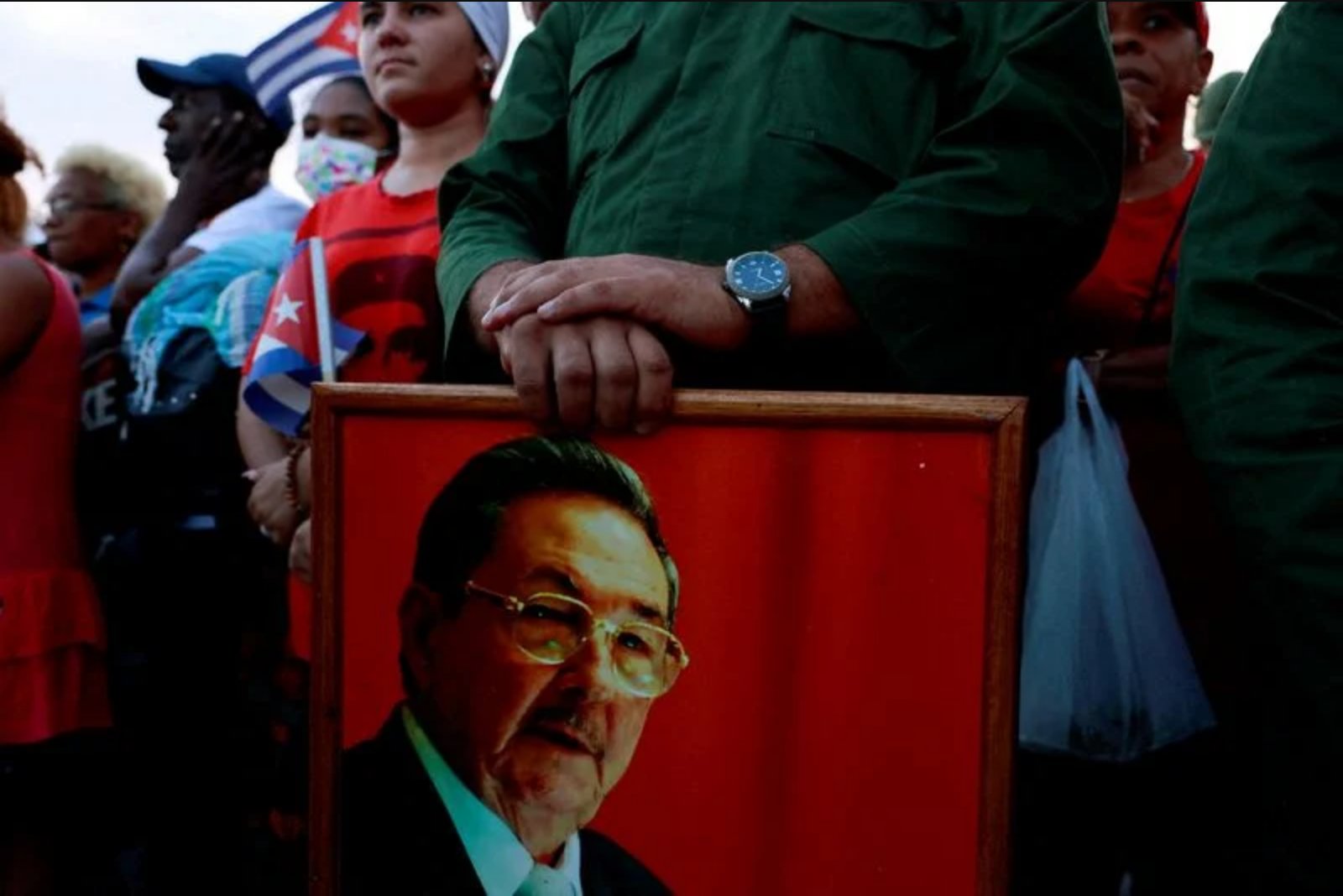
Former Cuban leader Raul Castro reached his 95th birthday on Wednesday, yet two weeks after the United States announced criminal charges against him his exact location remained unclear. The indictment, filed by U.S. authorities, links Castro to the 1996 shootdown of civilian aircraft flown by a group of Cuban exiles.
Early in the day Cuba’s president, Miguel Diaz-Canel, paid public tribute to Castro, describing him as both a mentor and a father figure and praising his record of service. "To reach 95 years of age with one foot in the stirrup and an endless record of service to the Homeland, to regional and world peace... to the dreams of social justice of millions of human beings, is not his luck, it is ours," Diaz-Canel said.
Castro remains a central, if often behind-the-scenes, presence in Cuban politics. He is widely remembered, along with his older brother Fidel, as a key leader of the 1959 guerrilla campaign that overthrew a U.S.-backed dictator. The U.S. indictment alleges that, while serving as Cuba’s defense minister, Castro ordered military jets to shoot down the planes operated by anti-Castro exiles in 1996 - a charge that the Trump administration has presented as part of a broader escalation in its campaign of pressure on Havana.
Over recent months the Trump administration has intensified punitive measures against Cuba, including sharply increased sanctions. Washington has taken steps that have cut off the island’s fuel supply and has threatened sanctions against foreign firms doing business in Cuba. U.S. officials have framed those measures as part of efforts to unseat a government that was led for decades by the Castro brothers.
Acting U.S. Attorney General Todd Blanche, in announcing the indictment, pledged that the United States would do "everything possible" to bring Raul Castro to justice. The indictment was publicly announced before a crowd of Cuban-Americans in Miami on May 20.
Reactions within Cuban political circles and among former regime operatives reflected alarm over the diplomatic fallout. Rene Gonzalez, a former Cuban intelligence officer who was one of the so-called "Cuban Five" arrested in 1996, told Reuters the indictment had pushed relations into what he described as a "critical situation." Gonzalez also pointed to Castro’s role in past negotiations with the Obama administration that opened a period of warmer ties between Havana and Washington roughly a decade ago.
Gonzalez said he saw an association between moments of potential rapprochement and swift backlash by opponents in Miami. "I don’t think it’s a coincidence that the very person who led the negotiations between Cuba and the United States 12 years ago is now the target of this accusation by the U.S. government," he said. "Whenever there has been a possibility of a rapprochement between the two countries, (Cuba’s enemies in) Miami have been instrumental in attacking that possibility, in undermining it."
Quiet perimeter
There is no public evidence that Raul Castro has left Cuba or that he will be extradited to the United States. Observers in Havana reported a subdued scene on Wednesday near one of Castro’s residences in a gated enclave known as La Rinconada. The suburb, situated in a well-to-do western district of Havana and home to foreign businesspeople, diplomats and Cuban officials, appeared quiet in the morning hours.
The compound itself is ringed by high aluminum and cement walls, topped in places by razor wire, and set against dense foliage. Security presence appeared limited: plainclothes guards at a gate, with a police cruiser making slow circuits nearby.
Castro, who has been noticeably thin in public appearances and typically wears military dress, was last seen at an official event about a month ago during May 1 celebrations in Havana, shortly before the U.S. indictment was announced. Prior to that, he had not been publicly visible since Jan. 15, when he attended a ceremony in the capital honoring 32 Cuban soldiers who were killed during the capture of Venezuelan President Nicolas Maduro.
The indictment, the public statements by U.S. officials and the diplomatic ripples have placed Raul Castro back at the center of a tense phase in U.S.-Cuba relations. For now, questions remain about his movements and about whether the U.S. promise to seek his prosecution will result in any change to his status inside Cuba.