
U.S. and Iranian representatives said they had reached a memorandum of understanding to halt active hostilities and to restore maritime traffic through the Strait of Hormuz, a development that pushed down oil prices and lifted risk sentiment in some markets. The agreement is described as a framework rather than a comprehensive settlement, with core issues reserved for subsequent negotiations.
President Donald Trump announced the breakthrough on his Truth Social platform at about 5:30 p.m. in Washington (2130 GMT) on Sunday, writing: "The Deal with the Islamic Republic of Iran is now complete." The statement followed an earlier announcement by Pakistani Prime Minister Shehbaz Sharif, whose government acted as a mediator, saying a deal had been reached early on Monday local time.
The memorandum of understanding is scheduled to be formally signed on Friday in Switzerland, though negotiators did not immediately disclose the full set of terms. In a post on X, Prime Minister Sharif said the pact called for "the immediate and permanent termination of military operations on all fronts, including in Lebanon." That commitment has been a central and contentious point in diplomatic talks.
Iran's Supreme National Security Council secretariat issued a statement saying that war and military operations on all fronts, including Lebanon, would end permanently starting on Monday night. Iranian deputy foreign minister Kazem Gharibabadi added that negotiators intended to use a 60-day ceasefire period to reach a more expansive agreement. He said those talks would encompass sanctions relief for Iran. The question of Tehran's nuclear program - a key outstanding issue - will be addressed during those subsequent negotiations, sources previously told Reuters.
There was no immediate public response from Israel, which has said it was not a party to the U.S.-Iran discussions. Israel's position on its operations in Lebanon has been a difficult element in reaching any regional settlement, and Israeli officials have indicated they intend to retain freedom of action there.
Markets and shipping
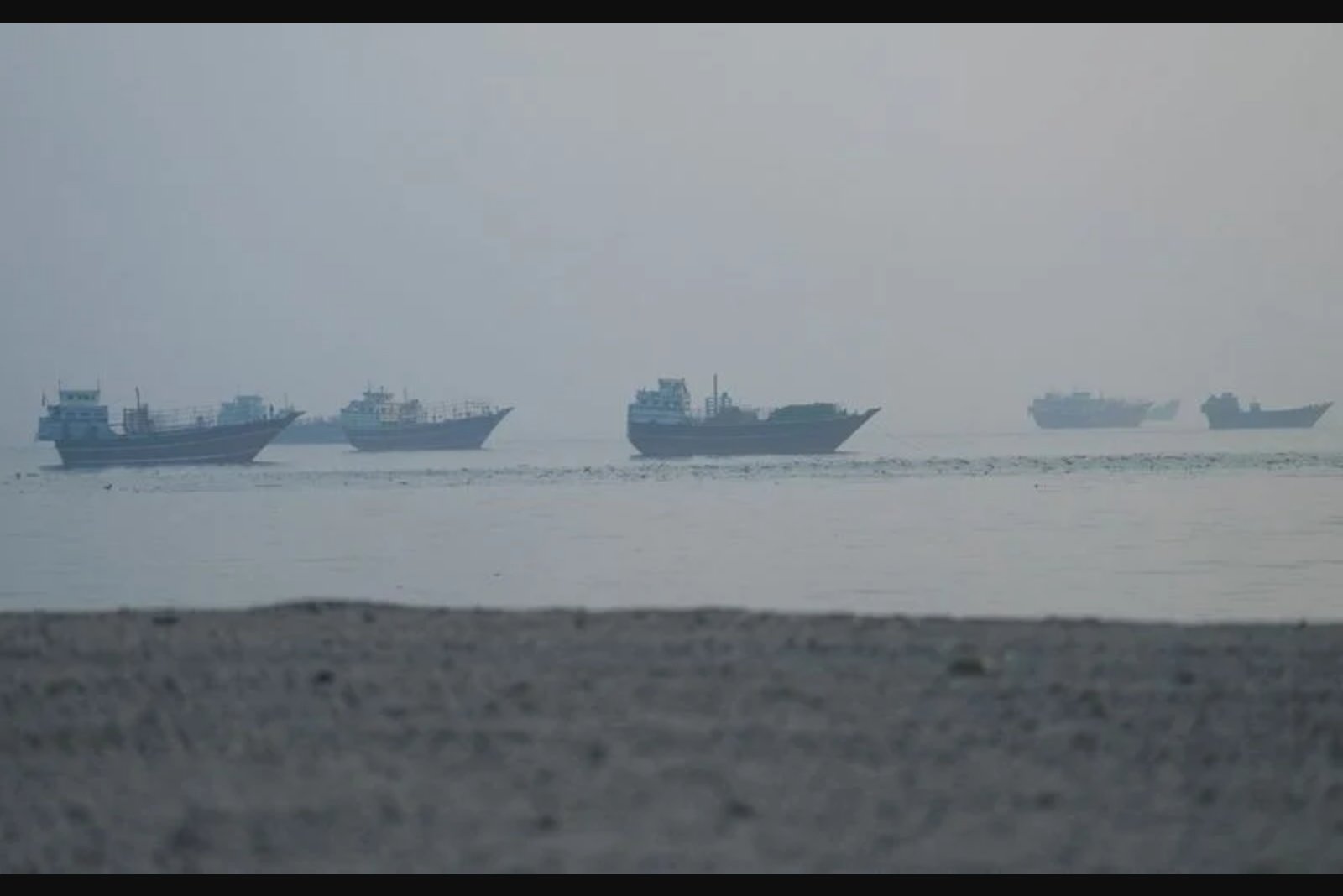
President Trump said the Strait of Hormuz - a vital route for global oil and gas shipments that Iran had effectively choked for months - would reopen on Friday, and that he had ordered the end of the U.S. blockade of Iranian ports. "Ships of the World, start your engines. Let the oil flow!" he wrote.
Brent crude futures dropped about 4% in early trading on Monday after the announcement, while stock markets in Asia moved higher. Analysts pointed to lingering vagueness in the agreement as a factor to monitor. "The lack of details especially on freedom of shipping is a concern but not one that should constrain markets today as the surge in risk appetite plays out," said Sean Callow, a senior FX analyst at ITC Markets.
Political reactions and domestic pressures
Former State Department spokesperson Matthew Miller, who served during the previous administration, said the U.S. had made significant concessions to restore the pre-war status quo. "We have no assurances the nuclear program will ever be addressed, but Iran has shown the world it can take the global economy hostage and get something from the U.S. in return," Miller said.
The conflict has inflicted heavy casualties, with thousands reported killed, primarily in Iran and Lebanon, since U.S. and Israeli forces first struck Iran on February 28. Iran has responded with strikes on Israel and Gulf states hosting U.S. bases and by effectively blockading the Strait of Hormuz, actions that drove global energy prices higher. U.S. forces in turn had blocked Iranian ports.
At home, the war has become a political challenge for the Trump administration and Republican lawmakers, with polling indicating widespread public frustration over higher gasoline prices as the country heads into November's midterm elections. Yet Trump has also been pushed by colleagues who demand a unilateral end to Iran's nuclear program.
Senator Lindsey Graham, a Republican and an outspoken critic of Iran, praised the progress toward a deal while signalling close scrutiny of the next phase. He said he would be "watching closely" the negotiations on Iran's nuclear program and noted procedural constraints, saying: "Under our law, any nuclear deal with Iran will be sent to Congress for review and a vote." He added: "Congratulations to all in getting us to this point."
Unresolved nuclear issues and material stocks
The long-term disposition of Iran's nuclear program remains unresolved by the preliminary accord. During his first term in office, President Trump withdrew the United States from the 2015 multilateral agreement that had lifted sanctions in return for limits and inspections aimed at preventing nuclear weapons development. Iran responded in subsequent years by scaling up enrichment of uranium.
Iran has produced more than 400 kg (around 900 pounds) of uranium enriched to near bomb-grade purity - a fact that negotiators say must be addressed. U.S. officials have indicated the deal would eventually lead to dismantling Iran's nuclear capabilities, with highly enriched stockpiles destroyed and removed. A senior Iranian official, speaking before the public announcement, said a draft would allow Iran to dilute enriched uranium inside the country. The final arrangements on that material are expected to be a central topic during the 60-day ceasefire negotiations.
Sanctions relief and frozen assets
Before the announcement, a senior Iranian official told Reuters that under the draft terms the United States would agree to release $25 billion of frozen Iranian assets. The Trump administration has said that any transfer of Iranian funds would only occur once Iran has met specified conditions under a peace deal.
A U.S. official, speaking prior to the public statement, said the pact would ultimately result in the dismantling of Iran's nuclear program and removal of its most sensitive materials. That official framed those outcomes as the objective of follow-up talks during the ceasefire window.
Regional dynamics and Israeli responses
The tentative agreement was clinched even as Israel conducted a strike in Lebanon on Sunday that drew criticism from both Iran and the U.S. President Trump has pressed Israeli leaders to temper operations in Lebanon to enable a diplomatic resolution with Iran, but Israeli Prime Minister Benjamin Netanyahu has resisted, asserting that Israel will preserve its freedom of operations there. Iran, for its part, had insisted on a comprehensive ceasefire in Lebanon as part of any settlement.
Trump reportedly spoke by phone with Netanyahu to update him on progress, according to an Israeli report cited in news coverage. In a separate interview, President Trump described Netanyahu as "a very difficult guy" and argued that the Israeli leader should appreciate U.S. efforts to prevent Iran from becoming a nuclear-armed state.
International endorsements and conditions
Governments outside the Middle East cautiously welcomed the announcement. In a joint communique, Britain, Germany, France and Italy said they were prepared to lift sanctions on Iran in response to "clear, verifiable steps" to limit its nuclear program. British Prime Minister Keir Starmer underscored the importance of maritime freedom, saying: "We are clear that toll-free freedom of navigation must now be restored in the Strait of Hormuz." He added: "Iran must never have a nuclear weapon."
Next steps and open questions
The memorandum of understanding sets out a path for immediate cessation of military operations and the reopening of a critical shipping corridor, and establishes a 60-day timeframe to negotiate a fuller settlement covering sanctions relief and nuclear issues. Yet the agreement leaves many substantive questions unresolved: precise terms and verification mechanisms have not been published, Israel was not a negotiating party, and the mechanisms for handling Iran's enriched uranium and frozen assets await clarification.
Officials have scheduled a formal signing for Friday in Switzerland, and negotiators will need to translate the framework into detailed provisions that address the complex technical, political and legal issues that remain.