
The Justice Department under the Trump administration charged at least 851 people with assaulting or impeding federal officers, according to a nationwide review of court files. But in a striking departure from established federal practice, a large portion of those prosecutions were later dismissed, leaving many defendants to contend with the fallout of publicized arrests and legal entanglements despite the absence of convictions.
The examination of federal court records found that 31% of the completed cases stemming from this wave of prosecutions ended in dismissal. By comparison, federal court data compiled by the Federal Judicial Center show that roughly 8% of federal criminal cases typically end in dismissal. Reuters obtained records for every person charged with assaulting or impeding federal officers between January 2025 and March, and followed the course of those prosecutions.
While the administration’s focus produced a variety of charges tied to immigration enforcement actions, the prosecutions were not limited to immigration contexts. They included allegations involving other federal employees, such as postal workers, and a wide range of confrontations at protests and elsewhere.
How the campaign played out
The review traced a pattern in which prosecutors pursued cases that officials familiar with the matter said would in the past often not have resulted in arrests or serious federal charges. A Department of Homeland Security spokesperson said DHS leadership had instructed that "anyone who assaults or obstructs law enforcement will be prosecuted to the fullest extent of the law." A Justice Department spokesperson, Kiersten Pels, said prosecutors should hold people accountable for assaults on officers but that "if there are mitigating factors identified in a case, then prosecutors must also act appropriately to inform the court, and in some cases downgrade or drop charges."
Prosecutors secured convictions in 65% of the 481 cases that Reuters examined that had been completed, leaving a sizable minority that were dismissed. The majority of those dismissals came at prosecutors' request. Where typical federal practice results in convictions in about 90% of cases, this initiative represented an unusual exception.
Officials involved in the effort, and court records, indicate the Justice Department put pressure on U.S. attorneys' offices to pursue these matters. Two officials familiar with internal instructions said prosecutors were told that decisions to decline prosecution needed to be explained to Washington, which had the effect of encouraging the filing of charges that might otherwise have been rejected. Acting U.S. Attorney General Todd Blanche is reported to have told immigration officials in Arizona that the department would prosecute any assault on an officer "no matter what."
Personal consequences for defendants
For many charged, the immediate consequences of arrest and public prosecution were severe and long-lasting, even when charges were later dismissed. Reuters interviewed multiple defendants who described losing employment, incurring legal expenses and receiving threats online after federal authorities publicized their arrests.
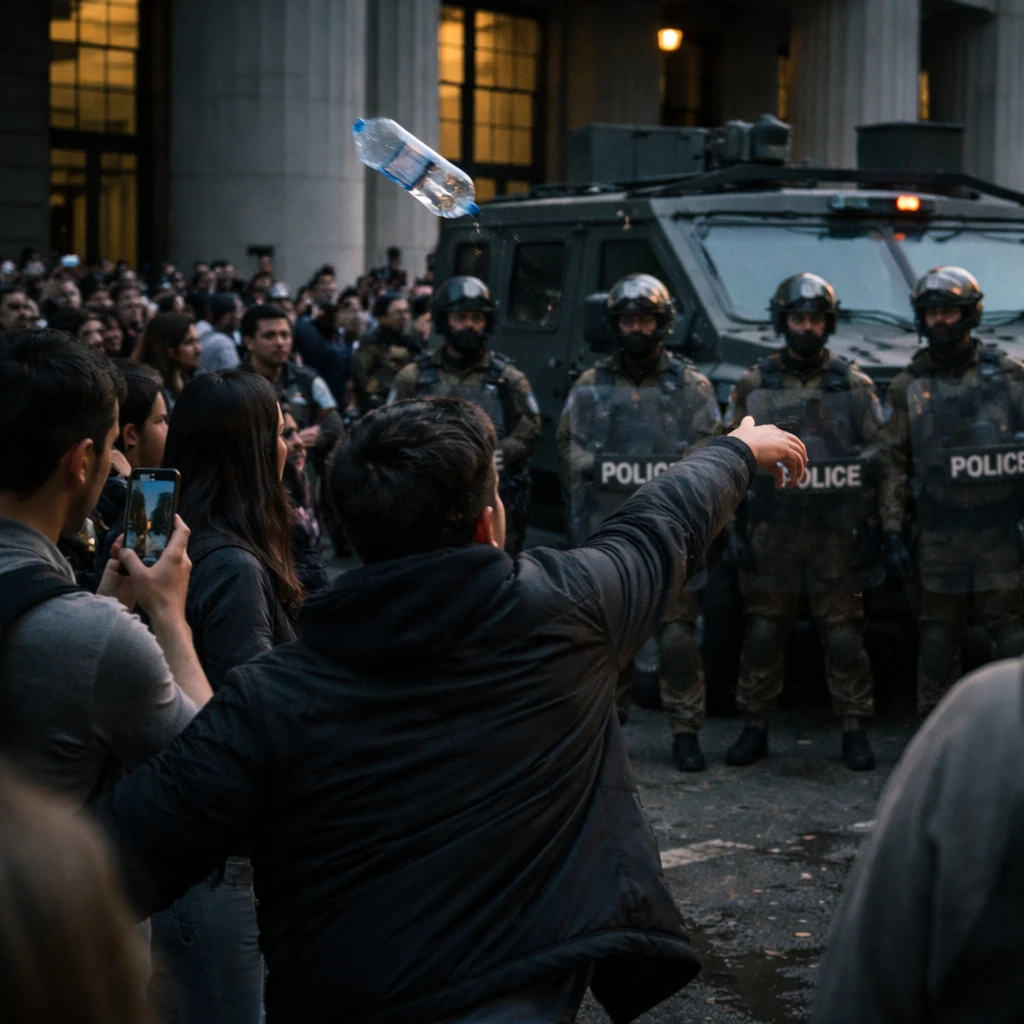
Christian Garcia, 32, described throwing an empty water bottle toward officers guarding a federal building near Los Angeles during an immigration protest last summer. He said the bottle struck no one and blew back into him. Garcia was arrested, jailed for three days and charged with a crime that could have carried up to a year in prison. He said his employers contacted him to say investigators had called them, and he subsequently lost both his jobs - one as a security guard and another as an undercover shopper. Prosecutors later dropped his case without explaining publicly why. Garcia also said he never recovered a phone that agents seized, and summed up the disruption by saying, "It's like I got no justice whatsoever. My whole life changed in one day."
Similarly, Lizzie Rose, 42, was charged in January after a low-speed incident in Minneapolis in which video shows her backing a car into an SUV that was transporting immigration agents. Homeland Security posted her mugshot on social media with a message that officials "will not be intimidated," and her image circulated in news accounts. Rose said the publicity generated threats that led her to leave her house and send her children to live with their father. She was put on leave from her nonprofit job. Prosecutors ultimately dismissed the charges, offering the standard rationale used in many of these cases that the dismissal was "in the interests of justice."
Across other matters included in the review were a range of encounters: a woman who nudged a federal agent's car at low speed with her SUV; a man who challenged an agent to box without throwing punches; a protester who climbed onto a Homeland Security vehicle; and the widely publicized case of a man who threw a sandwich that bounced off an immigration agent's body armor. At the other end of the spectrum, some allegations involved serious assaults that would likely have been pursued regardless of administration, including the case of a Minnesota woman accused of biting off the tip of a federal agent's finger in January.
Evidence problems and courtroom repercussions
Prosecutors sometimes encountered problems with evidence that complicated the government's case and contributed to dismissals. In Chicago, prosecutors dropped assault charges against 21-year-old Luci Mazur after questions arose about an agent's account and the body-camera footage. A judge noted that the affiant had sworn an assertion that video evidence corroborated the agent's description that Mazur had grabbed the agent's arm and resisted arrest, but body-camera footage later figured into the decision by prosecutors to decline to proceed.
Current and former law enforcement officials warned that pursuing cases that later reveal inaccuracies in agents' accounts risks eroding the credibility that judges customarily grant government lawyers. In one example from the Chicago area, local Democratic official Michael Rabbitt attended a protest outside an immigration processing facility and was shown on video with his hand on the side of an ICE vehicle as it moved slowly. He later received a voicemail from an FBI agent advising him he had been indicted and should surrender. Prosecutors brought multiple charges, including a misdemeanor for impeding an agent's vehicle and a felony conspiracy charge alleging an intent to impede or injure officers.
Prosecutors eventually dropped the conspiracy charge in early May but persisted in seeking trial on the impeding charge. In the lead-up to trial, a federal judge in Chicago sharply criticized prosecutors for their handling of the grand jury process and other aspects of the prosecution - accusing them of excusing potential jurors unfavorable to indictment, improperly suggesting jurors could rely on the prosecutor's credibility rather than the evidence, and communicating with jurors outside the grand jury room. The Justice Department later dismissed all charges in Rabbitt's case and, in an unusual gesture, prosecutors agreed not to contest a defense request that the DOJ pay some legal fees for Rabbitt and others charged in connection with the same protest.
Judge April Perry captured the strain on trust when she said, "I do believe deeply in the presumption of regularity and that most government attorneys are doing the best they can to do the right thing. That trust has been broken."
Assessing the prosecution outcomes
The sheer number of cases and the pace at which they were brought are central to critics' concerns. Kyle Boynton, a former federal prosecutor and FBI agent with experience in assault investigations, observed that the high dismissal rate suggested authorities "are moving so fast that they don't have time to do their job effectively." In many instances, prosecutors offered no detailed rationale for dismissing charges beyond the boilerplate that it was "in the interests of justice."
Prosecutors managed to secure convictions in a majority of completed matters reviewed, but the rate of dismissals remained far above normative levels. Among completed prosecutions, 65% resulted in conviction in the 481 cases examined, leaving 35% that did not produce convictions; of those, most were dismissed by prosecutors. For a broader frame of reference, data kept by the Federal Judicial Center indicate that historically federal prosecutors win roughly 90% of the cases they bring.
The review of thousands of court files and interviews with more than 15 investigators, prosecutors and suspects paints a picture of an aggressive enforcement posture that reached into a wide array of encounters with federal employees. The Justice Department's internal directives and public statements by senior officials signaled a lowered threshold for bringing federal charges in many instances, an approach that has created controversy in courtrooms and communities alike.
Broader consequences and unanswered questions
For those charged and later cleared, the repercussions often were tangible and enduring. Beyond lost employment and legal bills, several people said they received threatening messages and experienced social backlash after their arrests were publicized by federal authorities. Some said they never recovered property seized at arrest, and others described prolonged personal disruption and reputational harm.
The Justice Department and Homeland Security emphasized the goal of holding people accountable for assaults on officers. At the same time, prosecutors acknowledged the need to respond appropriately when mitigating factors or exculpatory evidence emerged, sometimes leading to charges being downgraded or dropped. How the balance between aggressive enforcement and prosecutorial caution will be managed in future similar campaigns was not resolved in the records reviewed.
Conclusion
The review of federal records shows a concentrated push by the Trump administration to escalate criminal prosecution of alleged assaults and obstructions of federal officers. While some cases involved clear and serious conduct that warranted federal criminal action, the high dismissal rate, questions raised about evidence in several prosecutions and the sometimes dramatic personal consequences for defendants have prompted criticism about the federal approach. As courts and communities continue to grapple with these prosecutions, the fallout for individuals whose cases were dismissed underscores a significant aspect of the broader enforcement strategy: even when charges do not lead to conviction, the process itself can inflict lasting damage.