
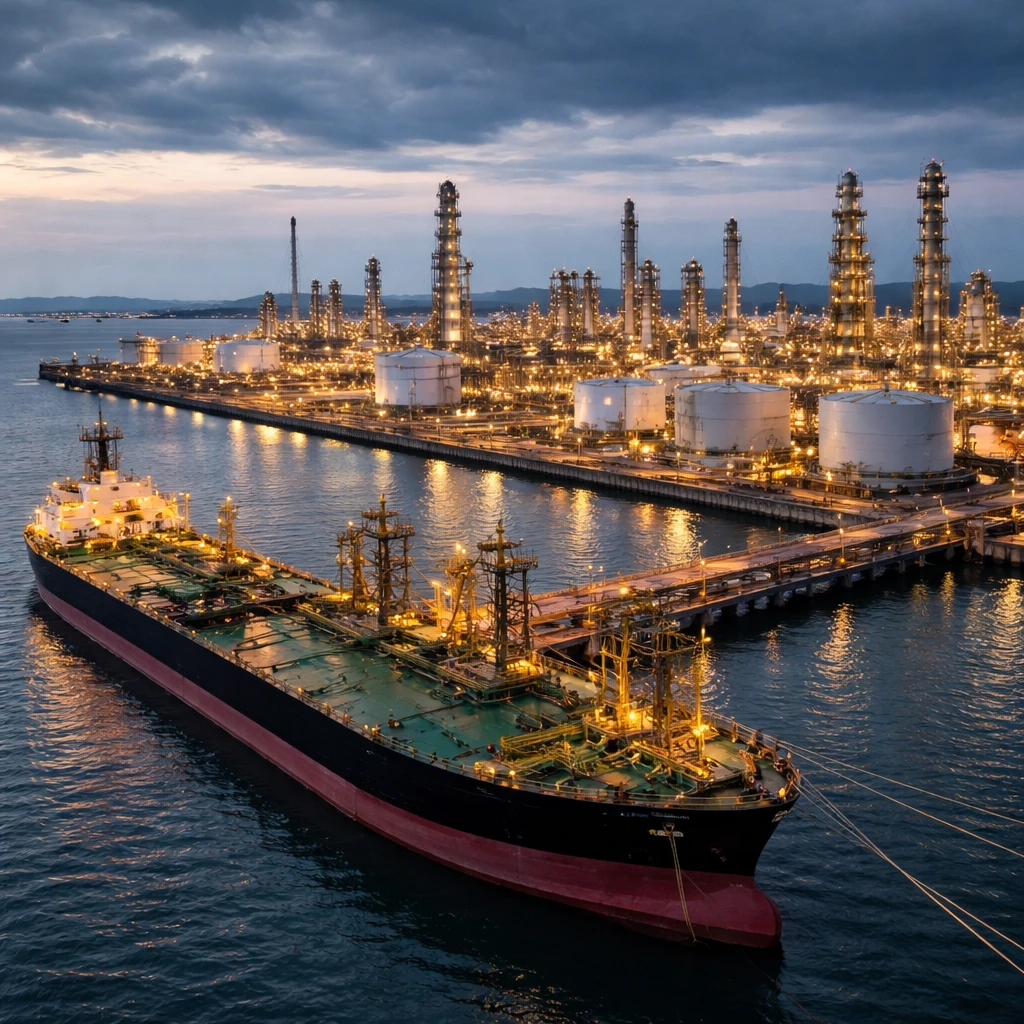
South Korea's biggest refiners are actively exploring Venezuelan crude as an alternative feedstock after recent conflicts in the Middle East have interrupted shipping through the Strait of Hormuz, a Korea Petroleum Association official said.
GS Caltex imported a single cargo of 110,000 barrels of Venezuelan crude in June to assess its quality, according to the official. The company intends to determine whether the cargo is compatible with its refining configurations and to measure likely product yields if further volumes are taken.
The official added that the country’s other large refiners - HD Hyundai Oilbank, SK Innovation and S-Oil - are also considering potential imports of crude from Venezuela. The group’s deliberations are driven by a desire to lessen reliance on Middle Eastern supplies and to seek both price competitiveness and more stable delivery prospects.
Alongside Venezuela, the refiners are evaluating alternative supply options from Canada and Australia. The official noted that U.S. shale oil has been ruled out as a practical alternative for these companies, citing the smaller operational scale of individual suppliers in the U.S. shale sector.
The interest in Venezuelan crude among South Korean refiners follows comments from U.S. President Donald Trump urging oil companies to invest $100 billion in Venezuela and to participate in rebuilding its energy sector. The official said that several U.S. and multinational oil firms have expressed interest in Venezuela this year following what was described as the U.S. removal of President Nicolas Maduro in a January 3 raid.
Context and immediate implications
- The refiners' moves are positioned as supply diversification efforts intended to reduce exposure to disruptions in the Strait of Hormuz and to pursue cost-effective crude purchases.
- GS Caltex's June import serves as a practical test to establish compatibility with its processing units and to project downstream yields before committing to larger or repeated shipments.
- Consideration of supplies from Canada and Australia indicates a broader search for non-Middle Eastern sources, while the exclusion of U.S. shale reflects operational and logistical considerations tied to supplier scale.
The refiners' deliberations reflect a balancing of price, compatibility and the stability of delivery routes. At the same time, developments related to Venezuela and comments from international political leaders have added a political dimension to the supply calculus, as companies weigh the commercial prospects of new sources against ongoing geopolitical uncertainty.