
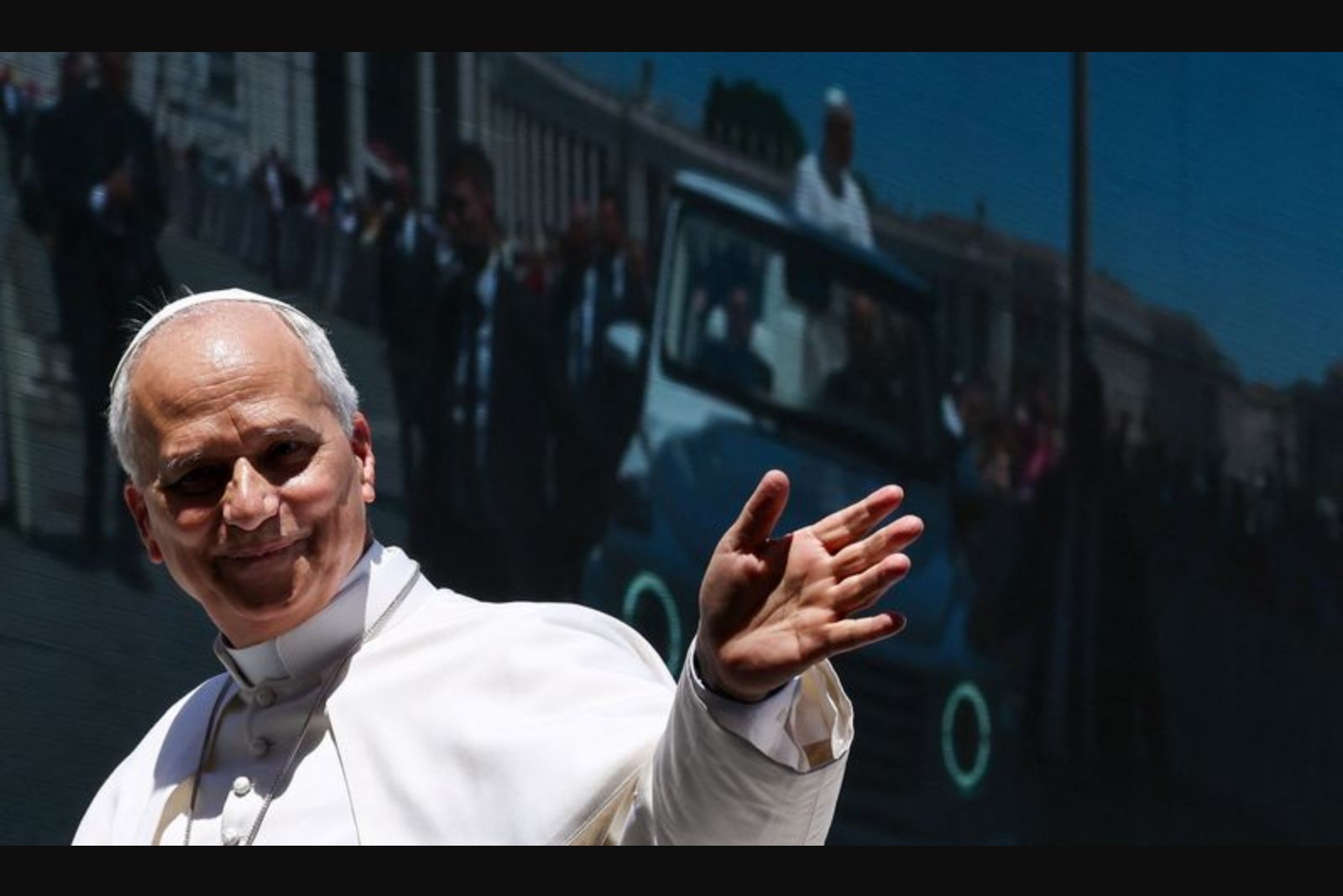
Pope Leo this week took the unprecedented step of disavowing the centuries-old just war framework that has been applied by the Catholic Church since at least the fifth century to assess the moral legitimacy of armed conflict. The formal rejection appears in his first major document, an encyclical published on Monday titled "Magnifica Humanitas" (Magnificent Humanity).
In the text the pope states plainly that the "just war" theory - which he says has frequently been used to validate virtually any sort of warfare - is "now outdated." He argued that humanity today "possesses far more effective and capable tools for promoting human life and resolving conflicts, such as dialogue, diplomacy and forgiveness."
The encyclical, presented at the Vatican on Monday, goes beyond the repudiation of the just war idea. It urges the global regulation of artificial intelligence systems and offers what the document describes as the clearest apology yet from the Catholic Church for its historic support of transatlantic slavery.
Chicago Cardinal Blase Cupich, a close ally of the pope who attended the Vatican presentation, told observers that Leo is worried about the way the just war concept has been applied by political leaders as a justification for entering conflicts. "We have to make clear that the just war theory was always meant to be a restraint, not a permission slip which sadly some are misusing to justify their decisions to go to war rather than seek the ways of peace," Cupich said.
Pope Leo used forceful language in the encyclical, lamenting the number of wars currently afflicting the globe and highlighting the role of the arms industry. He warned that profits from arms manufacturers can be a motivating force behind conflicts.
The traditional just war theory generally holds that resort to war is defensible only to repel aggression. The doctrine has been cited in recent months by officials in the United States administration - including Vice President JD Vance, who is Catholic - to defend the war with Iran. After the pope's official X account posted in April that God "is never on the side of those who once wielded the sword," Vance referenced the just war tradition at an event in Georgia and urged the pope to be cautious when addressing theological matters.
At Monday's presentation, British academic Anna Rowlands, who participated in the Vatican event, said the pope is raising alarms about "a new age of changing conflict, now increasingly tech driven." She described the encyclical as a forceful statement that calls for the just war framework to be contextualized within a broader set of criteria aimed at building peace and resolving disputes.
The origin of the just war theory is commonly traced to St. Augustine of Hippo, an early Church figure whom the pope has identified as an inspiration for his decision to enter the priesthood. Augustine, who died in the year 430, articulated criteria intended to determine whether a war might be considered just. He maintained that wars should be waged only with the aim of restoring a state of peace and never out of a desire for cruelty.
Augustine's criteria still form a part of the curriculum at military academies around the world, including West Point, the U.S. Naval Academy and the U.S. Air Force Academy, according to the presentation. Those principles have also been cited by critics who argue recent conflicts do not meet the moral standard. For example, some opponents of the Iran war, which began after surprise U.S.-Israeli airstrikes on February 28, have invoked Augustine's standards in declaring the campaign unjust.
Washington Cardinal Robert McElroy was among those who in April described the Iran war as "morally illegitimate," explicitly referencing Augustine's principles in his assessment.
Voices from the Catholic peace movement welcomed the pope's statement. Marie Dennis, a former leader of Pax Christi, an international Catholic peace organization, said the encyclical "exposes the fiction of a 'just war' with the truth about a culture of power that is normalizing war." She added that the pope aligns with "millions of others around the world" who see value in nonviolent methods for protecting democracy, transforming conflict and providing legitimate defense.
Context and implications
By declaring the just war theory outdated, Pope Leo has signaled a significant shift in the Church's moral guidance on conflict. The encyclical simultaneously addresses new technological dimensions of warfare and historical culpability, calling for systemic responses that range from diplomatic engagement to global regulation of emerging technologies.
The document's combination of moral stance, policy recommendations on AI, and acknowledgment of the Church's historical role in slavery makes it a multifaceted intervention aimed at leaders in political, military and technological spheres.