
For more than a century, successive popes have written major documents to press world leaders on urgent social concerns. The latest of those texts, "Magnifica Humanitas" (Magnificent Humanity), was issued by Pope Leo and formally signed on May 15, marking a deliberate link to the 135th anniversary of Leo XIII's 1891 encyclical "Rerum Novarum". That historical thread places the new document within a long tradition of papal interventions on issues perceived as epochal.
Popes have in the past addressed the social disruptions of their eras with succinctly titled, widely cited encyclicals. "Rerum Novarum" spoke to the plight of industrial-era workers; John XXIII's "Pacem in Terris" urged action on nuclear dangers in the early 1960s; and Pope Francis's "Laudato Si'" made climate change a central concern for the Church in 2015. "Magnifica Humanitas" now takes aim at the rapid advance of artificial intelligence, urging global leaders to slow development and to put in place strong legal and ethical frameworks.
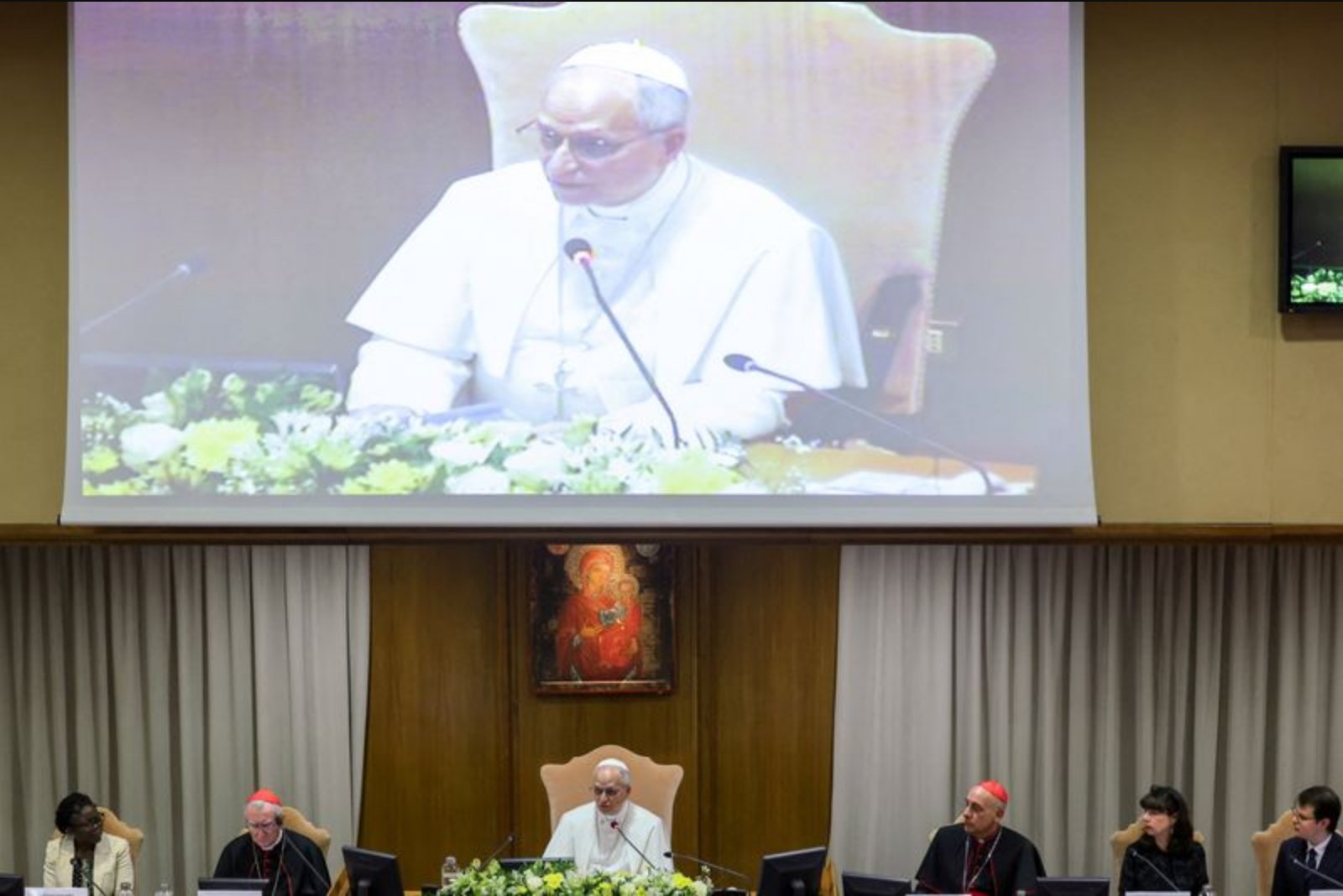
At a Vatican event presenting the new text on Monday, commentators underscored the continuity of the papal role in public moral discourse. Anna Rowlands, a British academic and adviser to the Church, noted that for over 100 years popes have cautioned that markets alone are not a salvific force; she drew a parallel in saying that "today, Pope Leo cautions that we will not be 'saved' by AI."
John Thavis, a veteran Vatican correspondent who has covered three papacies, described the encyclical as a response to "one of the most pressing social issues of his time." Thavis said the pope intends to shape debate by centering moral and ethical arguments that place the human person at the core of policy considerations.
Leo's encyclical is notable both for its timing and for the tone it adopts. Signed exactly a year into his papacy and intentionally tied to the anniversary of "Rerum Novarum," the document signals a priority for the current pontificate. Observers at the Vatican event pointed out that encyclicals are among the highest forms of papal teaching. They are chosen carefully, often take years to prepare, and are intended to set enduring priorities for the Church.
The text warns that unchecked AI development can have concrete social harms. It states that AI systems are capable of spreading misinformation and of promoting dynamics that prioritise conflict. The encyclical explicitly cautions that those dynamics could propel societies toward prolonged or even unending hostilities. At the Vatican presentation, Pope Leo also voiced concern that certain autonomous weapons systems have advanced to a point where they are "practically beyond any human reach to govern them."
The document calls for robust international regulation of AI, arguing that ownership and governance of AI data should not remain solely under private control. In his public remarks at the launch event, Chris Olah, a co-founder of Anthropic who participated in the presentation, thanked the pope for addressing the challenges posed by disruptive new technologies. Olah said that companies face strong commercial pressures and that independent scrutiny is necessary.
Leo has taken a more forceful public posture in recent months. The encyclical follows a period in which his comments - including criticism of the Iran war - have drawn strong reactions from political figures such as U.S. President Donald Trump. Observers say the stronger tone reflects the pope's desire to engage publicly on matters he sees as morally urgent.
Historically, papal encyclicals have had mixed results in producing concrete policy changes. "Pacem in Terris," for example, has been credited by some historians with providing moral underpinnings that bolstered diplomatic negotiation in the aftermath of the Cuban missile crisis and contributed to momentum toward agreements such as the Partial Nuclear Test Ban Treaty. "Laudato Si'" was the first papal document to endorse the scientific consensus on greenhouse gas-driven warming, and its author frequently lamented the insufficient pace of government action on climate mitigation.
Analysts caution that the long-form nature of encyclicals means their influence is often gradual. Thavis observed that it can be difficult initially to gauge an encyclical's lasting impact; ideas contained in such documents tend to permeate public discussion, media coverage and grassroots activism over time. He suggested that "Magnifica Humanitas" could emerge as a landmark reference in the global debate over artificial intelligence.
The Vatican has made the encyclical available on its website in several languages and will distribute printed booklets to encourage reading and public discussion. The text explicitly asks for international mechanisms to oversee AI development and warns against leaving ownership of crucial AI data entirely in private hands.
As the document circulates, it is likely to be read by a wide audience within the Church's membership of about 1.4 billion people, many of whom are familiar with the hallmark two- or three-word titles that have come to identify papal teachings. Whether "Magnifica Humanitas" will reshape policymaking or industry practices remains to be seen, but the Vatican has positioned the encyclical as a moral intervention on what it calls one of the defining technological and ethical challenges of the age.
Availability and Distribution
- The encyclical is published on the Vatican's website in multiple languages.
- Printed booklets will be circulated for reading and discussion.
- Public figures from the AI industry, including an Anthropic co-founder, took part in the Vatican launch event.