
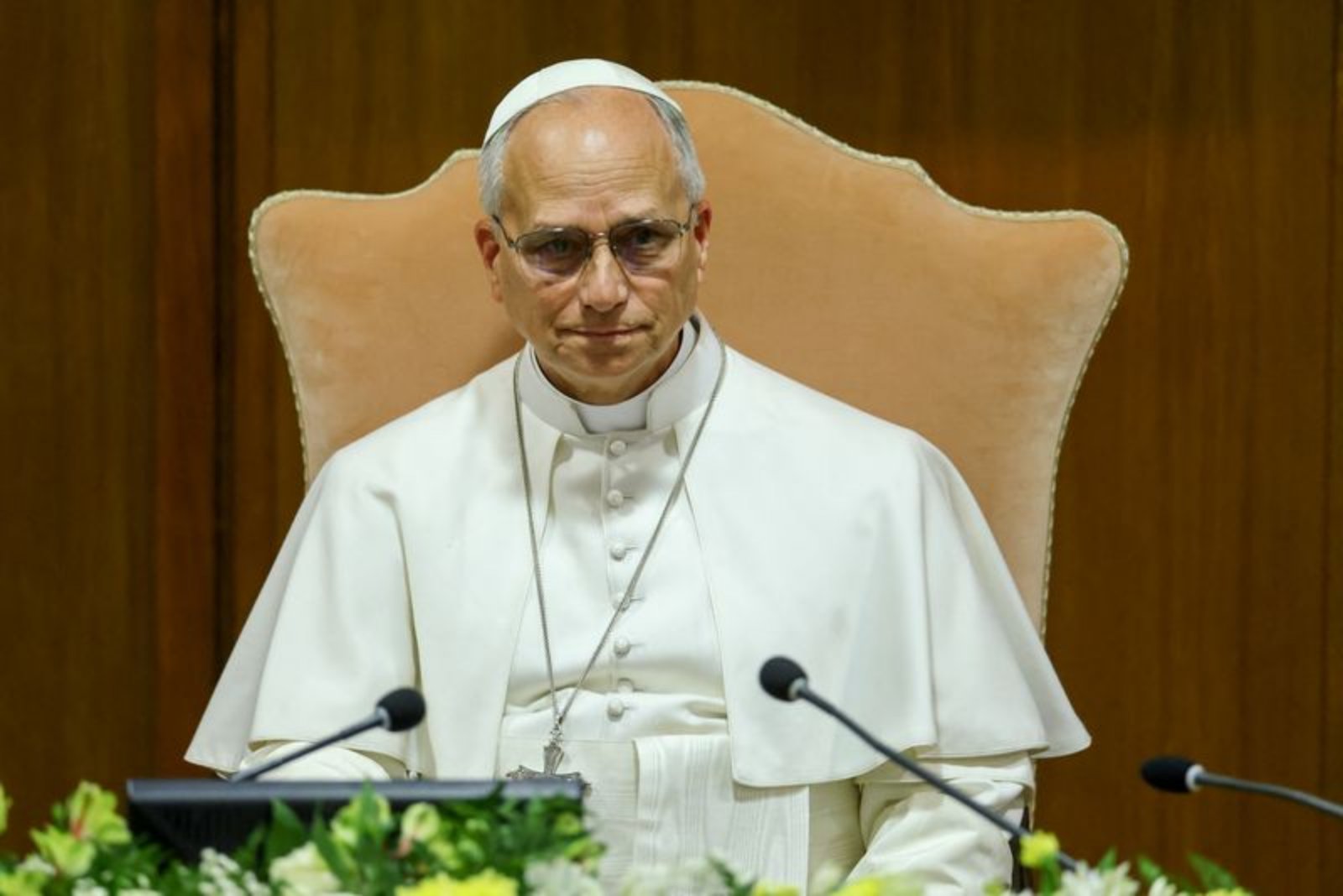
Pope Leo used his first major teaching document to press governments, corporations and citizens to take a more cautious approach to artificial intelligence. Released on Monday, the nearly 43,000-word encyclical titled "Magnifica Humanitas" (Magnificent Humanity) frames AI as a central moral and political challenge and calls for a slowdown in its development and deployment.
In direct language, the pope said that rapid acceleration in the field requires an active political response capable of applying brakes when progress outpaces safeguards. "What is needed is a more active political involvement that is capable of slowing things down when everything is accelerating," he wrote, arguing for comprehensive legal regimes, independent oversight, and a political system that does not abdicate responsibility.
The document addresses a range of concerns related to AI. The pope warned that AI systems can spread misinformation, accentuate conflict, and risk luring the world toward prolonged patterns of violence. He urged that ownership of AI-related data not be concentrated solely in private hands, called on policy-makers to protect workers' rights and children's wellbeing, and asked that competitive pressures among AI companies be cooled.
Ethics and warfare
Leo was emphatic that any use of AI in armed conflict must meet the highest ethical standards. He wrote that it is "not permissible" to entrust lethal decisions to AI systems, and he insisted that military applications of AI must be subjected to the most rigorous ethical constraints.
At the same time, the encyclical spoke more broadly about the global security environment. The pope lamented a proliferation of brutal conflicts over the past six decades, noting that civilians frequently bear the heaviest toll. "The past 60 years have been marked by conflicts of astonishing brutality, often affecting civilian populations on a massive scale," he stated in the English-language text, adding that humanity appears to be slipping into a "violent culture of power" where peace becomes merely a fragile pause between hostilities.
In a notable doctrinal shift, the pope questioned the continuing relevance of the 'just war' theory. He described that doctrine as outdated, saying it "has all too often been used to justify any kind of war." He added that the use of force and weapons reflects a "relational poverty" with disastrous consequences for civilians. The encyclical also warned that leaders could be tempted to start conflicts to distract from domestic problems, calling such a scenario a cynical instrument for managing difficulties.
Labor, supply chains and new forms of exploitation
Leo connected the rise of AI to persistent social and labour issues. Invoking earlier papal teachings, he referenced his predecessor Leo XIII and the 1891 encyclical that addressed industrial-era labour conditions. The current pope described "new forms of slavery" associated with people who tend AI systems and the factory workers who produce the devices where AI runs.
He described troubling conditions in some regions where children and adolescents are engaged in hazardous work extracting materials used in technology. "In some regions of the world, children and adolescents work in dangerous conditions, crushing the materials from which rare earth elements are extracted," he wrote. "The bodies of these people are scarred, injured and worn down so that computational flow may continue uninterruptedly." The pope said this reality challenges the moral conscience of the present age.
He also offered a personal apology for the Church's historical failure to condemn transatlantic slavery more forcefully until the 19th century. "This constitutes a wound in Christian memory," he wrote. "For this, in the name of the Church, I sincerely ask for pardon."
Governance, ownership and responsibility
Throughout the encyclical, Leo returned to the theme that political choices matter and that inaction is itself a moral choice. He called for data ownership not to be left exclusively to private entities, for informed users, and for governance frameworks that include robust legal protections and independent oversight. He urged policy-makers to protect workers' rights and to shield children from exposure to harmful applications of AI.
Framing his appeal for a collective moral effort, the pope referenced the biblical story of the Tower of Babel, warning against enterprises that "aspire to reach heaven without God's blessing." With the rhetorical voice of a shepherd, he asked humanity to abandon efforts that risk replicating Babel and instead to join forces in promoting the common good.
He cautioned against resignation and fatalism, noting that a "subtle temptation" can lead people to conclude problems are too big and individual choices cannot make a difference. "Certainly, not everyone has the same power to make a difference," he wrote. "Yet, no one is without responsibility. We all have our own areas for action."
Context within the pontificate
The encyclical marks the first major, comprehensive public teaching from Leo since his election shortly more than a year ago. The pope, who has adopted a more assertive tone in recent months, has at times drawn criticism from political leaders for his positions, including his remarks about the Iran war that irritated the U.S. President, according to the text. The document has been described as a sustained appeal to both Catholics and all people of good will to confront the ethical and political consequences of rapidly advancing technology.
The letter spans nearly 43,000 words and addresses a wide array of themes linking social justice, labour rights, international peace, and technological governance. In its scope and rhetoric, it urges a reassertion of political responsibility, stronger legal and ethical guardrails, and a renewed focus on protecting vulnerable populations from both the direct and indirect harms associated with AI.
Closing appeal
In closing, the pope asked leaders and citizens alike not to abandon efforts to manage the risks of AI. He framed the challenge in moral terms and called on societies to exercise responsibility in shaping a technological future that serves the common good rather than exacerbating violence, exploitation or social fragmentation.