
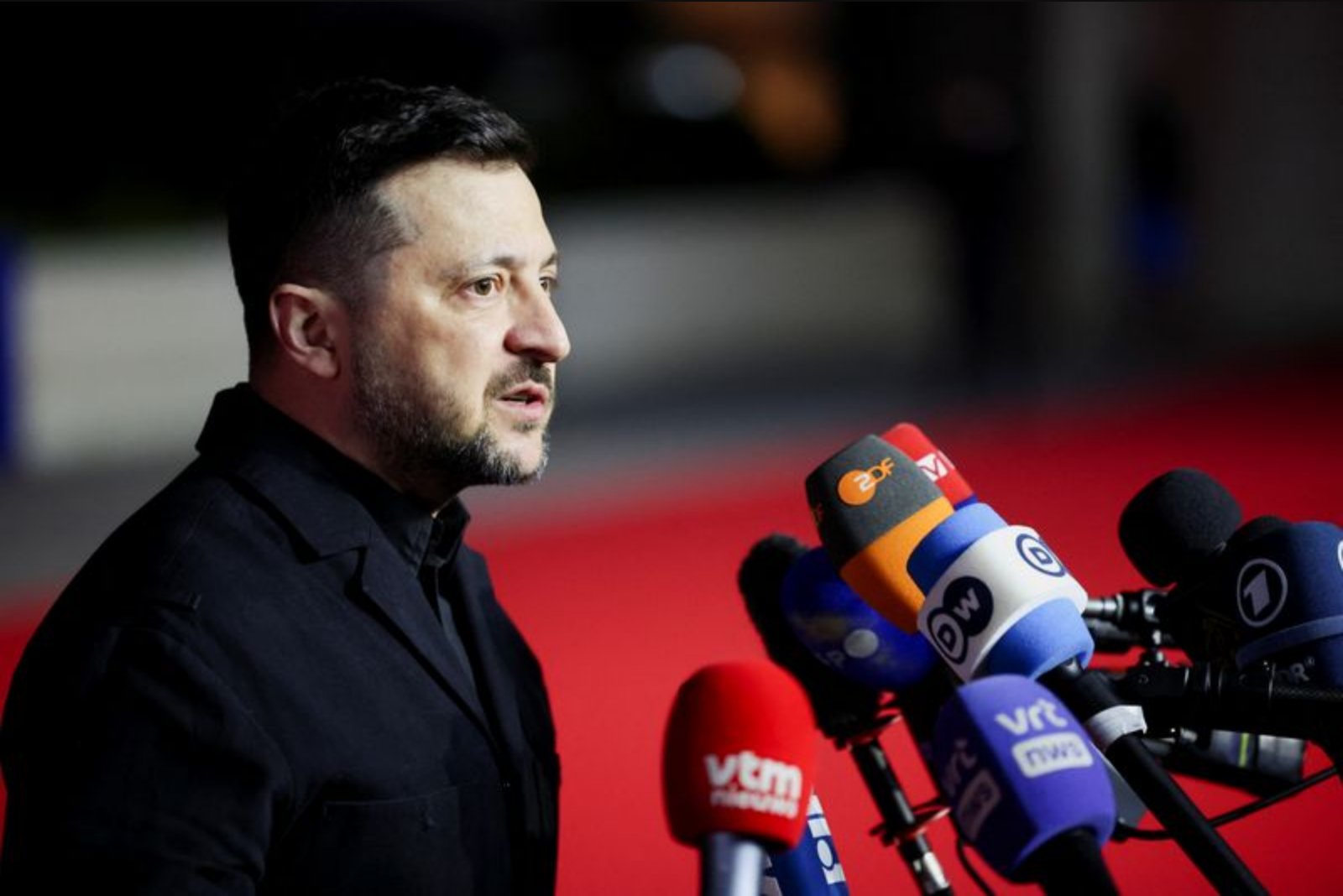
WARSAW, May 29 - Poland’s president said on Friday he has requested that the Chapter of the Order of the White Eagle examine whether Ukrainian President Volodymyr Zelenskiy should be stripped of Poland’s top state honour. The request follows Ukraine’s decision to rename a special forces unit after the Ukrainian Insurgent Army, or UPA, a formation that is celebrated by some in Ukraine for resisting both Soviet and Nazi control but is also blamed by Poland for mass killings of ethnic Poles during World War Two.
Poland has been a consistent backer of Kyiv during Russia’s war in Ukraine. Former Polish President Andrzej Duda awarded Zelenskiy the Order of the White Eagle in 2023 in recognition of his role in strengthening bilateral relations and for what Poland described as his contributions to democracy, peace, and European security, as well as his steadfast defence of human rights.
What prompted the review
The immediate trigger for President Karol Nawrocki’s move was Zelenskiy’s signing of a decree that recognised a Ukrainian special forces unit by giving it the name of the UPA. That decision has provoked strong reactions in Poland, where memories of the Volhynia massacres - a series of killings in 1943-1945 that Poland says resulted in the deaths of around 100,000 Poles at the hands of Ukrainian nationalists - remain deeply painful. The killings were followed by reprisal killings that also claimed thousands of Ukrainian lives.
"Glorifying the UPA has provided Russian propaganda with ample oxygen for disinformation," Nawrocki said at a press briefing in Warsaw. He emphasised that backing Ukraine against Russia remains a strategic objective for Poland, but added that formal procedures were necessary before any final decision on the award could be taken.
Nawrocki explained he had asked the Chapter of the Order of the White Eagle - an advisory council responsible for oversight of Poland’s highest and oldest state decoration - to place revocation of Zelenskiy’s Order on its agenda when it meets on June 8. "I proposed that one of the items on the agenda be the revocation of President Zelenskiy’s Order of the White Eagle," he said, noting that certain mechanisms must be followed before a final decision is made.
Responses from Kyiv and Warsaw
In Kyiv, a Foreign Ministry spokesperson, Heorhyi Tykhyi, told journalists that it was unfortunate the renaming had led to negative reactions in Poland and said Ukraine had not intended to cause offence. He said the UPA, for many Ukrainian soldiers, symbolises opposition to Moscow’s imperial policy. "Our history confirms that only Moscow benefits from disputes between Ukrainians and Poles," he added.
Poland’s foreign ministry issued a statement on X saying the renaming "wounds the memory of the victims of that organisation and strikes at the dialogue between our nations." Meanwhile, a spokesman for the Ukrainian presidency declined to directly comment on Nawrocki’s remarks but expressed gratitude for Poland’s support and said they hoped both countries’ independence would remain strong despite what the spokesman described as Russian attempts to undermine it. The spokesman said Ukraine was thankful for Poland’s support "and we hope that our independence, and Poland’s, will remain strong despite all the Russian attempts to kill it."
Political context inside Poland
President Nawrocki, described in Polish public discourse as a conservative nationalist with inspiration drawn from U.S. President Donald Trump, has campaigned on a platform of prioritising Poles at a time when some citizens express weariness over the large number of Ukrainians living in the country. His stance on this issue resonates with segments of the electorate that view national memory and victimhood as politically significant.
At the same time, Nawrocki made clear that Poland’s strategic goal of supporting Ukraine remains intact, even as he frames the UPA naming as a matter that affects historical memory and bilateral dialogue.
Regional reverberations
The controversy also intersected with a separate event involving Russia and Luxembourg: Moscow announced it had summoned Luxembourg’s ambassador to protest the exhumation and recent reburial in Kyiv of the remains of Andriy Melnyk, a leader of the Organisation of Ukrainian Nationalists, which was allied to the UPA. Russia has branded Melnyk a Nazi collaborator. Melnyk was reburied in Kyiv last week with full military honours, a fact that drew Russia’s public criticism.
The unfolding dispute places Warsaw and Kyiv in a delicate position where historical grievances, national symbolism and contemporary security cooperation collide. Poland has signaled it will use formal, established procedures to evaluate whether the highest honour bestowed on Zelenskiy should stand in light of the recent developments.