
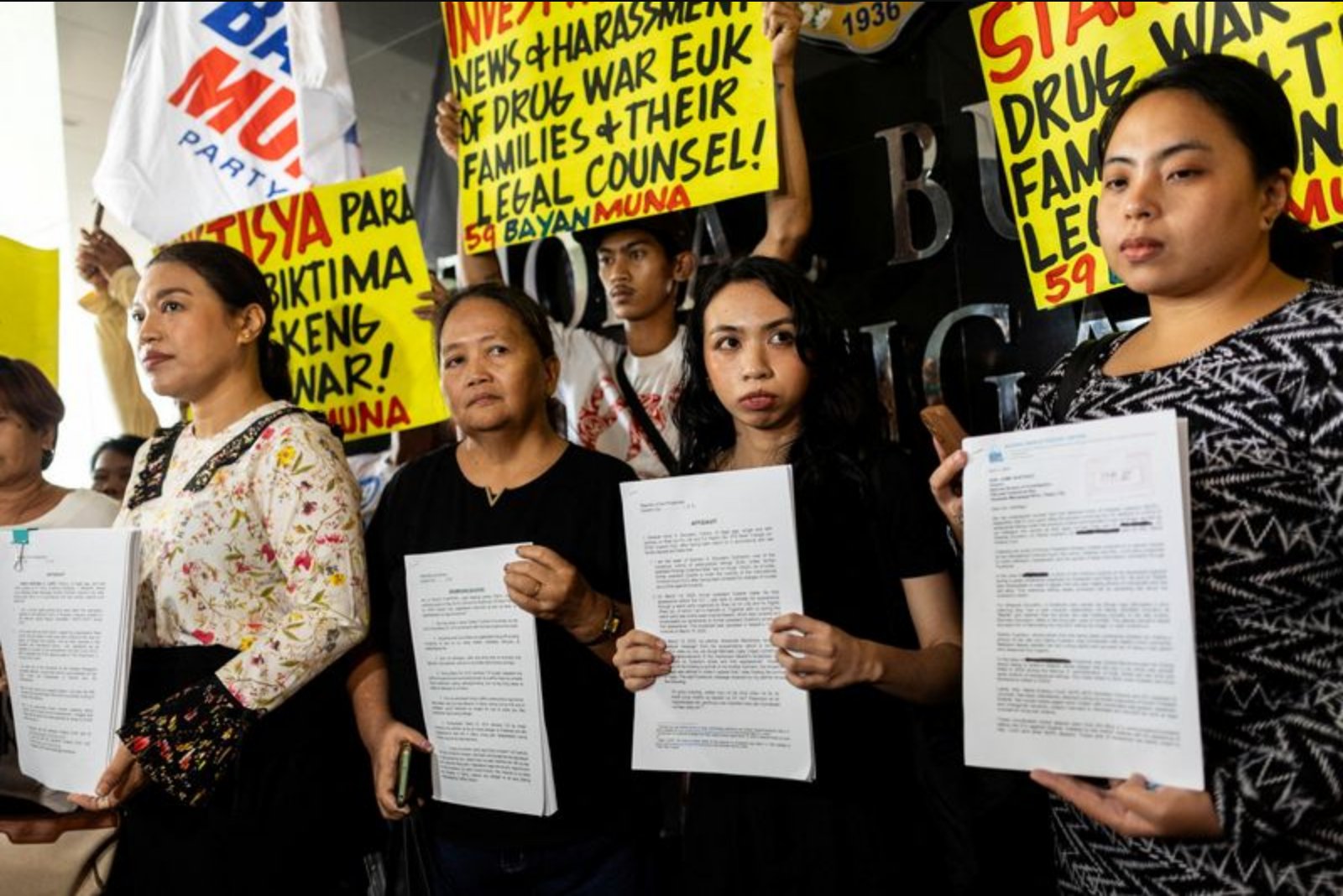
The Philippine government on Wednesday launched a civilian-led commission tasked with investigating the violent outcomes of the nation’s so-called "war on drugs" and compiling a comprehensive record of alleged abuses for possible legal follow-up. The body, named the Philippine Truth and Reconciliation Commission, will be headed by former International Criminal Court judge Raul Pangalangan.
The commission’s stated objectives are to document alleged extrajudicial killings, collect and preserve testimony and material evidence, and prepare referral-ready case files that can be considered by relevant state agencies. Officials said the panel will operate independently of government control, underscoring its aim to establish what it called a "credible public record of extrajudicial killings and related abuses".
"This is not about replacing the courts or assigning guilt. It is about building a credible truth record that can guide accountability, healing, reform, and the prevention of future violence," Pangalangan said, setting out the commission’s focus on verification, documentation and recommendations rather than judicial determinations.
Police statistics cited in relation to the crackdown indicate that about 6,200 drug suspects were killed while resisting arrest during anti-drug operations. Human rights groups, however, place the likely death toll at a much higher figure, saying the true number of killings under the campaign overseen by former President Rodrigo Duterte could be in the tens of thousands.
Duterte, who held the presidency from 2016 until 2022, has denied wrongdoing. He was arrested last year and is currently in The Hague awaiting trial at the International Criminal Court on charges of alleged crimes against humanity.
Domestic investigations into unlawful killings tied to the anti-drug campaign have so far produced minimal legal accountability, with Philippine authorities reporting only a handful of prosecutions to date. The new commission intends to address that gap by compiling evidence-based recommendations and referral-ready case files for institutions such as the justice ministry, the police, and the National Bureau of Investigation.
The commission’s work unfolds against the backdrop of an active manhunt for a highly visible figure associated with the previous administration’s security apparatus. Authorities are seeking former police chief Ronald dela Rosa, a senator and Duterte ally who is wanted by the ICC for alleged crimes against humanity; he has denied inciting or taking part in unlawful killings.
The commission intends to conduct public hearings during which victims, family members, witnesses and, where appropriate and protected, former perpetrators can provide testimony. Cardinal Pablo Virgilio David, an adviser to the commission and the former head of the Catholic Bishops Conference, described the panel’s purpose in human terms: "The Truth Commission exists so these stories can be heard, verified, preserved and acted upon."
Members of the commission include former human rights researchers and specialists in forensics and trauma, reflecting an emphasis on technical expertise in examining allegations and supporting victims. The panel has committed to issuing public findings every six months and to producing a final report at the end of its mandate.
The origins of the crisis under review are tied to the policy choices of former President Duterte, who campaigned as a maverick southern mayor promising to eliminate large numbers of drug dealers and criminals. Within weeks of taking office, killings connected to drug enforcement rose sharply, producing a pattern of fatal shootings during police operations and a wave of mysterious murders of drug users in some of Manila’s poorest neighborhoods.
Those patterns have prompted starkly different accounts of responsibility. Activists and rights groups have accused police of systematic killings, cover-ups and staging crime scenes. Police have rejected those charges, denying involvement in many of the slum killings that occurred alongside official operations and attributing those deaths to turf wars and vigilante violence.
By focusing on evidence-based recommendations and the preparation of referral-ready files for investigative agencies, the commission sets out a pathway for possible prosecutions and institutional reform. How quickly and effectively those referrals are acted upon by the justice ministry, the police and the NBI will determine whether the commission’s findings translate into legal or policy outcomes.