
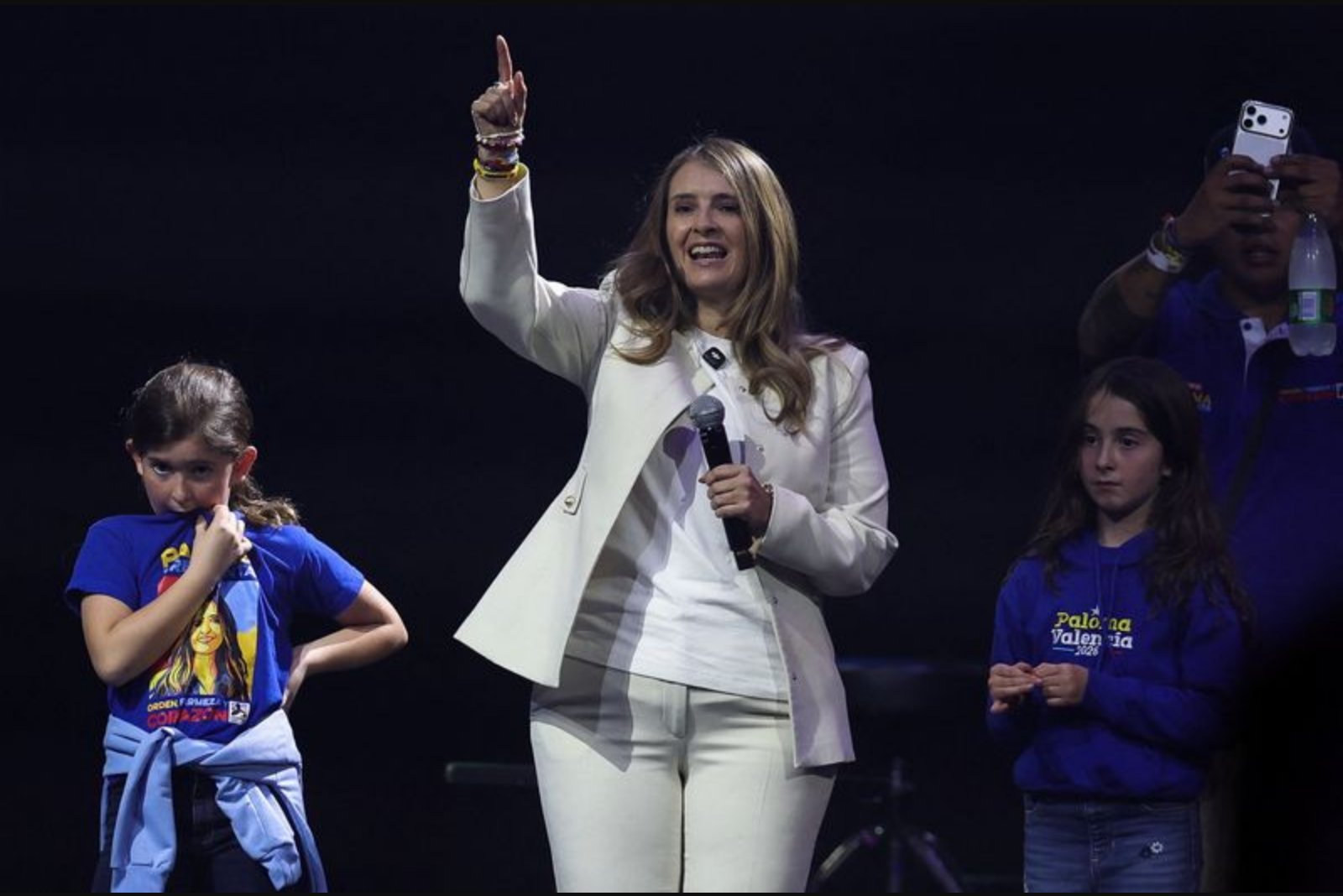
Paloma Valencia, a 48-year-old lawyer and senator identified with Colombia's right wing, is campaigning to become the country's first female president in a ballot scheduled for Sunday, May 31. Presenting security and economic revival as her central themes, she argues those areas have worsened under the current leftist administration.
Valencia is a prominent member of the conservative political landscape and draws political backing from former President Alvaro Uribe. Uribe, who led major operations against leftist guerrilla organizations in the 2000s, continues to exert influence despite an ongoing legal controversy in which he was at one point found guilty of fraud and bribery - convictions that were later overturned on appeal. Uribe has denied any misconduct and described the proceedings as political persecution.
At recent campaign events in Bogota, Valencia has repeatedly invoked her political ties to Uribe. "Uribe is like a father to me. I never make mistakes when it comes to loyalties. I want to take everything that worked in President Uribe's government and do it again," she said, adding, "I'm going to copy Uribe, who got Colombia back on track." Campaign trackers indicate she has recently fallen to third place in opinion polls.
The May 31 vote is the first round in a race to replace President Gustavo Petro, who is barred from seeking re-election. The electoral rules call for a runoff in June if no candidate secures more than 50% of the vote.
Valencia is one of the most visible opposition figures in Congress and traces her roots to Cauca province, a region among those most affected by a six-decade armed conflict that has resulted in more than 450,000 deaths. From that platform she has criticized the 2016 peace accord with the Revolutionary Armed Forces of Colombia (FARC) and has been critical of President Petro's attempts to negotiate with other illegal armed groups.
Speaking about her security priorities, Valencia has stated unequivocally that her administration would not pursue talks with the National Liberation Army (ELN), the FARC, or the so-called Gaitanista Army. "With me there will be no talks with the ELN, nor with the FARC, nor with the so-called Gaitanista Army. We will reactivate all arrest warrants and pursue them and hunt them down to bring them to prison," she said at a recent public appearance in Bogota, referencing multiple guerrilla and criminal organizations.
Valencia's background reflects a long-standing conservative lineage. Her paternal grandfather was Guillermo Leon Valencia, a conservative former president, while her maternal grandfather established a respected university. She earned a master's degree in creative writing from New York University and worked as a newspaper columnist and radio commentator prior to entering elected office.
Her first campaign in 2006 did not result in a congressional seat, but she has served as a senator for the Democratic Center party, founded by Uribe, since 2014. In the legislature she has supported measures aimed at agricultural and small-business interests, including laws to aid sugar producers, initiatives to formalize small businesses, and proposals to reduce working hours.
Valencia is married to academic Tomas Rodriguez and is a mother to a young daughter. As the race progresses, her campaign emphasis on security and a pro-business legislative record will be weighed against recent poll movements and the possibility of a second-round runoff if no contender wins an outright majority on May 31.
Key points
- Paloma Valencia, 48, is campaigning to become Colombia's first female president, emphasizing security and economic recovery.
- She is backed by former President Alvaro Uribe, who remains influential despite an overturned fraud and bribery conviction; Valencia has recently fallen to third in polls ahead of the May 31 vote.
- Her legislative record includes support for sugar producers, small-business formalization and reduced working hours - areas that could influence agricultural and small-enterprise sectors.
Risks and uncertainties
- Poll volatility - Valencia has slipped to third in recent polls, creating uncertainty about her standing heading into the first round of voting; this can affect investor confidence in near-term policy direction.
- Potential runoff - If no candidate exceeds 50% of the vote on May 31, a June runoff would delay confirmation of policy direction and prolong political uncertainty.
- Political controversy surrounding her principal backer - Alvaro Uribe's legal history, including initial convictions that were overturned on appeal, remains a source of political controversy that could influence public perception and campaign dynamics.