
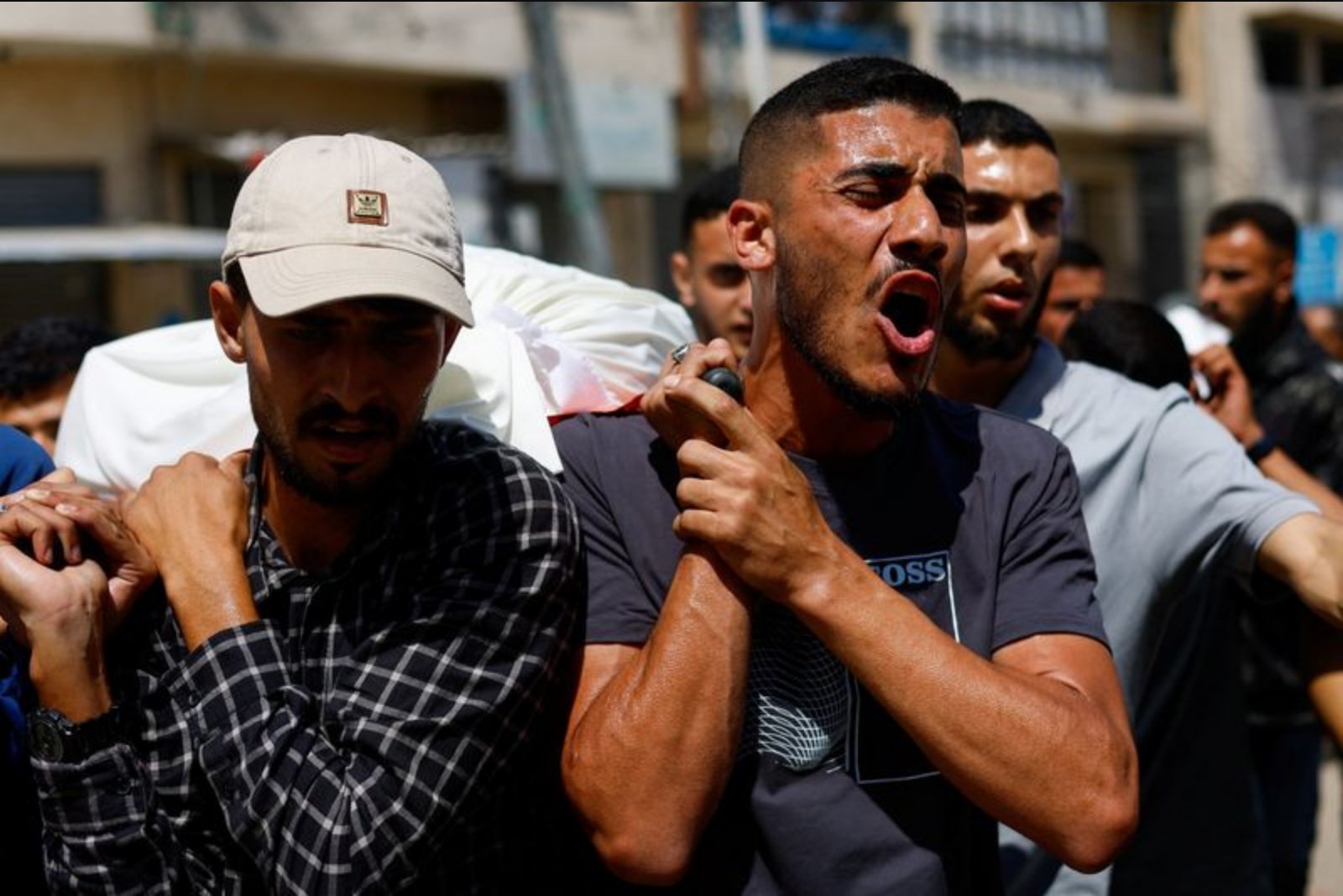
Dozens of people in Gaza City carried the body of a senior commander of Hamas’ armed wing through streets scarred by prior bombardment on Wednesday, one day after Israeli forces said they had killed him in a pinpointed attack.
Israeli military statements identified the slain militant as Mohammad Odeh, saying he was killed late Tuesday. The strike followed the earlier May killing of his predecessor, Izz al-Din al-Haddad, who died in an attack on May 15. Israeli officials say these operations aim to dismantle the militant group's leadership even as indirect talks, brokered by the United States, remain deadlocked over Gaza’s future.
At Odeh’s funeral, mourners carried his body along with those of family members killed in the same strike. Gaza health authorities reported that the attack that killed Odeh also killed his wife and son, and left at least three others dead with more than 20 wounded. The strike demolished the upper floor of an apartment building in the Rimal neighborhood of Gaza City, and rescue crews continued to search through rubble for possible additional casualties.
Hours after the funeral, the Israeli military said it carried out another operation in northern Gaza that targeted two militants, though it did not disclose their identities. Later on Wednesday evening, health officials reported that an Israeli strike on an apartment in Gaza City killed at least seven people and wounded 18.
Mourners and statements
Relatives and supporters at Odeh’s funeral, which passed bomb-damaged buildings, said the killings would not halt Palestinian resistance. Abu Al-Abd Odeh, a relative, told attendees at a mosque in Gaza City: "This journey will not stop and the struggle of the Palestinian people will continue on all levels." Mourners carried three bodies wrapped in white burial shrouds through city streets marked by damage from Israel’s wider two-year offensive on the enclave.
Israel’s leadership framed the strike as part of its effort to hold those it deems responsible for the October 7, 2023 cross-border attack to account. Prime Minister Benjamin Netanyahu said Odeh had led Hamas’ intelligence division at the time of that attack and that the commander had been named about a week ago to replace Haddad. In a statement following Odeh’s killing, Defence Minister Israel Katz said Hamas would no longer exert civilian or military control over Gaza and that a plan for what he described as "voluntary migration" from the enclave would be implemented "at the right time and in the right way." Palestinians have rejected any attempt to displace them and view talk of relocation as evocative of past population expulsions.
Leadership losses and organizational impact
Sources close to Hamas suggested that Odeh may have been the last surviving member of the armed wing’s senior leadership council. Analysts quoted by Israeli outlets said the group has few experienced militant leaders remaining. Michael Kobi of Israel’s Institute for National Security Studies commented that removing seasoned leaders is part of an Israeli strategy aimed at weakening Hamas and undermining its organizational cohesion, noting that losing experienced personnel complicates effective management of the organization.
Since the start of the Gaza war, Israel has carried out operations that it says have killed dozens of Hamas leaders and military officials. Gaza health authorities report that roughly 900 Palestinians have been killed since the truce agreed in October, a figure that does not distinguish between fighters and civilians. The Israeli military said four of its soldiers have been killed by militants in the same period. Hamas does not publish its own casualty figures for fighters.
Ceasefire talks and control of territory
Israel and Hamas remain at an impasse in indirect talks over implementation of a second phase of a ceasefire agreement that includes Hamas disarmament and withdrawals by Israeli forces. The ceasefire agreed in October left Israel in control of more than half of Gaza, while Hamas retained control of a small area of coastal territory. Israel has said that its continued strikes after the truce aim to prevent attacks and stop individuals from approaching the armistice line with Hamas.
Officials and families continue to weigh the human toll of targeted operations. The strike that killed Odeh and members of his family illustrated how military actions have caused civilian casualties and property destruction, and how the line between militant and non-militant victims remains contested in official tallies.
Outlook and ongoing dynamics
The killings of senior militant figures, the continuation of strikes across Gaza, and the stalemate in indirect negotiations underscore the persistence of volatility in and around the enclave. While Israeli officials frame targeted operations as necessary to degrade militant capabilities, Palestinian mourners and political actors view the actions as further fuel for resistance and a reminder of long-standing grievances over displacement and control of territory.
Rescue and medical teams in Gaza continued to respond to strikes, tending to the wounded and recovering bodies from damaged buildings. The events of the past days add to a cumulative toll and illustrate the continued fragility of a ceasefire that has left Gaza divided territorially and politically.