
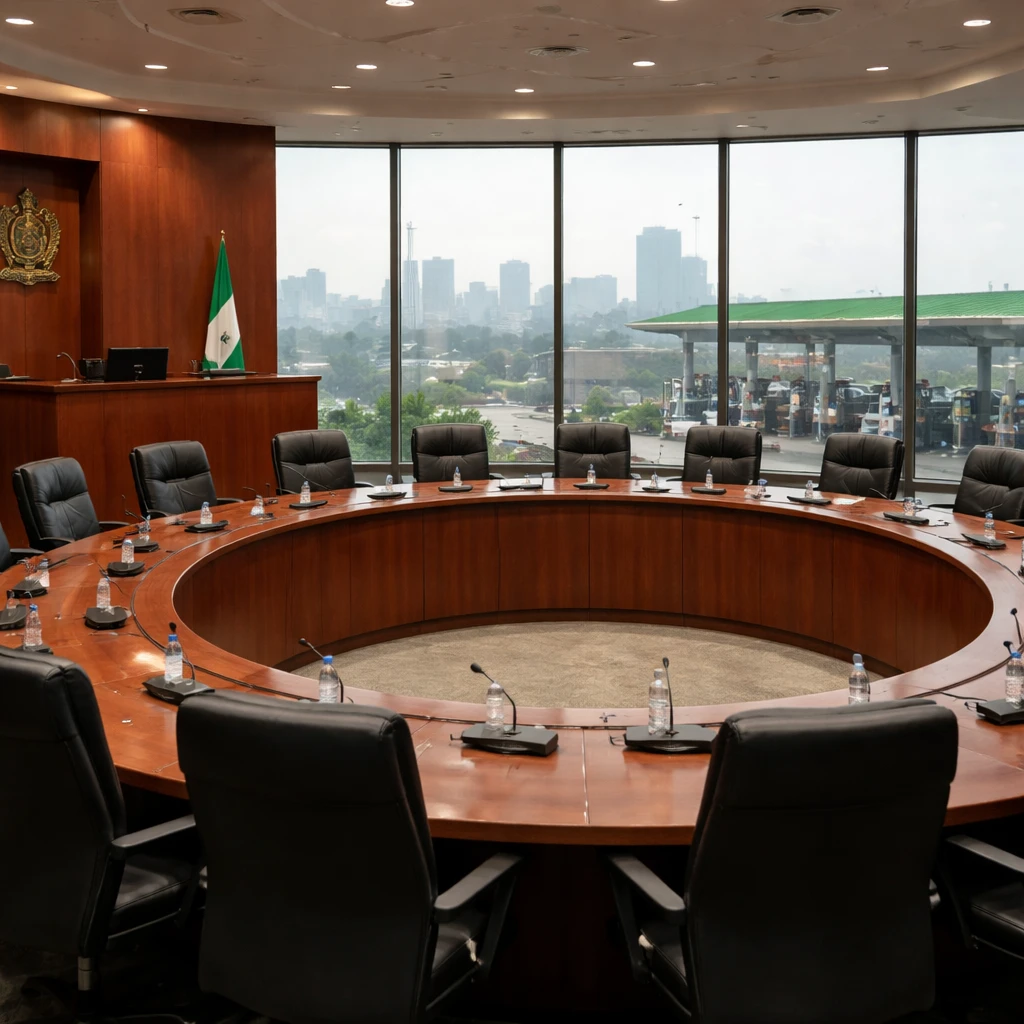
Abuja, Nigeria - Nigeria's central bank maintained its benchmark monetary policy rate at 26.5% on Wednesday, concluding its 305th monetary policy committee meeting without a change to the key interest rate.
The committee's decision matched the median estimate of economists surveyed by Bloomberg and leaves the central bank's policy stance unchanged amid rising consumer prices.
Alongside the unchanged policy rate, the committee retained the cash reserve ratio settings applied to different banking sectors: 45% for commercial banks, 16% for merchant banks and 75% for non-Treasury Single Account public sector deposits.
The standing facilities corridor was also left intact, set at plus 50 basis points and minus 450 basis points around the monetary policy rate.
Inflation in Nigeria accelerated to a five-month high after fuel prices rose, a movement the central bank linked to the conflict in Iran driving up energy costs. The committee noted that higher fuel expenses have pushed prices upward across the West African nation.
By holding the policy rate steady, the central bank maintains its current approach to monetary policy as the country contends with rising consumer prices that the committee attributed to external pressures on energy markets.
The monetary policy committee met in Abuja for the 305th time to review economic conditions and, while inflation pressures have risen, opted not to alter the interest rate or the existing reserve and facility settings.
Context and takeaways
- The policy rate remains at 26.5% following the committee's 305th meeting in Abuja.
- Cash reserve ratios are unchanged: 45% for commercial banks, 16% for merchant banks and 75% for non-TSA public sector deposits.
- The standing facilities corridor is maintained at +50 bps and -450 bps around the monetary policy rate.
- Inflation has risen to a five-month high, which the committee connected to fuel price increases driven by the war in Iran and associated energy cost pressures.