
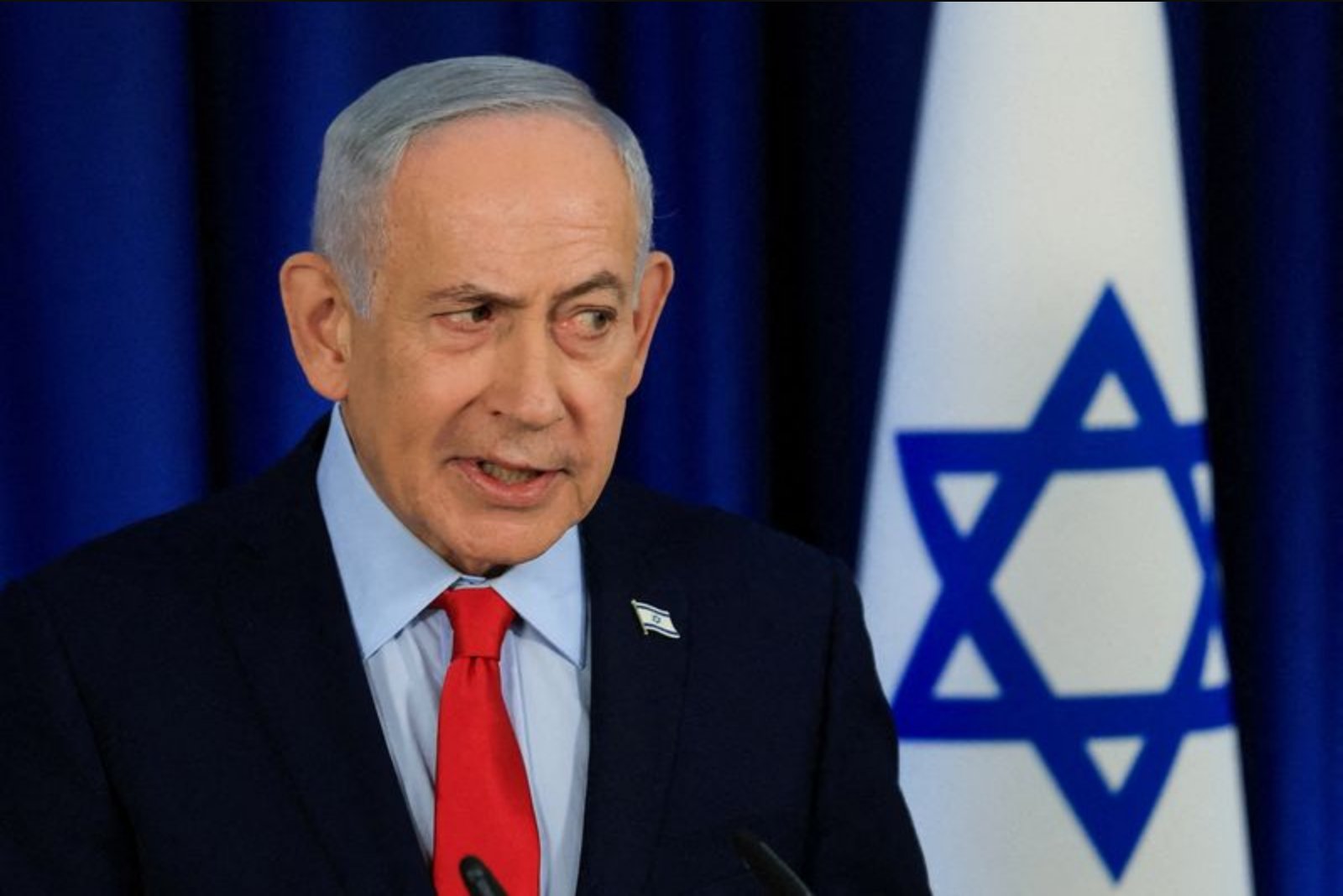
Prime Minister Benjamin Netanyahu said on Thursday he had instructed Israel's military to widen the area under its control in Gaza, setting an initial target of taking 70% of the Palestinian territory. The densely populated coastal enclave is already confined to a narrow strip of land along the sea, and Israeli forces currently exercise effective control over a substantial portion of it.
Israeli authorities are understood to control an estimated 64% of the coastal Strip after a two-year military campaign that followed the October 2023 Hamas attack on southern Israel. That campaign has left much of the territory devastated. Under an October U.S.-brokered truce that has not stopped Israeli operations or achieved Hamas' disarmament, Israeli troops were expected to pull back to a demarcation known as the "Yellow Line," which marked the extent of Israeli control.
The Yellow Line, as shown on military maps, placed Israel in control of roughly 53% of Gaza, with Hamas governing the balance. It has been reported that concrete blocks marking that line on the ground were moved by Israeli forces deeper into areas previously under Hamas control. Further military maps issued in March depicted an expanded restricted area that analysts say effectively cordons off about 64% of Gaza's territory in total.
Netanyahu has repeatedly asserted in public statements that the military holds more than 60% of Gaza. Speaking at a conference in a settlement in the occupied West Bank, he outlined plans to extend that footprint. "We were at fifty, we moved to sixty. My directive is to move to - let's go step by step," he said on Thursday. "First of all, seventy. Let's start with that. We're pressing them (Hamas) from all sides. We'll deal with the remnants."
Strategic framing and disputed aims
Israeli officials describe the territory it has taken in Gaza, as well as areas in Syria and Lebanon, as "buffer zones" intended to reduce the risk of future militant attacks after the October 7, 2023 Hamas-led assault. Palestinians view the expanding buffer in Gaza as part of a strategy to encourage permanent displacement, pointing to comments from senior ministers - including defense chief Israel Katz - about wanting to foster "voluntary migration" from the Strip.
Netanyahu's directive arrives as Israel intensifies its operations in Gaza, saying the strikes target senior Hamas leaders involved in the 2023 attacks. On Tuesday, Israeli forces killed the head of Hamas' armed wing, following the killing of his predecessor ten days earlier. Israeli officials stated those were targeted actions against Hamas leadership.
Civilian impact and accounts from Gaza
Gaza health authorities said an additional strike on Wednesday night that Israel said targeted two Hamas leaders killed at least 10 people, including five children, and wounded 18 others. That attack occurred as Palestinians marked the Muslim festival of Eid al-Adha, during which many families gathered in makeshift tent encampments and in buildings damaged by earlier strikes.
One survivor, Etidal Al-Za'im, described being inside a tent with family members when a nearby building was struck and debris fell on their shelter. "We came out to the sound of a bang, we sat for an hour before we could come out through the (rubble) and find a way out of the tent," she said.
Another Gaza resident who witnessed Wednesday's strike, identifying himself as Abu Azam, framed the daily risk: "A person in Gaza has no safety at all. He could be hit in the street, he could be hit in the house, he could be hit in the hospital, he could be hit on his way to the market."
Health authorities in Gaza report that Israeli strikes have killed more than 900 people since the truce took effect, while Israel says militants killed four of its soldiers during the same period. Both sides remain at an impasse over a U.S. proposal that would see Israeli troops withdraw and Hamas disarm, with no agreement on how to advance the plan.
Diplomatic stalemate and next steps
The directive to move toward control of 70% of Gaza signals a stepwise approach, as Netanyahu described, with the military pressing to expand the area under its authority. Israel maintains that its actions are designed to neutralize threats and create protective zones, while Palestinians and some Israeli critics interpret the measures as efforts that could lead to long-term displacement.
As operations continue and leadership targets are pursued, the humanitarian toll cited by Gaza health officials and the testimonies of civilians underscore the difficulties of distinguishing military objectives from the consequences experienced by the population living in the contested territory. The political deadlock over disarmament and withdrawal means the situation is likely to remain tense as both sides navigate competing demands and objectives.