
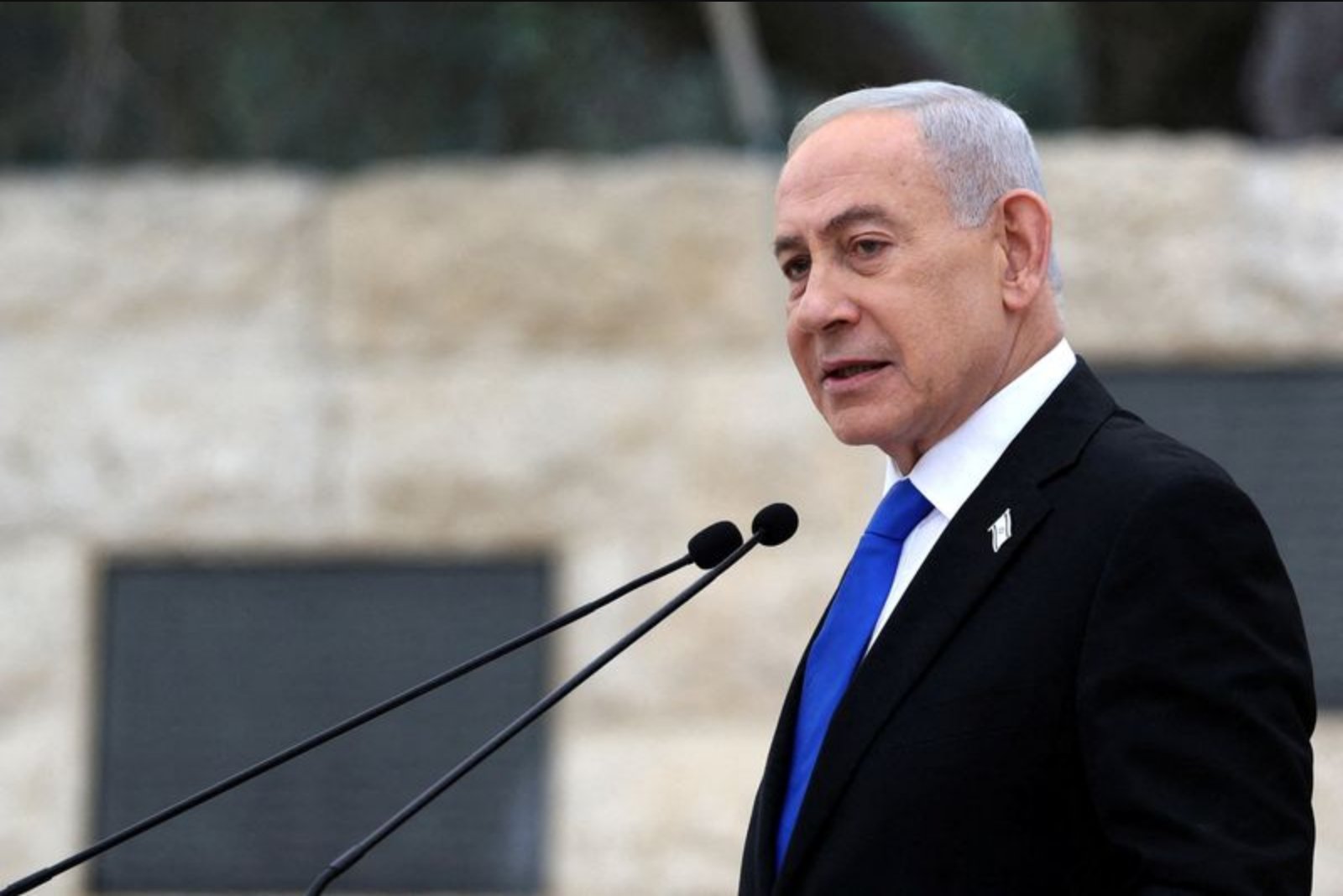
U.S. President Donald Trump said on Monday that Israel would refrain from executing planned attacks against Hezbollah in southern Beirut, following an exchange in which both Israel and the Iran-aligned group agreed to halt strikes on one another. The announcement came hours after Prime Minister Benjamin Netanyahu ordered fresh air strikes on Beirut's southern suburbs, an escalation that prompted a warning from Iran that Israel's actions risked undermining Tehran's talks with the United States.
Lebanon's government subsequently declared a new ceasefire that, according to the announcement, would see Israel stop strikes on southern Beirut while Hezbollah would cease attacks on Israel. The intervention by the United States and the resulting bilateral halt have become a focal point of political contention within Israel, where opinion polls indicate Netanyahu is trailing ahead of elections slated by October.
Opposition figures and prospective coalition partners have seized on the U.S. role in the latest pause in hostilities to criticize Netanyahu's stewardship of national security. Naftali Bennett, a right-wing security hardliner and former prime minister who has also faulted Netanyahu over the resurgence of Hamas in Gaza, posted on X that "the location is different, the story is the same." Bennett added that the country was governed by "a government that has lost control of Israeli sovereignty."
Bennett and his electoral partner, centrist Yair Lapid, have advocated for military strikes targeting Hezbollah. Lapid wrote on X that the situation amounted to "a full protectorate," an accusation that the United States is effectively dictating Israeli military policy and treating Israel as a client state.
The clashes between Israel and Hezbollah have persisted despite a ceasefire brokered by the United States on April 16. The current wave of heightened conflict began on March 2, when Hezbollah fired into Israel reportedly in support of Iran. Since then, Israel has intensified its military campaign in southern Lebanon, an operation that has displaced more than one million people and resulted in over 3,400 fatalities according to the casualty figures cited by Israeli authorities. Hezbollah has not published its own tally of casualties.
Hezbollah has employed rockets and explosive drones against Israeli forces and towns in the north, while Israel reports that 26 soldiers and four civilians have been killed since the escalation on March 2. Prime Minister Netanyahu has rejected critiques of his handling of the Lebanese front, arguing that Israeli air strikes under his leadership have inflicted significant damage on Hezbollah's capabilities.
Following the U.S. announcement of the Israel-Hezbollah understanding, Netanyahu maintained that Israel's position had not altered, saying the country's stance "remains unchanged." He reaffirmed that if Hezbollah does not stop targeting Israeli towns and citizens, Israel would continue to "attack terror targets in Beirut," a line he emphasized in a statement issued after the U.S. declaration.
Despite the public statement of a halt to mutual strikes, Israel's military has carried out operations in southern Lebanon since Trump's announcement. On Tuesday, Israeli Defence Minister Israel Katz said that Israel had refrained from carrying out strikes on Beirut at the request of the United States, but he cautioned that any renewed Hezbollah attacks on northern Israel would prompt retaliatory strikes on the southern suburbs of Beirut, an area widely regarded as a Hezbollah stronghold.
Gadi Eisenkot, a former chief of staff of the Israel Defense Forces who is also running for prime minister, criticized the White House push for a halt. Writing on X, Eisenkot called the U.S. demand "unreasonable" and asserted that "there has never been an Israeli prime minister who accepted such a humiliating demand."
The episode has exposed mounting fissures within Israel's political establishment over how closely military decisions should be coordinated with Washington, one of Israel's closest allies. Itamar Ben Gvir, who serves as national security minister and is a partner in Netanyahu's coalition, said Israel should reject U.S. pressure and simply say "no" to Washington's request.
Editorial commentary in the English-language Israeli newspaper The Jerusalem Post framed the situation as an erosion of sovereign decision-making, stating that Israel had "found itself in the humiliating position of having to seek American approval to defend its own citizens," and that "the United States is now actively restraining Israel from taking decisive military action."
As political leaders trade accusations and the military balance fluctuates on the ground, the ceasefire announcement and its reception at home underline the fragile intersection of battlefield dynamics and domestic politics. For now, the public record shows a temporary halt to mutual strikes agreed under U.S. auspices, continued armed exchanges since early March, a substantial humanitarian toll in southern Lebanon, and an intensifying domestic debate over the proper relationship between Israeli security policy and U.S. influence.