
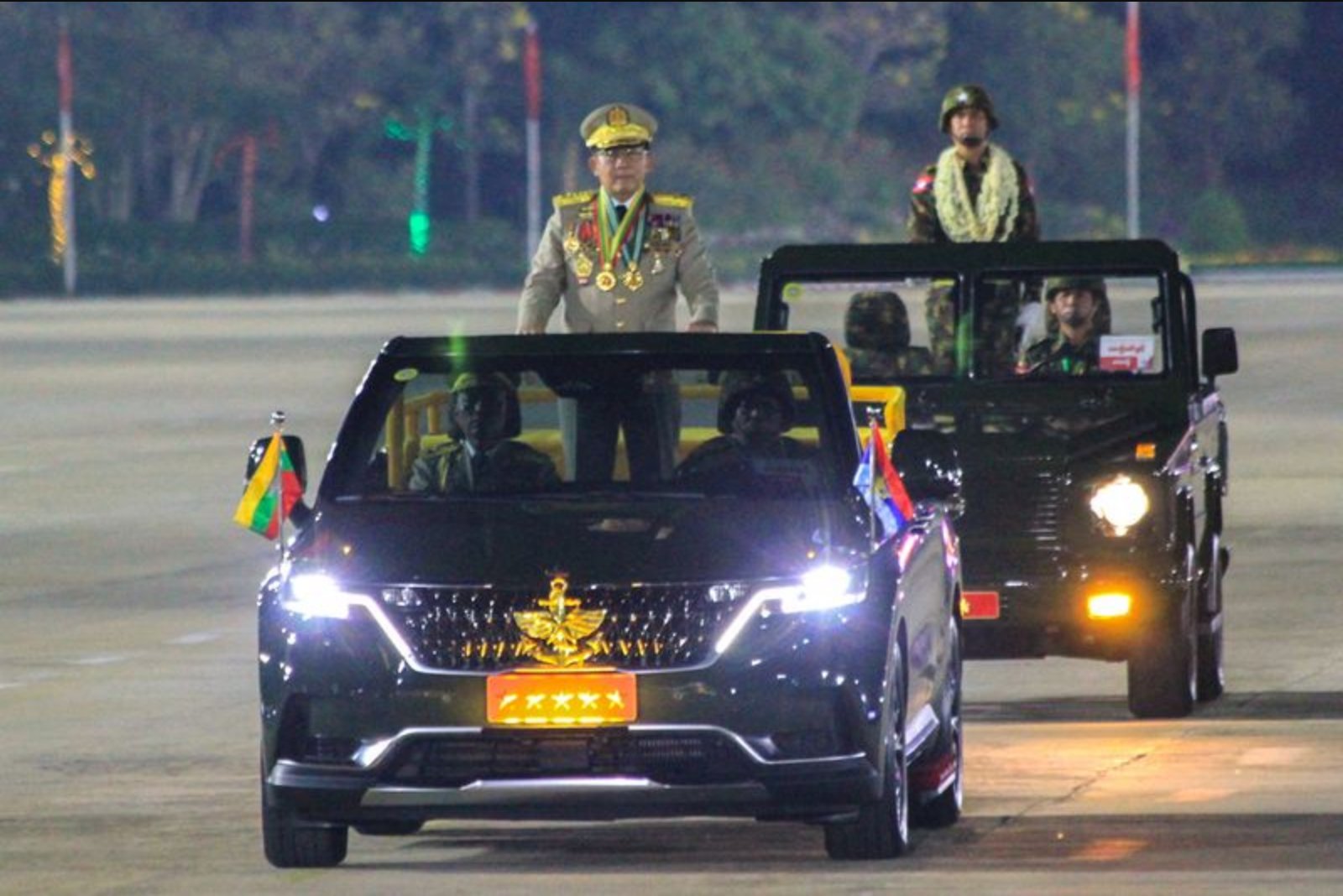
BANGKOK, May 30 - Less than two months after completing a carefully engineered shift from junta chief to the civilian presidency, Min Aung Hlaing will travel to India on an official five-day visit on Saturday. The trip represents his first overseas engagement since taking on the civilian role and will include talks with Indian Prime Minister Narendra Modi.
The visit is being watched as a barometer of Myanmar’s gradual return to regional engagement after prolonged estrangement. Neighbouring states largely distanced themselves from Myanmar’s military government in the wake of the February 1, 2021 coup that removed the elected administration led by Aung San Suu Kyi, generating widespread domestic protest that evolved into an armed insurgency.
For India, analysts say, the visit presents an opportunity to blunt China’s dominant role in Myanmar, pursue access to deposits of strategically important rare earths and reinforce security cooperation in areas adjacent to India’s northeastern states.
"After changing into civilian clothes as president, Min Aung Hlaing is looking to boost diplomatic engagement across the region," said Richard Horsey, senior Myanmar adviser at Crisis Group. "He expects more normal ties with ASEAN," Horsey added, referring to the Association of Southeast Asian Nations, "with support from Thailand and some other member states. He is also likely to visit Beijing soon to meet Xi Jinping. India is Myanmar’s other key neighbour."
An official from Myanmar’s presidential office, contacted by phone, declined to comment on the itinerary or objectives of the visit. Indian foreign ministry spokesman Randhir Jaiswal said to reporters on Friday: "All issues that form part of the gamut of relations between Myanmar and India will come up for discussion."
Myanmar’s military-led government endured significant diplomatic isolation after it seized power in 2021. The coup drew international condemnation and prompted regional measures that included excluding Myanmar’s generals from ASEAN summits. More recently, a destructive earthquake the previous year opened a limited diplomatic window for the military chief to appear at a regional summit in Bangkok, a move analysts say he is seeking to build upon following an election that faced wide criticism but ultimately paved the way for his presidency.
"He is seeking more and more regional and international respectability post-election," said Gautam Mukhopadhaya, a former Indian ambassador to Myanmar, characterising the wider aim behind the new leader’s outreach.
Although China has long been a principal backer of the Myanmar military and holds a range of investments in the country, the choice to make India the destination for his maiden overseas trip in his civilian capacity is, analysts say, in part an attempt to counterbalance Beijing’s deep influence.
"This has been part of Myanmar’s way of dealing with India and China, capitulating more to China and trying to sort of balance it with India," Mukhopadhaya said.
The visit coincides with renewed military operations by Myanmar’s forces in frontier areas where rare-earth deposits are located, and in regions encompassing key trade routes linking Myanmar to India and Thailand. Observers say these offensives increase the stakes for any security and resource-focused discussions during the New Delhi talks.
Horsey noted likely defence-related themes on the agenda: "Min Aung Hlaing will almost certainly seek India’s help in countering the Arakan Army and Chin armed groups," he said, referencing rebel organisations active in Chin state, which borders India, and adjacent Rakhine state.
India has also demonstrated an interest in securing access to Myanmar’s natural resources. That interest has included attempts to obtain mineral samples, which analysts and former diplomats say forms part of a broader Indian effort to identify commercial opportunities and raw materials in Myanmar. Mukhopadhaya summed up the mutual calculation behind the visit: "The bottom line behind this visit from the Indian side is what they can get out of it in terms of raw materials, rare earths (and) business propositions," he said. "And that’s exactly what the Myanmar military wants, because it wants its military enterprises strengthened."
The coming days in New Delhi will test whether Myanmar’s president can convert a fragile opening into more normalized diplomatic engagement and what concessions, if any, India might secure in exchange for closer ties amid ongoing internal conflict and international controversy surrounding the legitimacy of recent elections.
Context and next steps
Min Aung Hlaing’s first foreign trip as a civilian president underscores an active diplomatic push from Naypyidaw to re-establish relations across the region. New Delhi’s response will reflect competing priorities - balancing geopolitical influence vis-a-vis China, safeguarding border security, and pursuing access to strategic minerals - all against the backdrop of ongoing violence within Myanmar.