
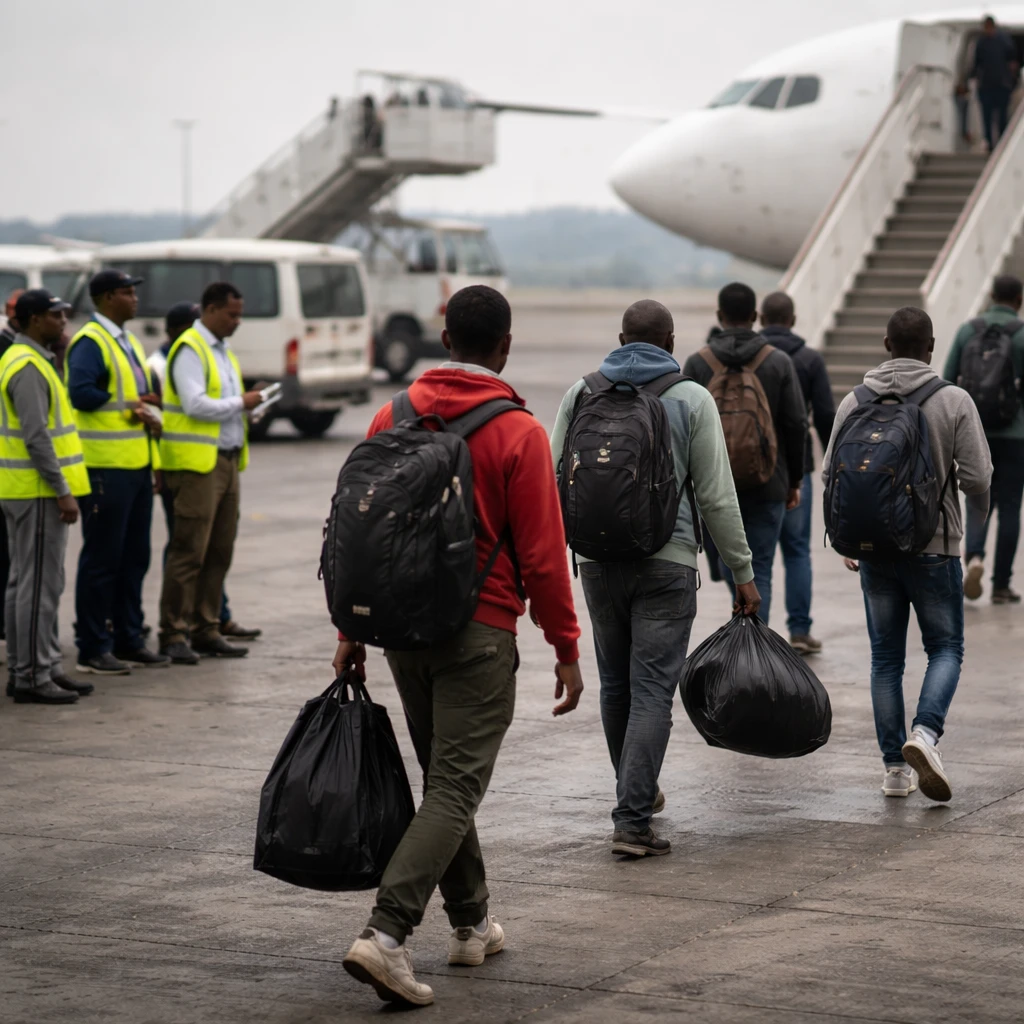
Kinshasa - Congolese authorities and migrants in the capital said on Friday that nine of the 15 people deported from the United States to the Democratic Republic of Congo in April have since returned to their home countries.
The group of 15 arrived in Kinshasa on April 17 under a bilateral arrangement with the Trump administration that had been announced two weeks earlier. The agreement was described as one to accept third-country deportees from the United States.
In a statement issued on Friday, the Congolese government said that "more than half" of the migrants had subsequently gone back to their countries and that the remaining individuals would return "shortly".
A migrant from Colombia who remains in Kinshasa, speaking alongside her lawyer, said that nine migrants had left Congo. According to the migrant and her counsel, those who departed included four Peruvians and five Colombians. The group still in Kinshasa was reported to include three Colombians and three Ecuadorians.
The Congolese government did not indicate whether the departures were voluntary. The Colombian migrant said that seven of the nine returned with assistance from the International Organization for Migration, a United Nations agency, while two of the nine left on their own.
Earlier reporting indicated that several members of the group had been granted legal protection in the United States, with judges finding they were more likely than not to face persecution if returned. It could not be independently verified whether any of the nine who have left Congo held such protections.
Deportation agreements similar to the one that resulted in this transfer have prompted criticism from legal experts and rights groups, who have questioned the legal basis for transfers and raised concerns about the treatment of people sent to countries where they are not nationals.
What is known and what is uncertain
The known facts are that 15 migrants arrived in Kinshasa on April 17 under a U.S.-Congo agreement to accept third-country deportees; that more than half have since departed; and that those departures included four Peruvians and five Colombians, according to a migrant in Kinshasa and her lawyer. What remains unclear is whether the returns were voluntary in all cases and whether any of those who left had previously been granted legal protections in the United States.
The international organization that reportedly assisted seven of the returnees was named by the migrant as the International Organization for Migration. Beyond the counts and nationalities provided, details about the timing of the returns and the status of the individuals are limited.
Implications
The case highlights ongoing questions about the handling of deportations involving third-country nationals, the role of international agencies in assisting movement, and the legal safeguards available to migrants. Observers have noted that similar arrangements have raised legal and humanitarian concerns, particularly where individuals face the prospect of being sent to places in which they are not nationals.