
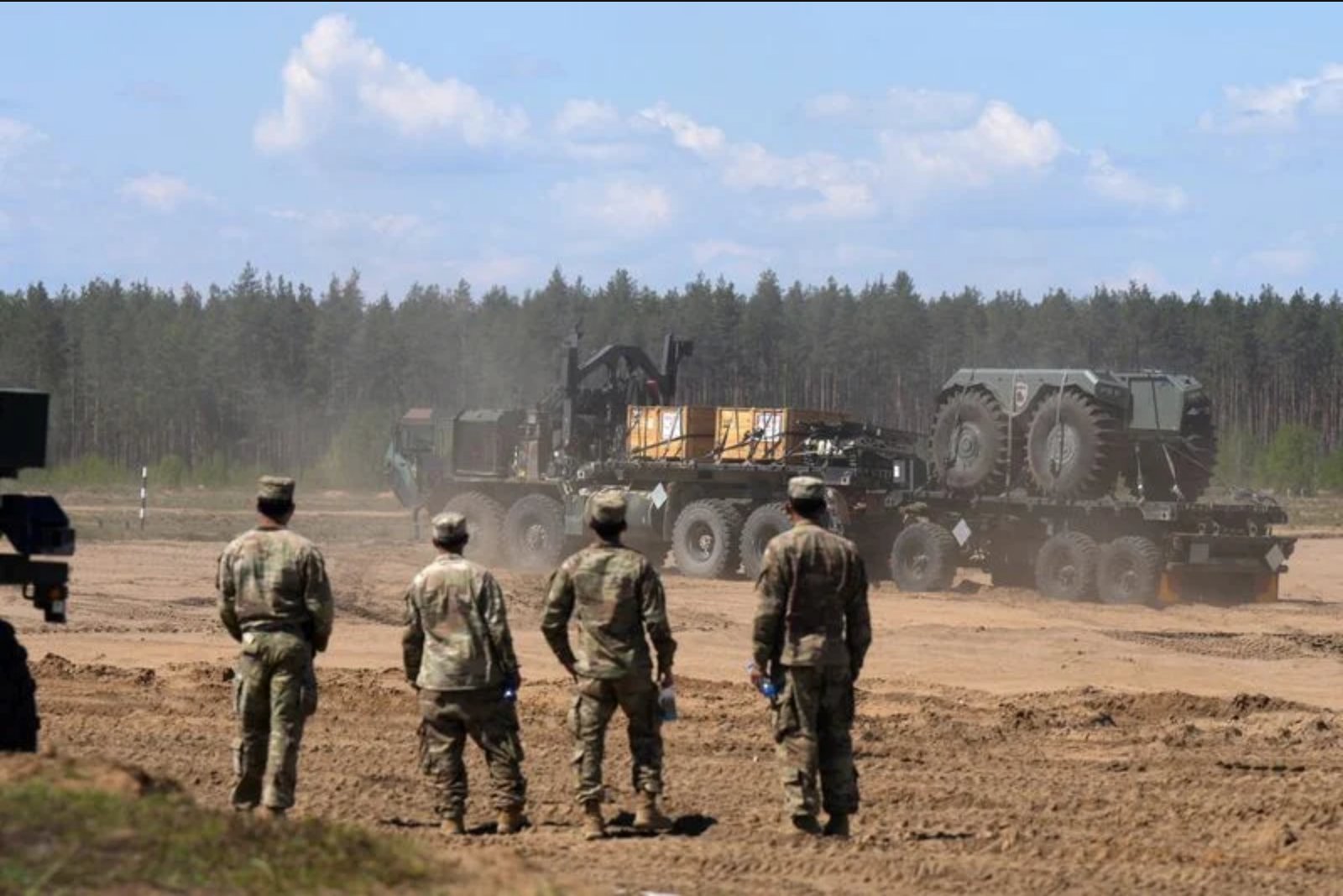
Lithuania's defence minister has confirmed that the planned arrival of the next U.S. military rotation to the country is being re-examined, with Washington yet to fix the timing, force size or specific capabilities of the contingent.
Speaking to reporters in Vilnius on Tuesday, Defence Minister Robertas Kaunas said U.S. troops currently stationed in Lithuania are departing as expected, but the next scheduled rotation has not arrived.
"(The next) rotation is currently under review... because the number of (U.S. troops) in Europe is changing, this naturally leads to a review of regional stance," Kaunas said, describing ongoing adjustments to U.S. force posture across the continent.
The minister said he raised the issue in discussions with U.S. Defense Secretary Pete Hegseth at the Shangri-La Dialogue conference in Singapore last week. Kaunas reported receiving assurances that a rotation for Lithuania will take place, but added that "when exactly, and with which capabilities, and at what size - this is due to be announced."
Kaunas warned the current pause in the scheduled rotation could mean Lithuania will be without an armored U.S. battalion of roughly 1,000 troops on its territory for the first time since 2020. He also said he had been reassured by U.S. officials that the Baltic region remains a priority for NATO and the United States.
"We were reassured that the Baltic region is of critical importance to NATO and the U.S., they see our investment, and our defence spending is shown as an example to other allies," Kaunas said, highlighting Lithuania's increased defence commitments.
Lithuania has significantly increased its defence spending since 2022 and is expected to allocate 5.4% of gross domestic product to defence this year, the minister noted.
The broader U.S. adjustments in Europe come as Washington is withdrawing thousands of troops based in Germany and Poland as tensions widen between the administration of President Donald Trump and NATO allies and partners in Europe over the Iran war. Those movements have prompted allied capitals to reassess regional force postures.
The current U.S. rotation in Lithuania arrived in October 2025 and comprised two battalions from the Texas-based 1st Cavalry Division. The deployed units brought Abrams tanks, Bradley armored vehicles and Paladin tracked self-propelled howitzers, according to the Lithuanian defence ministry. These forces were the first to occupy the permanent facilities Lithuania constructed at the Pabrade military base near the Belarus border.
Context and next steps
Kaunas said further details on the next rotation - including timing, exact troop numbers and capabilities - are expected to be announced by U.S. authorities. Until then, Lithuania faces a temporary gap in having an armored U.S. battalion on its soil.