
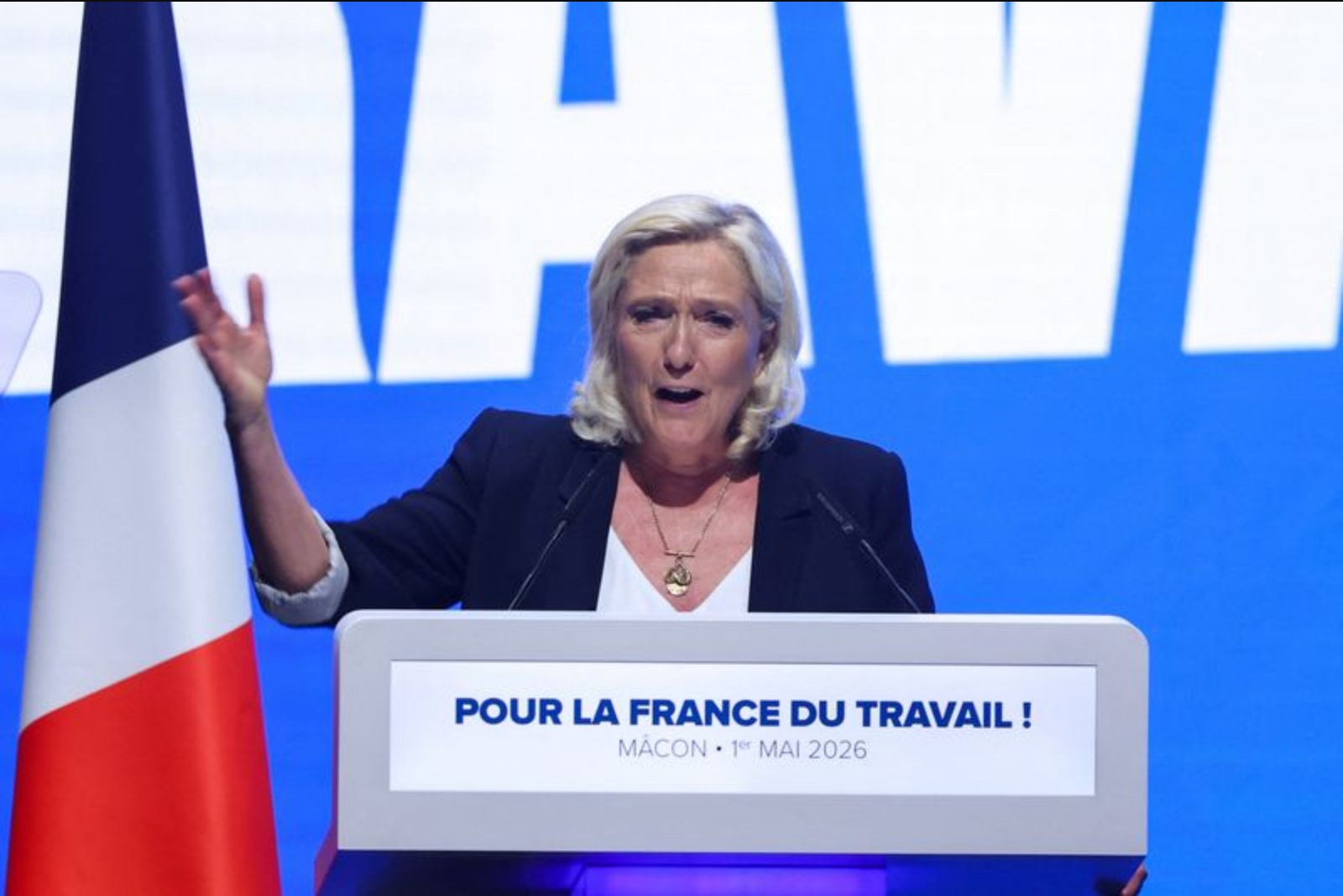
HELSINGBORG, Sweden, May 22 - Marine Le Pen, the leader of France's far-right National Rally, said on Friday she would remove France from NATO's integrated military command if she becomes president next year. Speaking as NATO ministers convened in Sweden, Le Pen argued that staying in the alliance while exiting its integrated command would preserve interoperability with allies but restore France's autonomy.
Le Pen repeated a long-held argument that participation in NATO's command structure undermines national independence. On BFM TV she said: "We have to withdraw from NATO’s integrated command. We should remain in NATO, but leaving the command does not prevent interoperability with allied forces," and criticised what she described as Europe’s dependence on decisions made in the United States. "In reality we are dependent on the decisions of (U.S. President) Donald Trump which is regrettable," she added.
Her potential candidacy for the 2027 presidential election remains contingent on an appeals court ruling later this year. National Rally currently leads opinion polls about a year before that vote.
France's Foreign Minister Jean-Noel Barrot responded sharply upon arriving at the NATO meeting in Sweden, calling proposals to withdraw from NATO's integrated command "obviously unreasonable and wholly irresponsible." Barrot warned that with Washington reassessing its level of engagement in Europe, it was more important than ever for France and its partners "to assert their vision, develop their capabilities - in short, to Europeanise NATO." He added that some allies, "constantly harassed by Russian aggression," would view such a withdrawal as a betrayal.
NATO’s Integrated Military Command is the alliance’s permanent command system, designed to enable the military forces of its 32 member states to operate quickly as a single force. Debate over France's role in that structure has a long history in Paris, where the notion of "strategic autonomy" has been politically salient.
Past presidents have taken differing approaches to NATO integration. Former President Charles de Gaulle withdrew France from NATO’s integrated command in 1966; that decision was reversed in 2009 under President Nicolas Sarkozy. President Emmanuel Macron has in recent years emphasised that Europe should reduce its reliance on the United States for security and defence.
Within National Rally, positions vary on the tactical approach to NATO. Jordan Bardella, the party’s leader and a potential presidential contender, offered a more cautious stance in March by stating he would not pull France out of the command during wartime.
Diplomats say that any future French leadership inclined to distance Paris from NATO’s command structures would be closely watched in foreign capitals already uneasy about Washington’s long-term commitment to Europe. At the same time, lawmakers across political blocs in France, including members of National Rally, voted in favour this week in the lower house of increased defence spending, reflecting a wider push to bolster the French military as Russia's war in Ukraine continues.
Context and implications
The exchange between Le Pen and Barrot highlights an ongoing tension in French politics between aspirations for strategic autonomy and the practical realities of alliance commitments. The issue surfaced while NATO ministers met in Sweden, a setting that brought allied perspectives into sharper relief.