
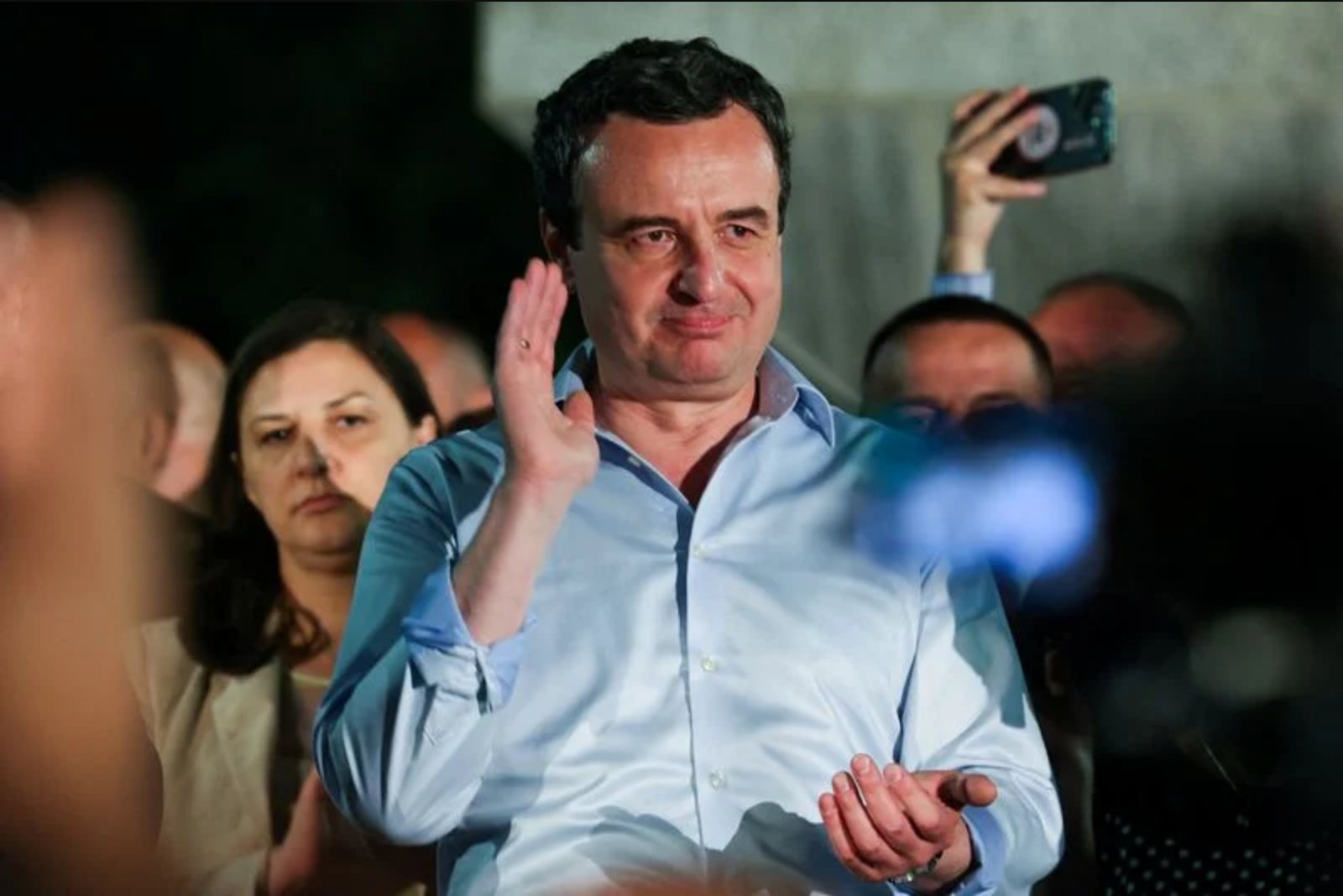
PRISTINA, June 7 - Prime Minister Albin Kurti’s movement emerged as the largest force in Kosovo’s third parliamentary election in 18 months, but it did not achieve the majority needed to conclude the country’s long-running political stalemate.
Official results with 99.4% of ballots tallied placed Kurti’s Vetevendosje party on 43% of the vote. That performance left the party short of the seats required to form a government without partners and to secure the two-thirds parliamentary majority needed to appoint a president.
The Democratic Party of Kosovo was polling at 21%, while the Democratic League of Kosovo stood at 18%, according to the results released. Vetevendosje had previously won 51% in the last election in December, up from 42% in February 2025, but was unable to reach agreement with other parties on a candidate for the largely ceremonial presidency. That impasse prompted parliament’s dissolution in April and the calling of another snap ballot.
Turnout this time was subdued. The election commission reported participation below 37%, down from 45% in December. Voters interviewed at polling sites said they have grown tired of repeated contests and want an end to the political paralysis as well as improvements in living standards commensurate with economic growth.
"The political elite needs to be ready to reach an agreement. There has been a very deep division caused over recent years, and this must come to an end," said Fatos Selimi, an IT worker, after voting in the capital Pristina.
The European Union has urged Kosovo’s politicians to establish robust institutions able to implement the reforms needed for membership. Successive elections have interrupted that process and delayed the flow of EU funds linked to reforms.
Vetevendosje first came to power in 2021 on a platform combining a more nationalist stance with welfare-oriented policies. The party, like all major Kosovo political formations, is pro-Western and opposes further concessions to Serbia, with which relations remain strained.
Election authorities said more than 900 candidates from 17 parties and three coalition groups were contesting seats in the 120-member parliament. The commission also noted that about 2.1 million voters are registered to vote, a figure that exceeds Kosovo’s 1.6 million resident population and reflects a sizeable diaspora mainly based in western Europe that tends to favour Kurti’s party.
Because Vetevendosje does not hold the majority alone, the party faces the practical task of finding coalition partners and negotiating compromises to form a functioning government. It will also need to marshal broader parliamentary support to elect a new president under the two-thirds threshold required by Kosovo’s legislature.
The outcome leaves Kosovo poised for continued negotiations among parties and further uncertainty over when a fully functioning government and a new head of state will be in place. Until that impasse is resolved, reforms tied to EU accession and the associated funds that support them are likely to remain on hold.