
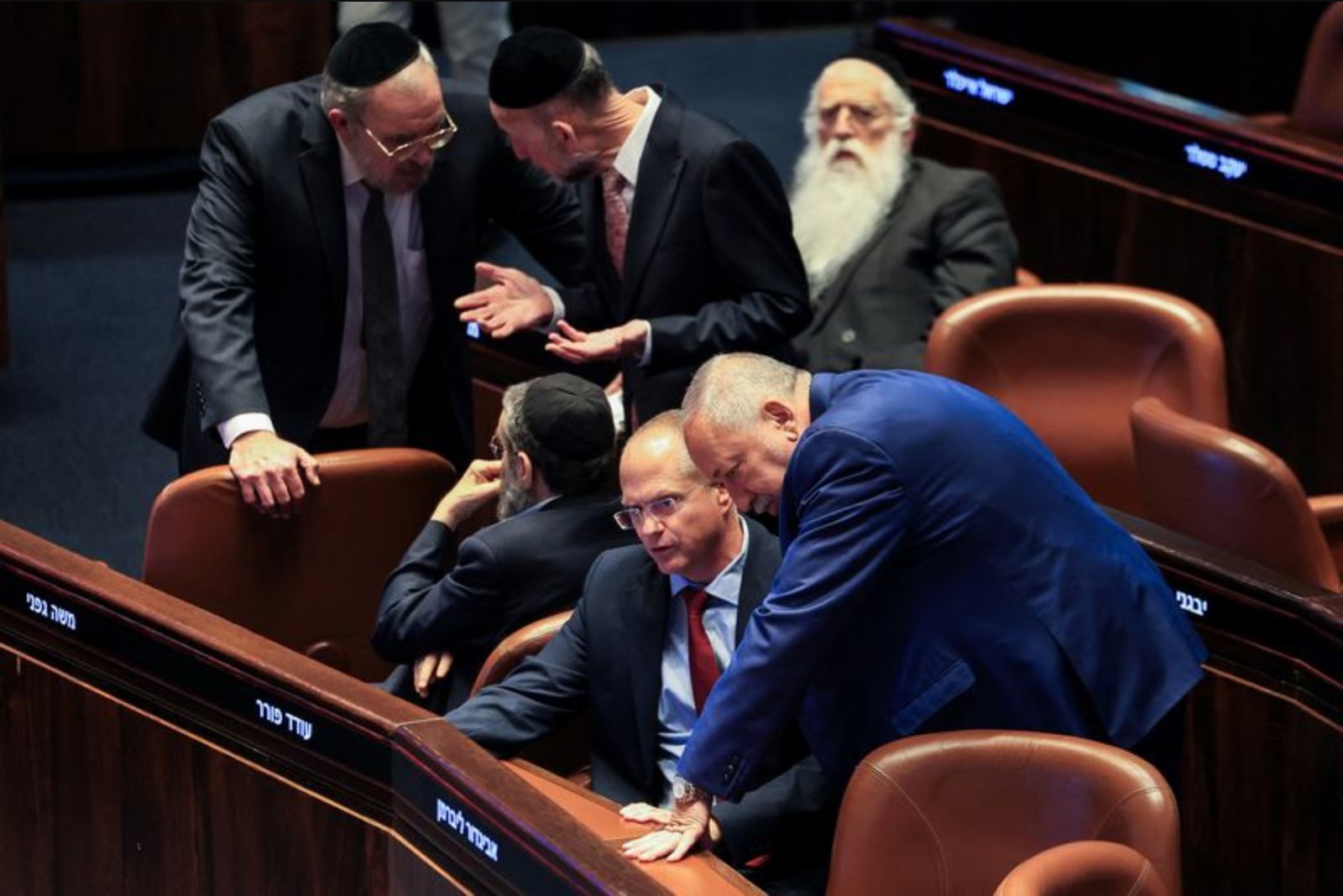
Jerusalem, May 20 - Israel took a concrete step toward an early national election on Wednesday after members of the Knesset voted in a preliminary reading to dissolve parliament. The vote was nearly unanimous in favour of initiating the process to disband the 120-seat legislature.
In the preliminary reading, roughly 110 members cast votes supporting the bill to dissolve the Knesset, with no recorded opponents or abstentions. The measure will now move to committee where participating lawmakers and officials agree a candidate election date, before returning to the full Knesset for final approval. If the bill clears the remaining stages, Israel could hold a national ballot several weeks before an October 27 deadline.
The dissolution bill was submitted by Prime Minister Benjamin Netanyahu's own coalition after a dispute with an ultra-Orthodox faction traditionally aligned with the prime minister. That faction accused Netanyahu of reneging on a commitment to pass legislation that would grant their community an exemption from mandatory military service, a core demand that compelled the coalition to press for early elections.
Opinion polling conducted since the October 7, 2023 Hamas attacks has consistently shown Netanyahu's governing coalition performing far short of a parliamentary majority. Recent polls indicate that in a head-to-head national vote Netanyahu would be trailing, making the potential election a critical moment for the long-serving prime minister who heads the most right-wing government in Israel's history.
The snap-election possibility unfolds against a backdrop of active security tensions. Israel remains engaged in conflicts with Hamas in Gaza and faces volatile fronts involving Hezbollah in Lebanon and Iran. Those security dynamics are likely to form part of the political context leading up to any election.
Netanyahu also continues to confront a prolonged corruption trial. Israel's President Isaac Herzog is mediating talks that could result in a plea agreement; such a deal might include Netanyahu stepping away from politics as part of the terms, according to the descriptions of the ongoing negotiations. Separately, the prime minister's health has been recently disclosed by his office: he underwent successful treatment for prostate cancer and in 2023 had a pacemaker fitted.
There remains a possibility that opposition parties will not be able to assemble a governing coalition after an election, which could leave Netanyahu leading an interim government until the impasse is resolved. The final timing and political consequences depend on the committee discussions, the Knesset's final approval, and the evolving security and legal environment.
Contextual summary
- The Knesset voted in a preliminary reading to dissolve parliament, with roughly 110 members supporting the bill and no recorded opposition or abstentions.
- The bill was initiated by Netanyahu's coalition following pressure from an ultra-Orthodox faction over a promised military service exemption.
- Israel faces active security tensions in Gaza, Lebanon and with Iran, and Netanyahu is contending with an ongoing corruption trial and recent health disclosures.