
World May 23, 2026 08:29 AM

King Gives Mette Frederiksen Another Opportunity to Form Government After Centre-Right Talks Collapse

Caretaker premier faces renewed challenge to assemble a coalition as centre-right negotiations led by Troels Lund Poulsen fail

By Leila Farooq

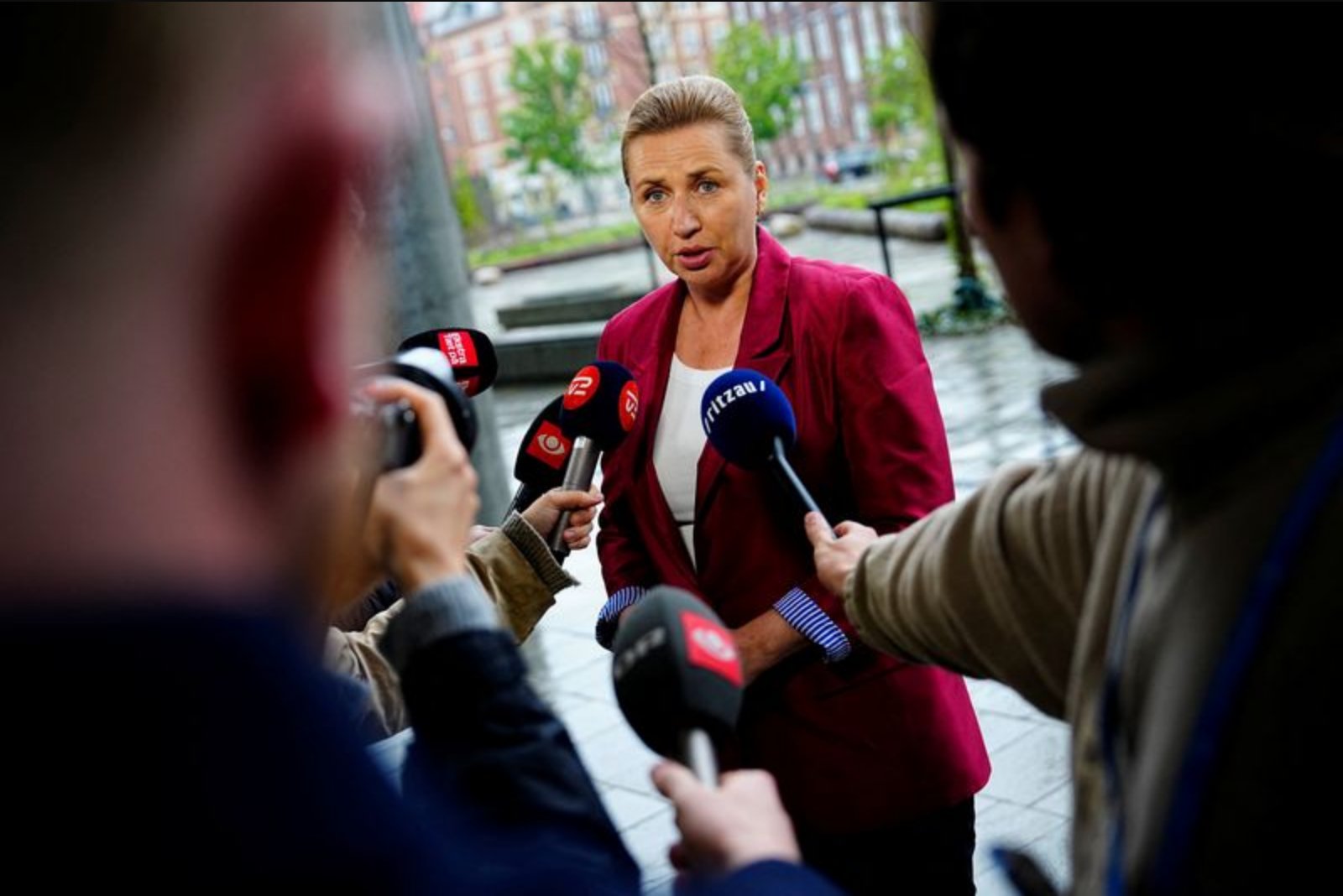
Denmark's King Frederik on May 23 asked caretaker Prime Minister Mette Frederiksen to make a fresh attempt to form a government after talks led by Defence Minister Troels Lund Poulsen collapsed. Frederiksen's Social Democrats remain the largest party but suffered heavy seat losses in the March election. With parliament divided among 12 parties, Frederiksen will likely need support from the centrist Moderate Party and may face pressure to make concessions to secure a coalition.

King Gives Mette Frederiksen Another Opportunity to Form Government After Centre-Right Talks Collapse

Key Points

  • King Frederik has asked caretaker Prime Minister Mette Frederiksen to make a new attempt to form a government after centre-right talks failed - (impacts: public sector and political stability).
  • The Social Democrats remain the largest party with 38 seats, down from 50 in 2022, leaving parliament fragmented among 12 parties - (impacts: legislative process and market confidence in political stability).
  • Frederiksen is likely under pressure to make concessions to Moderate Party leader Lars Loke Rasmussen, whose support is seen as pivotal - (impacts: potential policy compromises affecting government direction).

COPENHAGEN, May 23 - King Frederik has asked caretaker Prime Minister Mette Frederiksen to try again to form a government after negotiations led by Defence Minister Troels Lund Poulsen failed to produce a coalition agreement.

The talks, which were led by Poulsen - who heads the right-wing Liberal Party - broke down after efforts to assemble a centre-right alternative did not succeed. Poulsen had been tasked earlier this month with exploring government options following the collapse of Frederiksen's own coalition discussions when the centrist Moderate Party withdrew its participation.

Frederiksen's Social Democrats remain Denmark's largest party despite heavy losses at the ballot box. In the March election the party won 38 seats in the 179-seat parliament, a decline from 50 seats in 2022 and the party's worst showing since 1903. The election left the Folketing split among 12 parties, complicating the path to a stable majority.

Observers expect Frederiksen to encounter pressure to yield on policy or personnel to win backing from Moderate Party leader Lars Loke Rasmussen, whose support is widely viewed as pivotal in the fractured post-election landscape. The exact terms of any concessions are not detailed in the available information.

The drawn-out negotiations have already had practical effects. Government decision-making has been slowed at a sensitive moment, according to the facts presented, while Denmark seeks to address a diplomatic crisis with the administration of U.S. President Donald Trump over Greenland. The timeframe for resolving that dispute and other matters has been affected by the absence of a settled government.

With the king's renewed invitation, Frederiksen now has another opportunity to attempt to stitch together a governing majority. How she proceeds and what compromises she may offer to pivotal centrist actors will determine whether a third consecutive term in office is achievable under the country’s current parliamentary arithmetic.


Context and next steps

  • King Frederik formally asked the caretaker prime minister to resume efforts to form a government on May 23.
  • Troels Lund Poulsen, leader of the Liberal Party, led centre-right talks that ultimately broke down.
  • The Social Democrats hold 38 of 179 seats after losses in the March election; parliament is divided among 12 parties.

Risks

  • Persistent parliamentary fragmentation could prolong negotiations and keep decision-making constrained - this may affect government operations and policy implementation.
  • The need for concessions to secure support from key centrist parties could limit the incoming government's policy flexibility and slow reforms.
  • Protracted coalition talks are occurring while Denmark seeks to resolve a diplomatic crisis with the U.S. administration over Greenland, potentially complicating foreign policy responses.

More from World

Zelenskiy Invites Putin to Direct Talks in Open Letter, Proposes Ceasefire During Negotiations Jun 4, 2026 Zelenskyy Calls for Direct Talks With Putin, Offering Ceasefire During Negotiations Jun 4, 2026 Putin Says Russia Will Prevail if Needed, But Offers Diplomacy Backed by Unspecified Compromises Jun 4, 2026 Steering Board Fails to Name Successor to Bosnia’s High Representative Jun 4, 2026 Why U.S.-Brokered Truces Have Not Halted Fighting Across the Middle East Jun 4, 2026