
World May 28, 2026 01:43 PM

Japan Rebukes Russia’s Critique of Its Defense Buildup as ‘Ridiculous’

Tokyo rejects Moscow’s charge that remilitarization in Japan threatens global security while highlighting Russia’s actions in Ukraine

By Nina Shah

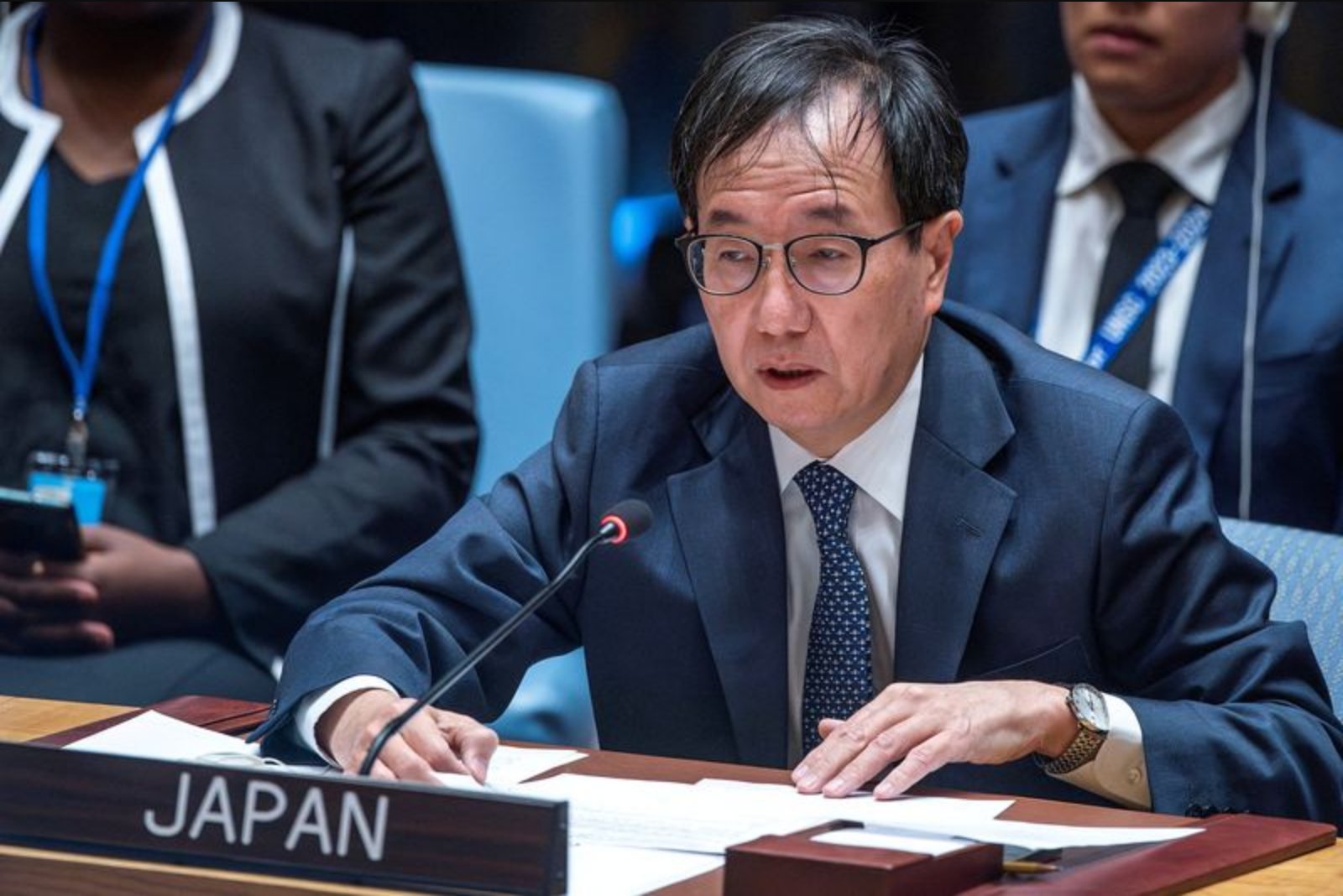
Japan’s U.N. ambassador dismissed Russian criticism of Japan’s expanding defense capabilities as 'ridiculous,' arguing that Tokyo’s measures respond to a deteriorating security environment and are consistent with a constitutionally defense-oriented posture. The rebuke came after Russia said remilitarization in Germany and Japan undermined the post-World War Two order amid Moscow’s ongoing military action in Ukraine.

Japan Rebukes Russia’s Critique of Its Defense Buildup as ‘Ridiculous’

Key Points

  • Japan’s U.N. ambassador labeled Russian criticism of Japan’s defense buildup as "ridiculous," citing Russia’s ongoing military action in Ukraine as a violation of the U.N. Charter.
  • Russia’s U.N. ambassador argued that remilitarization in Germany and Japan threatens global security and counteracts results of World War Two.
  • Japan says its stronger defense posture responds to a worsening security environment, maintains an exclusively defense-oriented constitutional policy, and is not aimed at any specific country.
  • Germany also pushed back against Russia’s accusations, with a German official calling them unjustified; both Germany and Japan are expanding their forces in response to regional security concerns.

Japan’s ambassador to the United Nations on Thursday forcefully rejected Russian condemnation of Tokyo’s efforts to strengthen its military, calling Moscow’s remarks "ridiculous" at a time when Russia continues military operations in Ukraine that Tokyo says violate the U.N. Charter.

The exchange followed comments made on Tuesday by Russia’s U.N. ambassador, Vassily Nebenzia, who told the opening session of a U.N. Security Council meeting focused on upholding the U.N. charter and enhancing multilateral cooperation that remilitarization in Germany and Japan posed a grave threat to global security and was reversing the outcomes of World War Two.

In response, Japan’s envoy emphasized Tokyo’s adherence to international law and the U.N. Charter, contrasting that record with what he described as Russia’s continuing aggression against Ukraine in breach of the same charter. Japan framed its defense measures as reactive and defensive in nature, not targeted at any single country.

"Japan’s efforts to strengthen its defense capabilities are a response to an increasingly severe security environment and are not directed against any specific country," the ambassador said, reiterating Japan’s long-stated constitutional commitment to an exclusively defense-oriented policy. He further said that it was absurd for Russia to label Japan’s posture as militaristic, particularly from the perspective of a state that is continuing military action in violation of the U.N. Charter.

The same Security Council session saw Germany’s minister of state for Europe, Gunther Krichbaum, characterize Nebenzia’s remarks as "unjustified accusations." Germany, like Japan, has announced plans for a significant expansion of its armed forces in the aftermath of Russia’s invasion of Ukraine.

Japan has moved away from some postwar pacifist constraints and is undertaking what officials describe as the largest military buildup since World War Two, a process officials link to concerns about China’s growing power. The government frames this buildup as a defensive response to changing regional dynamics rather than an aggressive rearmament aimed at other nations.

The U.N. Security Council exchange underscored sharply divergent views among member states about the causes and character of recent defense expansions in Europe and Asia. Tokyo and Berlin maintain their actions are defensive and intended to preserve peace and deter conflict, while Moscow portrayed them as destabilizing steps that, in its view, undo the postwar settlement.

Risks

  • Persistent diplomatic friction at the U.N. over differing interpretations of defense build-ups could complicate multilateral efforts to address security challenges - this may affect defense and diplomatic engagement planning.
  • Ongoing military action by Russia in Ukraine, cited by Japan in its rebuttal, sustains tensions that could influence regional security calculations and defense policy decisions.
  • Divergent narratives between Moscow and Western-aligned states about remilitarization could hinder consensus in international bodies, potentially affecting coordination on global security initiatives.

More from World

Zelenskiy Invites Putin to Direct Talks in Open Letter, Proposes Ceasefire During Negotiations Jun 4, 2026 Zelenskyy Calls for Direct Talks With Putin, Offering Ceasefire During Negotiations Jun 4, 2026 Putin Says Russia Will Prevail if Needed, But Offers Diplomacy Backed by Unspecified Compromises Jun 4, 2026 Steering Board Fails to Name Successor to Bosnia’s High Representative Jun 4, 2026 Why U.S.-Brokered Truces Have Not Halted Fighting Across the Middle East Jun 4, 2026