
Overview
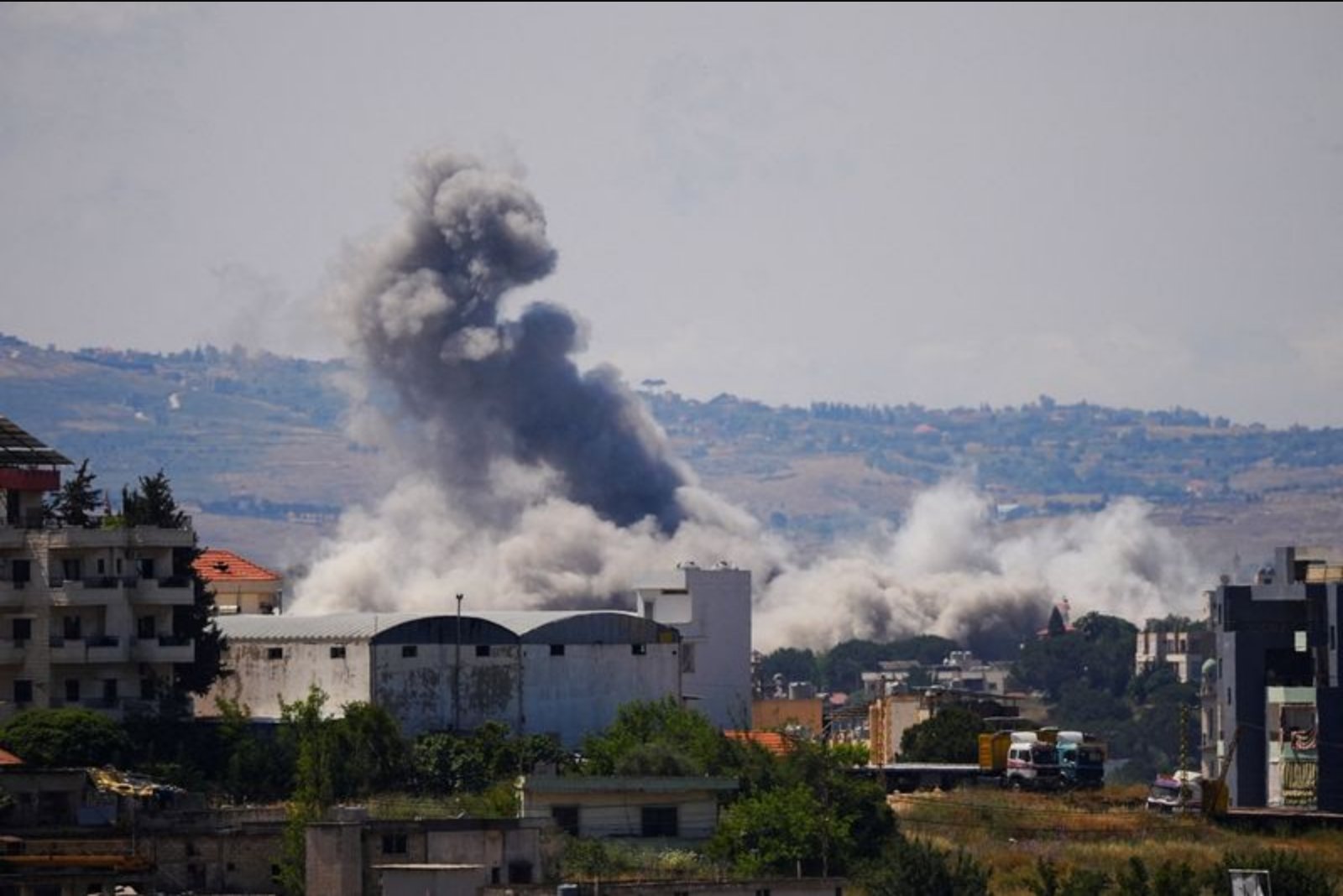
The pause in open hostilities agreed on April 16 has not produced safety for civilians in southern Lebanon. Instead, a combination of ground occupation, large-scale demolition, near-daily air strikes and successive evacuation orders has uprooted hundreds of thousands of residents, stretching far beyond the initial front lines identified by Israeli forces.
Extent of evacuations and strikes
Immediately after the truce was announced, Israeli authorities made public a map delineating a buffer zone of nearly 600 square kilometres that its ground forces had occupied and named 57 towns and villages where residents were warned to evacuate. In the weeks since, military action has not been limited to that occupied footprint. Hundreds of air strikes have been reported over a broader geographic area, and the military has issued evacuation orders for more than 100 additional towns and villages. In aggregate, the occupied zone together with the expanded set of evacuation notices covers roughly 2,000 square kilometres, or about one-fifth of Lebanon’s territory, creating a large region effectively off-limits to most residents.
That assessment rests on a review of Israeli statements and on interviews with municipal officials, aid workers and people forced from their homes. The scale of displacement that has followed the ceasefire provides one of the clearest accounts yet of the crisis engulfing communities along Lebanon’s southern and coastal belts.
Origins of the recent escalation
Hostilities that produced the current displacement crisis escalated on March 2 when Hezbollah fired rockets into northern Israel in apparent solidarity with Iran, which was then the target of strikes by Israel and the United States. Israel responded with a ground invasion of southern Lebanon, beginning a new phase of combat that the Lebanese government says has killed more than 3,000 people and displaced hundreds of thousands of civilians.
Israeli officials describe their operations as part of a broader strategy to push back against what they call threats from Iran and its proxy forces across the region, including the creation of buffer zones along its borders with Gaza, Syria and now Lebanon. Prime Minister Benjamin Netanyahu stated on March 31 that the intended area of occupation in Lebanon would reach to the Litani River, roughly 30 km north of the Israeli border, framing it as a large protective zone against anti-tank fire and potential incursions. By the time the truce was declared on April 16, Israeli ground forces had occupied about half of the territory Netanyahu envisaged.
Displacement beyond the Litani and continuing attacks
In the period following the ceasefire, air strikes and evacuation notices have driven residents from areas both south and north of the Litani River, with only around half of the towns subject to evacuation orders located south of the river. Some of the places targeted by evacuation notices lie more than 20 km north of the Litani, underscoring how the area from which civilians have fled extends well beyond the original occupation zone.
On May 12, the Israeli military reported that it had struck more than 1,100 targets since the truce, citing weapons warehouses, launchers and sites where it said Hezbollah was operating. An independent examination of open reports published by Lebanon’s state news agency located the positions of over 300 of those strikes during the first month after the ceasefire, highlighting the breadth of the aerial campaign.
Satellite-derived nighttime lights data also indicate a pronounced fall in activity across southern Lebanon. An analysis of VIIRS sensor data carried out by Professor Hadi Jaafar of the American University of Beirut found significant reductions in light emissions throughout the south since the fighting began. The dimming persisted in many areas through the ceasefire period, a strong signal that many displaced residents have not returned to their homes.
Official positions and ongoing exchanges
The Israel Defense Forces say the air campaign in Lebanon since the truce is aimed at eliminating threats posed by Hezbollah and is not intended to displace civilians. The military has characterised evacuation notices as recommendations issued in advance of strikes, designed to allow civilians to leave if they choose. It has maintained that southern Lebanon remains an active combat zone where Israeli troops continue to confront what it calls terrorist elements on a daily basis.
Hezbollah, a Shi’ite political and military movement, has continued to carry out attacks, including kamikaze drone strikes, during the period of the truce. The group has said it retains the right to resist what it describes as ongoing Israeli aggression and has denied accusations that it embeds military assets in civilian areas. Hezbollah’s media office did not provide comment for this report.
Demolitions and the erasure of villages
In the roughly 600 square kilometre corridor that Israeli ground forces occupied before the truce, bulldozers and explosives have been used to raze structures, effectively erasing some villages. Those operations followed a statement by the defence minister on March 31 vowing to destroy "all homes" near the border. In other areas outside the zones of occupation, residents who attempted to return during pauses in fighting were often forced to flee again by renewed evacuation orders and fresh air strikes.
The net effect of occupation, demolition and continued strikes has been to create a large swathe of southern Lebanon where remaining residents are few and where the infrastructure of towns and villages has been heavily damaged or destroyed.
Voices from the evacuated towns
Local leaders and residents describe near-total flight from communities subjected to evacuation orders. Officials in 20 towns and villages that have received such notices estimated pre-conflict populations ranging from a few hundred to several thousand. Most said the share of people still in those places was in the single digits, with the majority having fled northward or to coastal cities such as Tyre and Sidon.
"There is no way we are coming back now," said Iyad Watfi, a mukhtar in Bazouriye, describing a town that once held about 13,000 people and which, he said, had been struck repeatedly by air attacks and evacuation orders since the truce. "Last week, we had 20 buildings destroyed in the town in one night." He said only a tiny minority remained, with most displaced people sheltering in tents farther north.
Ali Nazzal, a mukhtar in Srifa, described his village as virtually deserted. "People’s nerves are shattered. They can’t take it anymore so they left," he said, adding a blunt assessment: "The ceasefire is a lie."
Repeated cycles of flight and attempted return have taken a heavy toll on families. Hawraa Yousef Ghadbouni, 39, recounted fleeing Qlaileh with her husband and three children at the outbreak of the latest round of fighting, sleeping in a car in Sidon. After the ceasefire she and her family returned and found only two rooms of their home still intact amid widespread ruin. Within a day, renewed shelling and air strikes forced them to flee north to Tyre; when Tyre was later bombed, they fled back to Sidon and sought shelter in a school. "We want to return, even if we have to sleep on the ground," she said. "What matters is going back. Life here is not sustainable."
In Bedias, about a half-hour drive north of Qlaileh, Wael al-Amin, a 48-year-old medic, described a moment of personal tragedy on May 10. He was sitting outside his brother’s house with his children when a blast tore through the home. He pulled his eight-year-old son from the rubble, only to learn his brother had been killed in the strike. The scene underlined how civilian life continues to be caught in the crossfire despite the declared truce.
Wider implications and regional dynamics
Israel has framed the expansion of its operations as part of a broader campaign against Iranian-backed proxy forces across the Middle East. Tehran has pressed for a halt to Israeli attacks in Lebanon as a condition in talks aimed at reducing wider regional tensions. The continuing exchanges of strikes and counterstrikes risk complicating those diplomatic tracks and have prompted fresh waves of internal displacement, including movement away from southern suburbs of Beirut toward northern districts as residents seek safety.
The military developments, the expanse of evacuation orders and the persistent dimming of lights across southern towns together paint a picture of a civilian population under sustained pressure to abandon much of southern Lebanon. For many residents, the combination of demolition, repeated strikes and uncertainty over how far a buffer zone might ultimately extend has created a pervasive fear that returning home may be impossible in the foreseeable future.
Humanitarian consequences
The mass displacement of civilians has generated urgent humanitarian needs, from shelter and basic services to medical care for the wounded. Large numbers of displaced families have converged on coastal cities and other locations away from the south, where they increasingly rely on temporary shelters and makeshift arrangements. The persistence of strikes despite the truce has interrupted attempts at recovery and complicated efforts by aid organisations to provide consistent assistance.
Local officials and relief workers point to long-term concerns about the loss of housing stock, the degradation of public infrastructure and the strains on host communities receiving large numbers of displaced people. The satellite evidence of dimmed night-time lights supports the on-the-ground reports that many towns remain largely empty.
Conclusion
More than a month after a U.S.-brokered ceasefire was intended to pause hostilities, the pattern of occupation, demolition, aerial strikes and expanding evacuation orders has left a fifth of Lebanon effectively depopulated. With both sides continuing regular attacks and with strategic aims articulated by Israeli leaders to create buffer zones that could extend northward to the Litani River, the prospects for an early return are uncertain. For many who have fled, returning home will depend on a resolution of military objectives and clear assurances of safety - neither of which is presently guaranteed.