
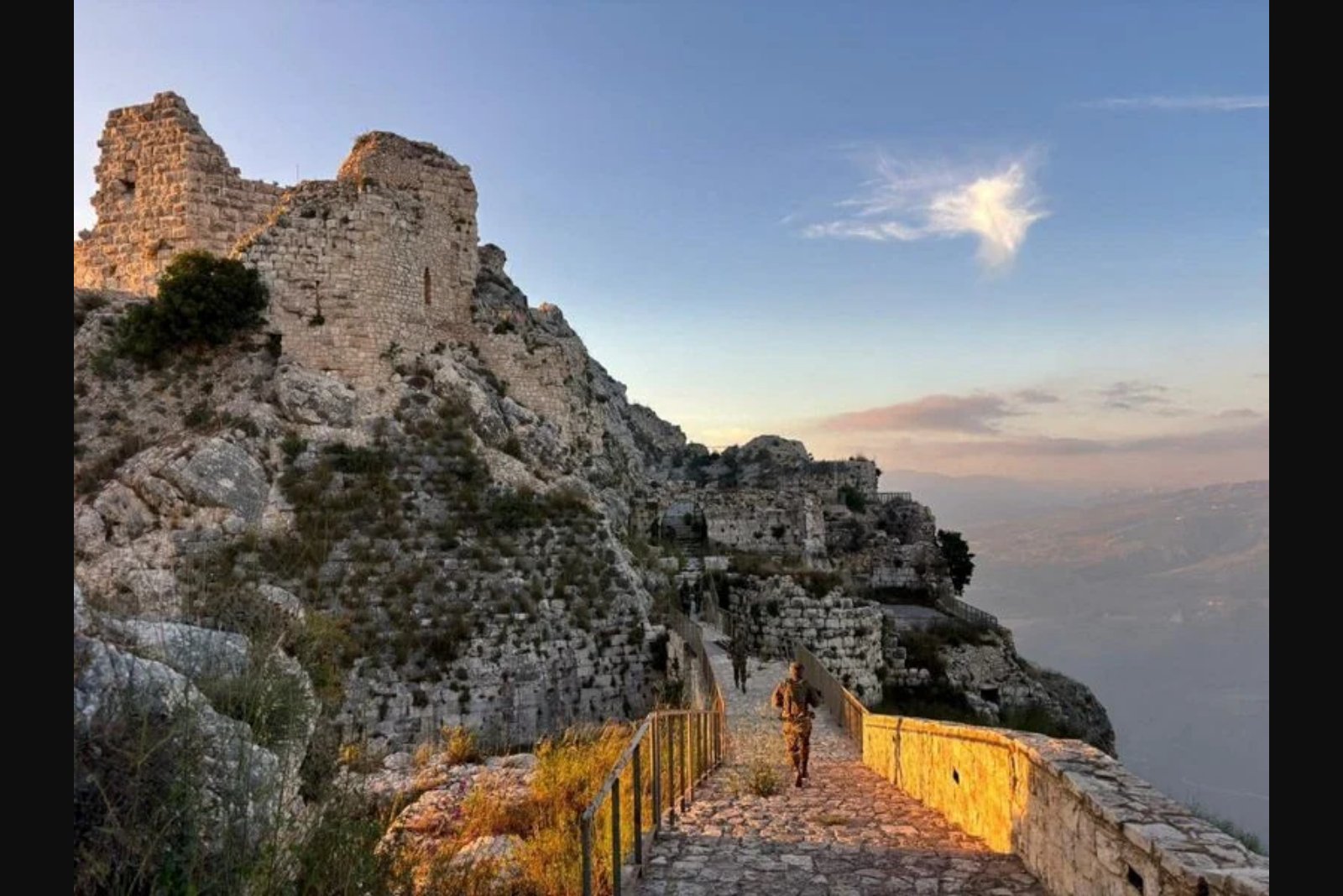
Israeli forces said on Sunday that they have taken control of the 900-year-old Beaufort Castle and the strategic high ridge that surrounds it in southern Lebanon. The military described the operation as a significant tactical gain against the Iran-backed Hezbollah militia, coming despite a ceasefire that was announced more than six weeks ago.
The advance followed a spike in Hezbollah fire on Saturday, which the military described as one of the heaviest days of attacks toward northern Israel since the April ceasefire. Those strikes led to school closures and imposed restrictions in the affected areas as authorities sought to protect civilians.
According to the military, the operation concentrated on securing the Beaufort Ridge and the Wadi al-Saluki area while degrading Hezbollah and its infrastructure on the ridge, which the military said had been established under Iranian direction. The capture of the medieval fortress and the surrounding terrain gives Israeli troops a commanding overlook across large parts of southern Lebanon and northern Israel - positions from which attacks have previously been launched toward Israeli residential areas.
The military said Hezbollah "carried out numerous attacks" from the ridge and that Israeli troops were striking at launch infrastructure in the area, locations from which "hundreds of projectiles were launched toward Israeli civilians and IDF soldiers." The military also reported operations near Nabatieh, which it described as a major Hezbollah stronghold in southern Lebanon.
One Israeli soldier was killed during the operation, the military said. There were no immediate responses from Lebanon or from Hezbollah about the reported capture.
The Israeli military framed the move as part of broader efforts to push the Iran-backed militia away from Israel's northern border. The announcements place the Beaufort Ridge operation within the wider context of the conflict involving Iran: the military noted that Hezbollah entered the U.S.-Israeli war against Iran by firing rockets and drones into Israel on March 2, days after the Iran conflict began. Israeli forces then moved to try to displace the militia from positions used to strike into Israeli territory.
With control of Beaufort Castle and the ridge, Israeli forces now occupy an elevated position previously used to target communities and troops. The military's statements emphasized both the tactical importance of the terrain and the intent to disrupt the launch infrastructure that had been responsible for a high volume of projectiles aimed at civilians and soldiers.
Key points
- Israeli forces captured Beaufort Castle and the surrounding ridge in southern Lebanon, a position used to launch attacks into northern Israel.
- The operation targeted Beaufort Ridge and Wadi al-Saluki to degrade Hezbollah infrastructure established under Iranian direction; one Israeli soldier was killed.
- Military activity also reported near Nabatieh, a major Hezbollah stronghold.
Sectors potentially impacted
- Defense and security - heightened operations and territorial changes can affect defense planning and procurement.
- Regional markets - sustained hostilities and border instability can influence investor sentiment in local markets.
Risks and uncertainties
- Escalation risk - the land advance and recent heavy exchanges highlight a risk that the Israel-Hezbollah front could see further fighting even while a broader ceasefire holds.
- Civilian disruption - recent heavy fire forced school closures and restrictions in northern Israel, indicating ongoing civilian vulnerability to cross-border attacks.
- Unclear responses - there were no immediate public comments from Lebanon or from Hezbollah about the capture, leaving the near-term reaction uncertain.