
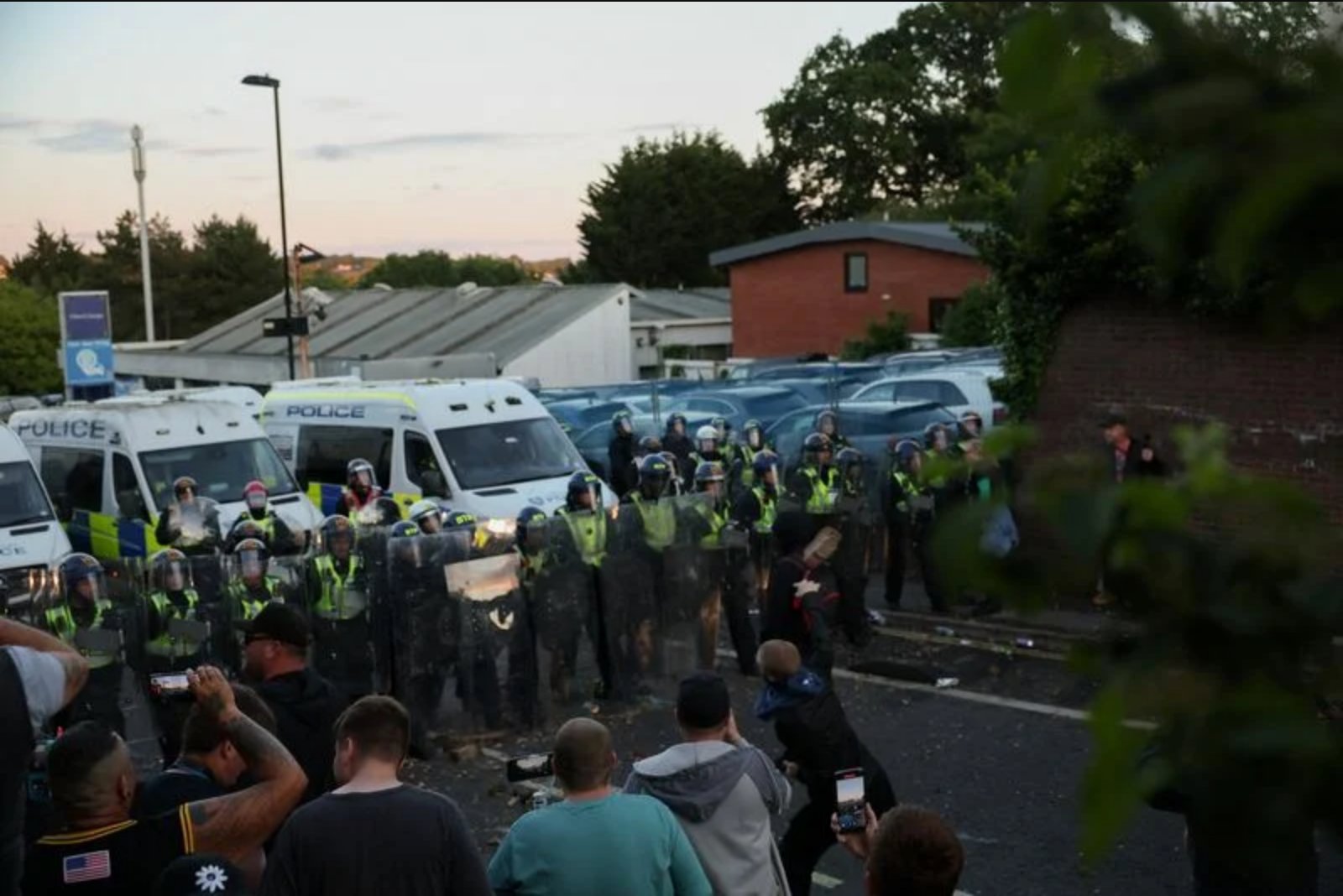
Britain’s interior minister described on Wednesday the outbreaks of violence tied to the killing of an 18-year-old as "completely unacceptable", after clashes between protesters and police in the port city of Southampton and planned demonstrations in London. The unrest followed renewed public scrutiny of the circumstances surrounding the death of student Henry Nowak and the police response captured on body-worn camera footage.
What has happened
Nowak’s death last year has remained prominent in national coverage since the sentencing on Monday of the man convicted of his murder. Footage shown publicly of officers placing the dying teenager in handcuffs has provoked a political debate about whether police actions differ between ethnic groups and prompted protests in multiple locations.
Interior minister Shabana Mahmood said the violent reaction seen in some demonstrations was in no way defensible. "There can be no justification for hijacking this tragedy to stir up violence and disorder," she said after disturbances in Southampton - near where Nowak was killed - during which objects were thrown at officers. Mahmood described the later violence as "disgraceful" and warned those responsible would face legal consequences. Authorities reported two arrests, including one for assaulting an officer.
Official reviews and government stance
The government has welcomed a review of police guidance by the National Police Chiefs' Council. The guidance at issue was drafted in response to documented instances of racism in policing and instructs officers not to be "colour blind" - in other words, to recognise ethnicity in their approach. That language has become a flashpoint in public debate, with critics arguing it creates differential treatment.
Policing minister Sarah Jones, speaking on television, said it was appropriate to reassess the wording of the guidance but cautioned that a review did not mean abandoning the entire framework. "It’s right that it should be reviewed, but I think that shouldn’t be taken to mean we need to rip up the whole system, we don’t," she told Sky News.
The government has denied the existence of a formal "two-tier" policing system - a phrase that has circulated widely on social media as observers debated whether officers treat different ethnicities differently.
Family reaction and medical findings
Nowak’s family sharply criticised how he was treated by police, describing the actions as "inhumane and degrading". Speaking outside court, his father urged that his son’s death not be used to "create further division, hatred or tension".
Court pathologists concluded that Nowak would have died of his injuries at the scene regardless of the emergency response. Body-worn camera footage released in the course of the case shows Nowak on the street saying "I’ve been stabbed" and "I can’t breathe" while officers handcuffed him. In the footage an officer replies, "I don’t think you have, mate." Officers later called an ambulance and performed CPR.
Legal outcomes and personnel action
Vickrum Digwa, 23, was convicted of murdering Nowak. Prosecutors said Digwa lied to police during the incident last December, falsely claiming Nowak had racially abused and assaulted him during a brief street altercation. Digwa was sentenced to life in prison on Monday.
Hampshire Police issued an apology and stated that one officer involved in the arrest had resigned; three other officers are being treated as witnesses as part of the ongoing investigation. An independent inquiry by the Independent Office for Police Conduct is under way to examine how the incident was handled.
Public demonstrations and political reaction
Protests have continued to draw public attention. At one gathering on Tuesday evening, hundreds of people rallied, waving flags and holding placards in tribute to Nowak and calling for unity. Many chanted the phrase "I Can't Breathe" while others displayed messages of solidarity. A further protest was scheduled outside parliament in London at midday (1100 GMT) on Wednesday.
Prominent political figures and public commentators have weighed in. The leader of the Reform Party, Nigel Farage, argued that Nowak’s death indicated preferential treatment for ethnic minorities by police and urged people to respond with what he called "pure cold rage". Silicon Valley entrepreneur Elon Musk, who has posted repeatedly about the case, wrote: "Did you know that official police policy requires them to be racist against Whites?"
Interior minister Mahmood urged restraint and insisted that all individuals are equal before the law while the independent investigation proceeds.
Ongoing uncertainties
The unfolding mix of legal review, public protest and political commentary has left several questions open as investigators assess both the conduct of the officers involved and the wording of national policing guidance. Authorities have signalled internal personnel action and an external inquiry is continuing.