
Overview
The handover of Sarcelles’ town hall to Bassi Konate this spring marked the end of three decades of Socialist administration in the north Paris suburb, and signalled a broader shift in French politics toward the hard-left. Konate, 38, an independent candidate supported by La France Insoumise (LFI), tapped into local roots and a modern campaign apparatus to unseat the long-standing political establishment in a town that has struggled with poverty and demographic change.
Local victory, national implications
Konate, who was raised in Sarcelles’ social housing and is of Malian heritage, mobilised a coalition of supporters that included rappers, soccer personalities and social media influencers to energise young voters through canvassing and online outreach. He framed his victory as an expression of contemporary France’s diversity. "Sarcelles is the most beautiful city in the world because the whole world is truly represented," he said. "The face of the world in France." His success in the town where he grew up illustrates why LFI has become more prominent as France approaches a presidential election that could upend traditional alignments.
As President Emmanuel Macron completes his second and final term, his waning popularity and a sluggish economy have weakened the political centre and opened space for sharper ideological options. LFI leader Jean-Luc Melenchon, aged 74 and seeking the presidency for a fourth time, stands as the hard-left’s primary vehicle. Polls continue to show the far-right National Rally (RN) as the favourite to reach the second round next April, yet analysts and certain surveys indicate Melenchon could also make a run-off if the moderate and centre-right forces remain fragmented.
A May 29 Toluna Harris poll suggested scenarios in which Melenchon reaches a run-off in three out of five hypothetical match-ups. Separate polling on May 26 by Odoxa found Melenchon to be France’s most widely rejected politician, with a 69% rejection rating, but still virtually level with former Prime Minister Edouard Philippe, who is widely viewed as the strongest centrist prospect in the field.
Policy platform and market concerns
Melenchon and LFI have articulated a platform that includes a higher minimum wage, increased taxes on wealth and corporate profits, and price controls. Those proposals have alarmed business leaders and investors concerned about potential effects on corporate profits and market stability. At the same time, LFI’s vocal support for Palestinian causes has provoked accusations of antisemitism, allegations the party rejects, and has heightened tensions in communities across France.
Youth and suburban support
LFI’s message resonates particularly with younger voters and in suburbs with large immigrant populations that feel overlooked by both the RN and centrist figures who, many residents say, have failed to deliver sustained economic improvement. A Cluster17 poll cited in recent reporting found almost half of voters aged 18 to 24 and more than a third of those aged 25 to 34 saying they would vote for Melenchon—a substantial base of potential support as the campaign period opens.
Melenchon is scheduled to launch his campaign next Sunday in Saint-Denis, another economically disadvantaged Paris suburb where LFI mayor Bally Bagayoko recently took office. LFI’s national coordinator, Manuel Bompard, described the party’s constituency as "the forgotten, the despised, the overlooked," pointing to single-parent families and gig-economy workers who often lack the protections of formal employment and unions. Bompard said people support LFI because they feel recognised and are drawn to the party’s proposals on wages, prices and public services.
Sarcelles in focus
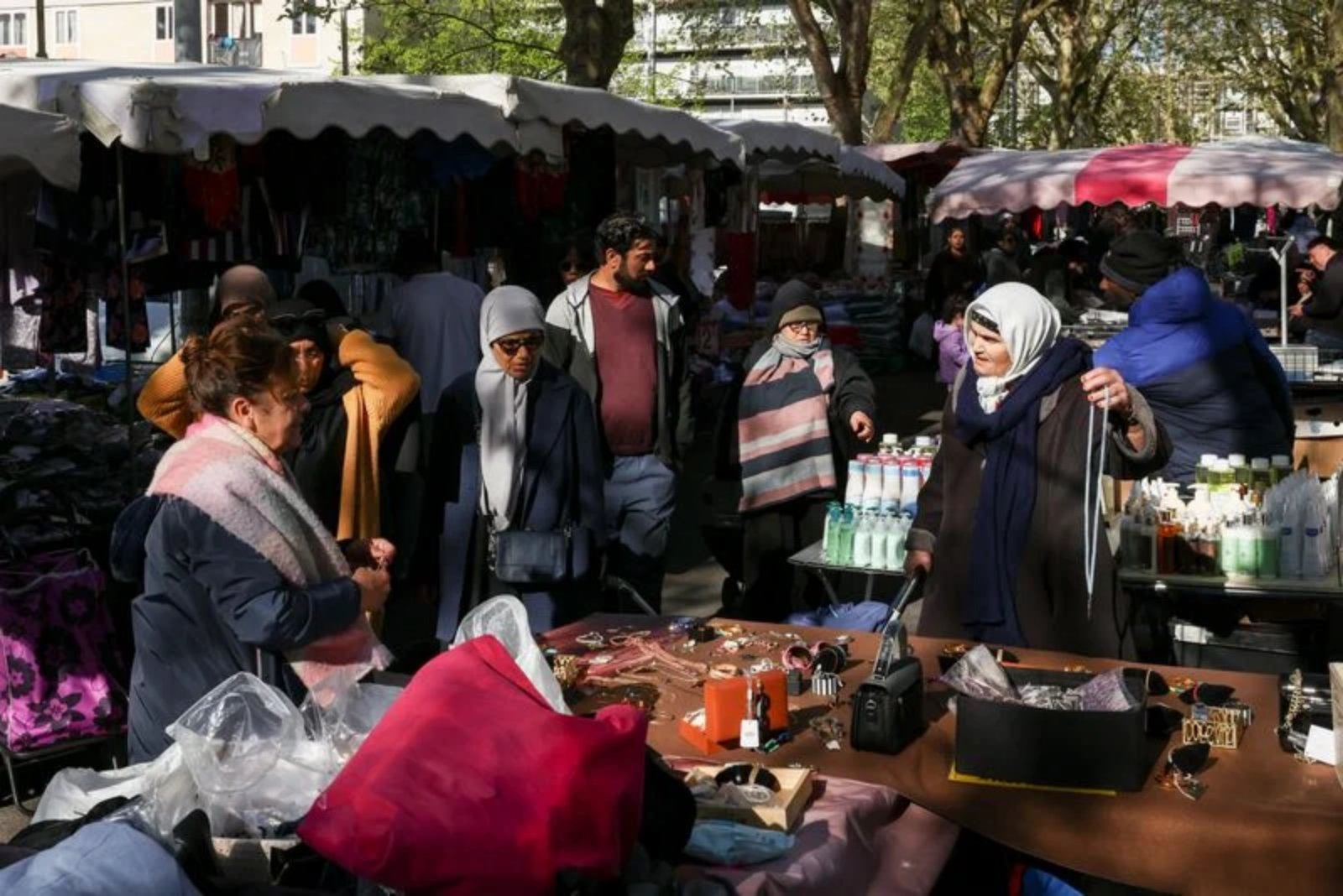
Sarcelles, a town of 60,000 residents that includes roughly 8,000 Jewish inhabitants, is among France’s youngest, poorest and most diverse municipalities. The former Socialist mayor, Patrick Haddad, who was defeated by Konate, characterised France’s electorate as fractured into three blocs: affluent, gentrified cities favoring centrists; rural areas leaning toward the RN; and poorer urban suburbs increasingly supporting LFI.
Local voices underscore both the challenges and the sense of community in Sarcelles. Catherine Elyn, 57, spoke of her 31-year-old pregnant daughter returning to live with her after temporary work failed to cover rent. Walking by a mural that promotes coexistence—bearing an Islamic crescent, a Star of David and a cross—Elyn described widespread financial strain: "The problem is young people no longer have money," she said. "We are afraid of gas and gasoline prices, of using the car. But we still help each other."
Concerns in the Jewish community
Jewish leaders and political adversaries have blamed LFI for contributing to a rise in antisemitic incidents since the Gaza war began in 2023, though reports indicate those incidents have since fallen. Konate acknowledged community unease and said he would work to ensure relations remain stable, noting his own upbringing alongside the local Jewish community. "I grew up alongside the Jewish community, so I will do everything possible to make sure things go well," he said.
Community leader Moise Kahloun said he was trying to remain open-minded and noted that Konate observed Passover at a Sarcelles synagogue, but Kahloun also asserted, "LFI stigmatizes our community." Francois-Xavier Valentin, the right-wing candidate whom Konate defeated, expressed fears that the town’s Jewish population, already reduced by half since the 2000s, might decline further as residents move to Israel or wealthier suburbs. "I understand that in the current context, the Jewish community is worried," he said. "Gaza is a concern." Konate blamed political opponents for stoking tensions.
Electoral strategy and outlook
LFI’s leadership believes it can translate local momentum into national gains by mobilising voters who abstained in previous elections. Manuel Bompard noted the party’s calculation: Melenchon fell roughly 420,000 votes short of a second-round berth in 2022, and LFI is targeting the roughly 26% of voters who abstained in that election in hopes of moving into a run-off against the RN.
Bompard also framed Melenchon’s candidacy as tapping into a wider appetite for more radical options within European politics, and argued that Melenchon’s age could be seen as an assurance he would not be seeking personal career advancement. "His age is a guarantee that he will not betray because he no longer needs to build a career," Bompard said.
Conclusion
Bassi Konate’s victory in Sarcelles encapsulates the blend of local grievances, demographic shifts and targeted outreach that now underpins LFI’s surge. As France moves toward a closely watched presidential contest, the dynamics playing out in poor, diverse suburbs such as Sarcelles will be an important bellwether of whether the party can translate municipal successes into a viable national challenge.