
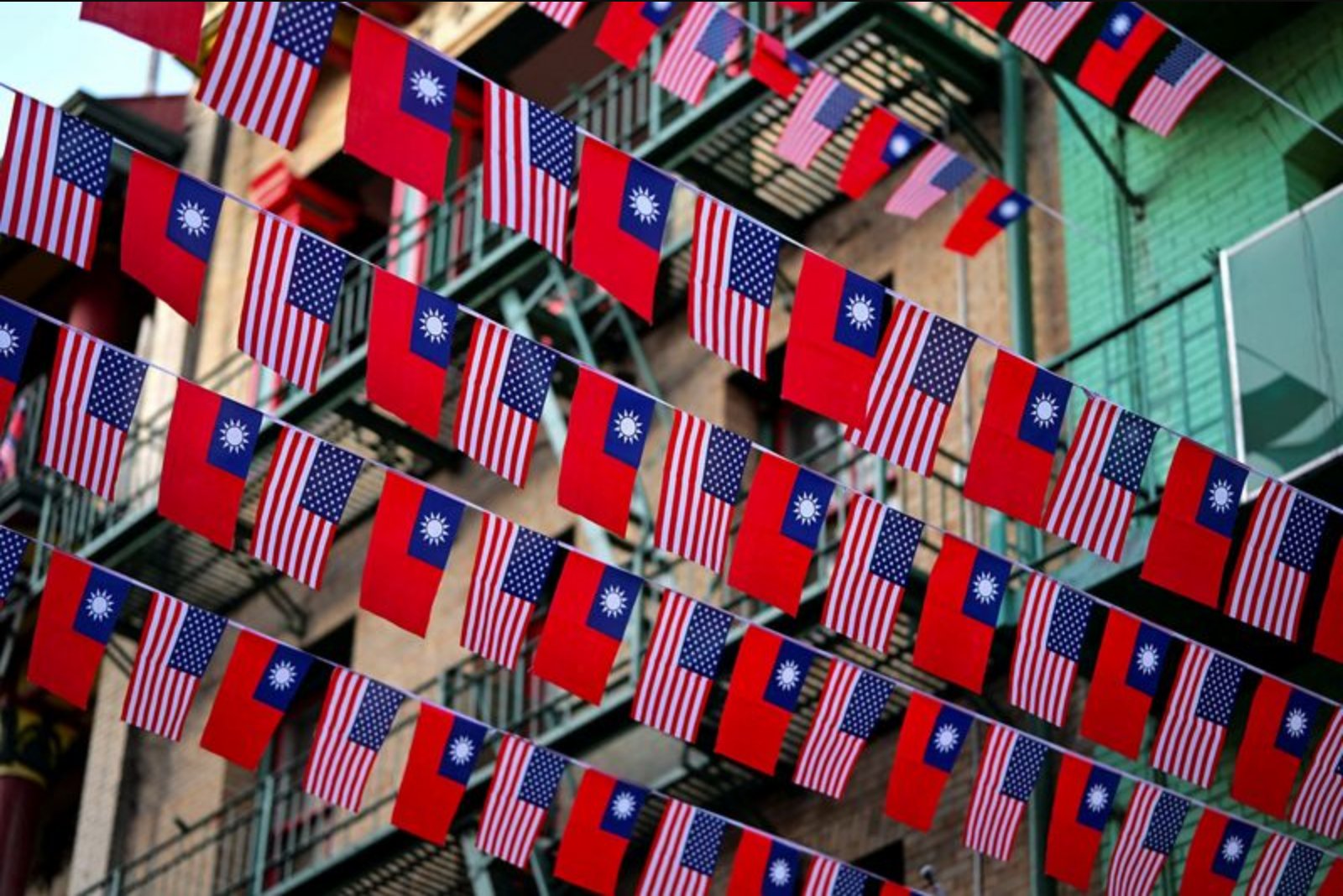
U.S. President Donald Trump on Wednesday said he would speak with Taiwan’s President Lai Ching-te, an announcement that marks an unusually direct public statement about contact between the leader of the United States and the head of government in Taipei. The declaration followed an earlier remark by Trump after meeting Chinese President Xi Jinping, which had prompted questions about whether it was a slip of the tongue; Trump’s confirmation on Wednesday dispelled that uncertainty.
Taiwan’s government indicated it would welcome a call between Lai and Trump, although neither Washington nor Taipei has provided details on when such a conversation might take place. China’s foreign ministry responded on Thursday by urging the United States to "handle the Taiwan issue with extreme caution and stop sending wrong signals to the separatist forces of Taiwan independence," explicitly referencing the possibility of a Trump-Lai call.
Why Beijing sees this as incendiary
At the heart of the Chinese response is Beijing’s consistent framing of Taiwan as its most important and sensitive issue, tied to questions of sovereignty and territorial integrity that it says foreign powers must not challenge. China characterises Taiwan as a legacy issue from the civil war that culminated in 1949 when the Republic of China government relocated to the island after defeat by Mao Zedong’s Communist forces, who established the People’s Republic of China.
According to Chinese statements, Taiwan is a province of China that should not claim statehood, and Beijing has not renounced the use of force to achieve reunification while nonetheless saying it prefers to pursue this outcome peacefully. Officials in Beijing have described Taiwan as the "core of core interests" and a red line that should not be crossed; they routinely criticise high-level foreign engagements with Taipei as interference in China’s internal affairs. In its responses, China also refuses to use the title "president" when referring to Lai.
How China has reacted previously
China has in the past responded to senior-level engagement between foreign officials and Taiwan with military demonstrations. In 2022, major war games took place around the island shortly after a visit to Taipei by then U.S. House Speaker Nancy Pelosi. Beijing has carried out several rounds of exercises in reaction to U.S. engagement with Taiwan, with its most recent large-scale drills near the island occurring in late December of the same year.
Separately, U.S. policy moves have also played into tensions. Earlier in December, the Trump administration approved an $11 billion arms sales package to Taiwan, described in the public record as the largest such package to date. China has repeatedly demanded that the United States end arms sales to Taiwan.
Taiwan’s stance
Taiwan’s government rejects Beijing’s sovereignty claims and affirms its status as a democracy that calls itself the Republic of China, the island’s formal name. Taipei argues it has the right to interact with the international community and to select its own leadership. President Lai has offered talks with Beijing on multiple occasions, but those overtures have not led to talks, and Chinese authorities label him a "separatist."
The U.S. position and legal framework
Since 1979, the United States has maintained unofficial relations with Taiwan after formally switching recognition to Beijing. U.S. obligations to Taiwan are governed in significant part by the Taiwan Relations Act, which commits Washington to provide the island with the means to defend itself. Official U.S. policy maintains no position on Taiwan’s sovereignty under the framework commonly referred to as the One China policy.
In 2022, the U.S. State Department also incorporated language related to the Six Assurances into public statements. These assurances stem from 1982 and were declassified in 2020. They include commitments that the United States has not set a date for ending arms sales to Taiwan, that it has not agreed to consult Beijing in advance on those sales, and that it has not agreed to revise the Taiwan Relations Act. China has regularly demanded that the U.S. discontinue weapons sales to Taiwan.
Past direct engagement by President Trump
President-elect Trump in late 2016 held a brief phone conversation lasting around 10 minutes with then-Taiwan President Tsai Ing-wen. That interaction drew a muted response from Beijing at the time, which issued a diplomatic protest and accused Taiwan of engaging in a "petty action."
What to watch
For now, both Washington and Taipei have provided only limited details about the proposed exchange between their leaders. Taipei has expressed a willingness to proceed, and Beijing has already signalled strong disapproval of the possibility of the call. Observers point to China’s prior use of military exercises in reaction to high-level foreign contacts with Taiwan and to the sensitive diplomatic balance the United States maintains between supporting Taiwan’s defense needs and recognising Beijing diplomatically.
How events unfold will depend on whether the call takes place and on Beijing’s subsequent response, but the situation highlights the enduring fragility of cross-Strait relations and the careful balancing act at the centre of U.S. policy toward Taiwan and China.