
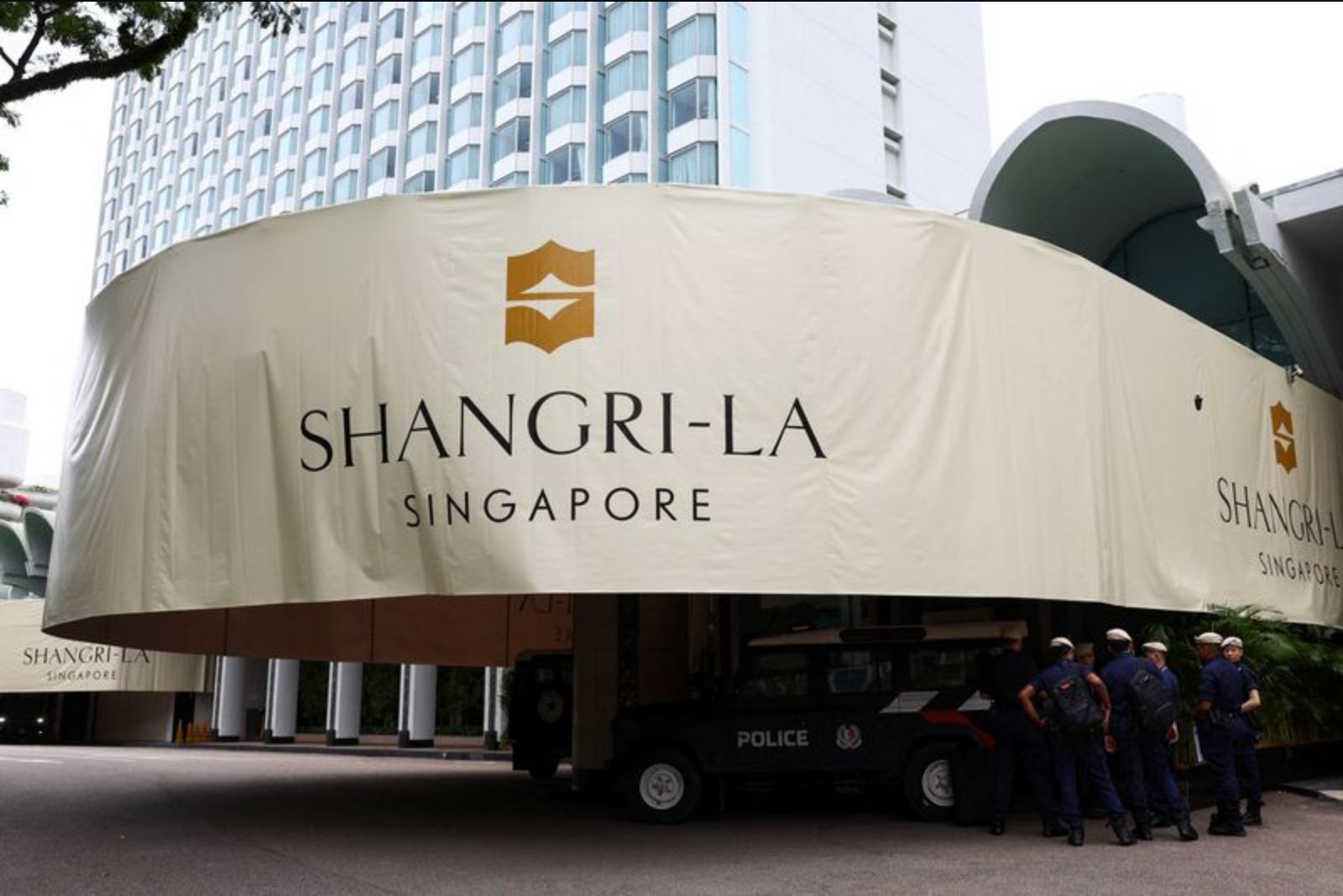
The annual Shangri-La Dialogue, Asia’s leading informal defence forum, opens this week in Singapore with a program likely dominated by discussions of the war in Iran, doubts about U.S. focus in the region, and increasing tensions over Taiwan.
Running from May 29 to 31, the conference brings together a wide mix of defence ministers, senior officers, intelligence officials, diplomats, analysts and weapons industry representatives for formal remarks and candid exchanges behind closed doors. While Vietnam’s President To Lam is scheduled to deliver the Friday night keynote address, much of the attention will be on the U.S. defence secretary when he addresses the gathering amid unsettled efforts to halt the conflict in Iran.
U.S. President Donald Trump indicated on Sunday that he had instructed his negotiators not to hasten into any accord with Iran, as his administration tempered expectations of a swift resolution to the conflict that began three months ago. On his social media account, the president said the U.S. blockade on Iranian shipping in the Strait of Hormuz would "remain in full force and effect until an agreement is reached, certified, and signed." According to the timeline cited by participants, Iran has effectively closed the Strait since the outbreak of hostilities on February 28, disrupting an important route that normally handles roughly a fifth of global oil and gas shipments.
Asian allies and partners are expected to watch the U.S. defence secretary closely for indications about whether Washington is able to sustain attention on Asia, given its involvement in the Middle East and frictions with European partners. Some allied officials are assessing whether U.S. policy is overstretched - a concern linked to troop withdrawals and other decisions that have garnered international attention.
"There will likely be some continued anxiety over the unpredictability and volatility of U.S. policy, and the consequences for stability," said Ian Ja Chong, a political scientist at the National University of Singapore. "The most pressing issue for Asia would be the U.S.-Israel-Iran conflict and its effects on energy supply."
Delegates have cited the Iran war’s disruptive effects on the global economy. A rise in oil prices has increased inflationary pressures and strained supply chains for products ranging from fertiliser to food - impacts that are particularly acute for Asian economies that depend heavily on imports.
China’s representation and Taiwan tensions
One open question for the Dialogue is whether China will return senior defence representation after declining to attend last year. Beijing’s absence in the previous edition left Washington with greater visibility at the forum and prompted criticism from China that the U.S. defence secretary had "vilified" Beijing.
China’s defence ministry has not confirmed whether Defence Minister Dong Jun will attend this year or which other officials might represent Beijing. Reuters’ requests for comment on the ministry’s plans were not answered, according to participant notes and requests for comment documented by delegates.
The U.S. defence secretary’s participation follows a summit earlier this month between President Xi Jinping and President Trump in Beijing. That meeting was followed by a period of heightened pressure around Taiwan, with China intensifying its military presence in the island’s vicinity and Taipei remaining on high alert for further activity. China maintains that Taiwan is part of its territory, a stance that Taiwan’s democratically governed administration rejects.
"In the aftermath of the summit, I suspect he will tread carefully on China," said Bonnie Glaser, head of the Indo-Pacific Program at the German Marshall Fund think-tank, adding that the defence chief may urge allies and partners to raise defence spending.
Observers note that Chinese delegates could face direct questioning on how recent anti-corruption purges among senior officers might be affecting the People’s Liberation Army’s combat readiness. The forum is expected to feature exchanges on how smaller states manage the U.S.-China rivalry, debate over maritime flashpoints in the South China Sea and the Strait of Malacca, and discussions about defence budgets.
Vietnam’s shifting role
President To Lam is anticipated to emphasise Vietnam’s neutral posture as Hanoi continues to deepen relations with both Washington and Beijing while asserting its maritime claims. Having recently assumed the dual roles of Communist Party chief and president, Lam is described by observers as Vietnam’s most powerful leader in decades and is likely to take on a more prominent diplomatic profile during the Dialogue.
Across sessions, defence and diplomatic representatives will probe how geopolitics, military readiness and economic pressures intersect - particularly where energy stability, shipping lanes and defence spending influence regional security calculations.
The Shangri-La Dialogue will therefore serve as a forum for states to test positions, press for assurances and seek clarity on how a protracted Middle East conflict and evolving great-power dynamics might affect security, economic stability and defence planning in Asia.