
Summary of the attack
Russian forces subjected Kyiv and nearby areas to a sustained, hours-long bombardment that Ukrainian officials described as one of the heaviest the city has suffered since the full-scale invasion began. The assault involved hundreds of drones and dozens of missiles and included the reported use of the Oreshnik hypersonic missile in the vicinity of the capital.
The strike and immediate toll
Ukrainian authorities said the overnight barrage killed two people in Kyiv and two more in the surrounding area, and wounded nearly 100. Officials also reported strikes in other regions of the country and two deaths in the southern Kherson region. In the capital, Mayor Vitali Klitschko reported at least two fatalities and 81 wounded, and President Volodymyr Zelenskiy said roughly 30 buildings had been damaged or destroyed.
Local authorities reported that dozens of residential buildings and several schools were damaged, many located in Kyiv’s central districts.
Cultural and civic damage
Authorities said a number of prominent cultural sites in Kyiv sustained significant damage. The national art museum and the city’s philharmonic hall - both located in the heart of Kyiv - were badly affected, with other historic buildings in the city centre also struck. The cabinet building and the Foreign Ministry suffered minor damage.
One strike destroyed a recently opened museum commemorating the 1986 Chornobyl nuclear disaster; President Zelenskiy visited the scene and expressed anger at the loss. Kyrylo Budanov, a senior presidential aide, framed the attack as an assault on Ukrainian culture and identity, saying: "This is a war against our culture, memory, and identity."
Residents and on-the-ground scenes
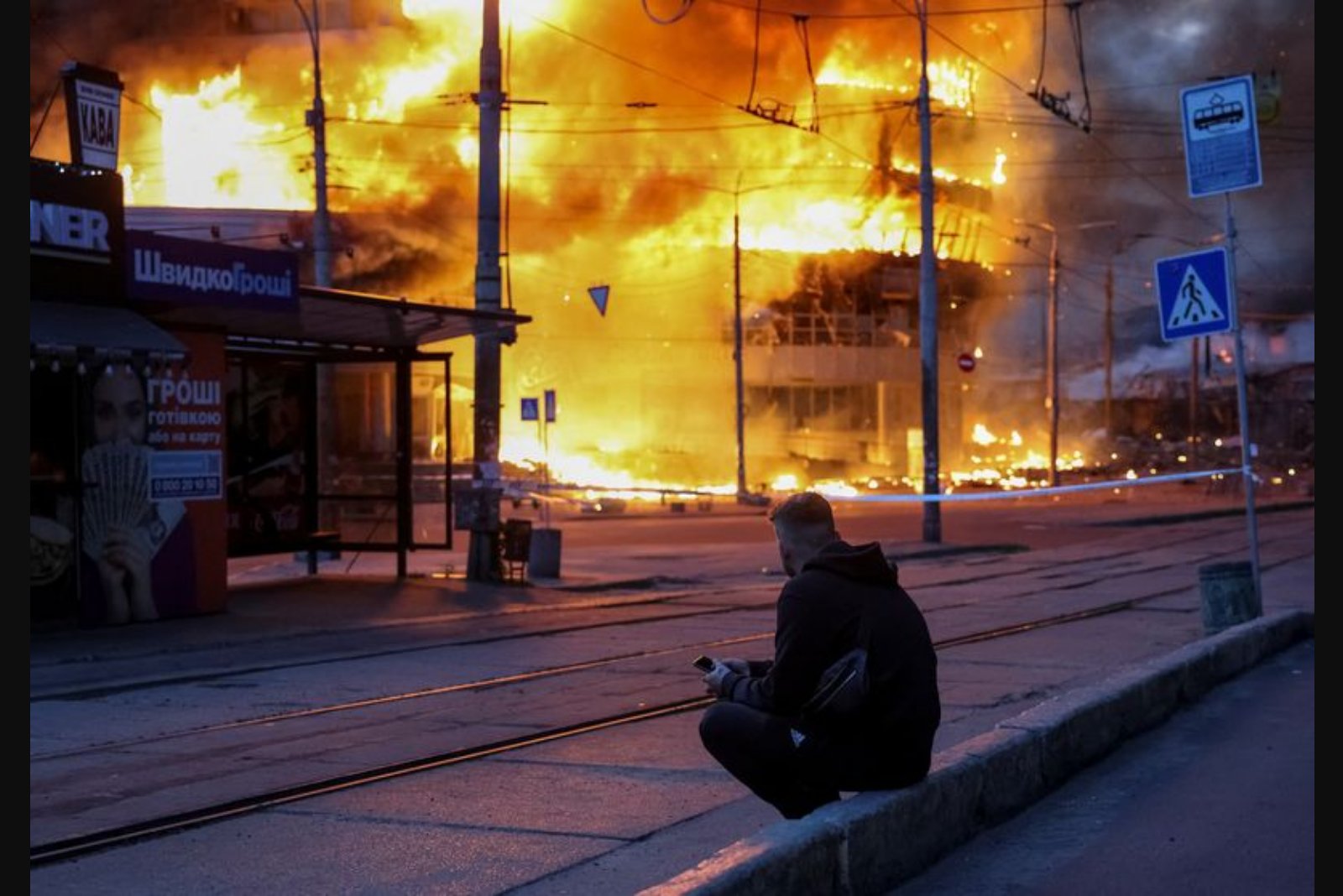
Sections of the Lukyanivka district, north of Kyiv’s centre and home to a missile plant, were devastated. Apartment blocks and commercial buildings in the area have been damaged repeatedly during the conflict, officials said. A shopping centre and an adjacent market were gutted by fire following the strikes.
Many residents sheltered overnight in metro stations. Nataliia Zvarych, 62, described the experience: "It was terrifying, scary." In one city-centre cafe that had opened on Saturday, staff swept glass and rubble on Sunday yet continued to serve patrons; co-owner Yevhenii Prusak said they would "think about whether to restore everything ... or whether to work at all" once emotions subsided.
Missile types and scope of the assault
Ukraine’s air force said Moscow launched 90 missiles and 600 drones in the operation. The Oreshnik hypersonic missile - described in reporting as an intermediate-range system capable of carrying nuclear warheads - was used near Kyiv in what was reported to be the third recorded use of that missile against Ukraine since Russia’s full-scale invasion began in February 2022.
Officials reported the Oreshnik struck Bila Tserkva, a city of about 200,000 people located roughly 40 miles (64 km) from the outskirts of Kyiv. A review of footage by an investigative analyst noted that the Oreshnik’s warhead appeared to have split into 36 submunitions.
Claims and counterclaims
Moscow’s defence ministry said the strikes targeted Ukrainian military command facilities, including locations used by land forces and military intelligence, air bases and military-industrial sites. Russia also said it had employed Iskander, Kinzhal and Zircon missiles alongside the Oreshnik in what it described as retaliation for Ukrainian strikes on civilian targets in Russia. Ukraine maintains that it does not target civilians.
President Zelenskiy said Russian forces had also struck water-supply facilities, accusing Moscow of aiming to damage those systems ahead of the summer months, when demand for water typically rises.
Moscow denies intentionally striking civilians; Ukrainian officials and other accounts point to thousands killed in Russian bombardments of Ukrainian cities during the war.
International reaction
European leaders condemned the attack, and officials in Britain and Germany described the use of the Oreshnik as an "escalation." Kaja Kallas, the European Union’s top diplomat, said Moscow was resorting to "a political scare-tactic and reckless nuclear-brinkmanship."
Infrastructure and broader consequences
Officials reported damage to residential, educational and cultural infrastructure, and Ukrainian leaders expressed concern about impacts to essential services such as water supply. The assault damaged multiple civic buildings and cultural institutions in central Kyiv, while commercial and residential areas were hit across districts that have previously seen repeated strikes.
Closing observations
The overnight bombardment left swaths of the capital and nearby areas damaged, prompted civilian casualties and drew international criticism. Ukrainian leaders have urged allies to respond with concrete decisions, citing the severity of the strikes and the use of a missile system described as capable of carrying nuclear warheads.