
Overview
Health officials are warning that a swiftly advancing Ebola epidemic in the Democratic Republic of Congo is moving faster than the systems deployed to stop it. The virus involved is the Bundibugyo strain, and there are currently no approved vaccines or treatments for this variant. According to figures cited by the World Health Organization, the outbreak has been linked to an estimated 220 suspected deaths and approximately 900 suspected cases, and it has crossed the border into Uganda where seven cases have been recorded.
Tracing and tracking gaps
Authorities and international partners are struggling to locate and monitor the people most likely to have been exposed. Documents produced for a recent virtual coordination meeting convened by the World Health Organization and the Africa Centres for Disease Control and Prevention indicate that, as of the week prior to the meeting, only 7% of the 1,261 people identified as contacts of suspected Ebola patients had been found and followed up. A WHO update later put the number of contacts at over 2,000.
Those shortfalls mean thousands of potentially exposed individuals remain unmonitored during the virus' 21-day incubation window, undermining one of the core strategies for containing Ebola: finding contacts and watching them for symptoms so that they can isolate and avoid further transmission.
‘Outpacing the response’
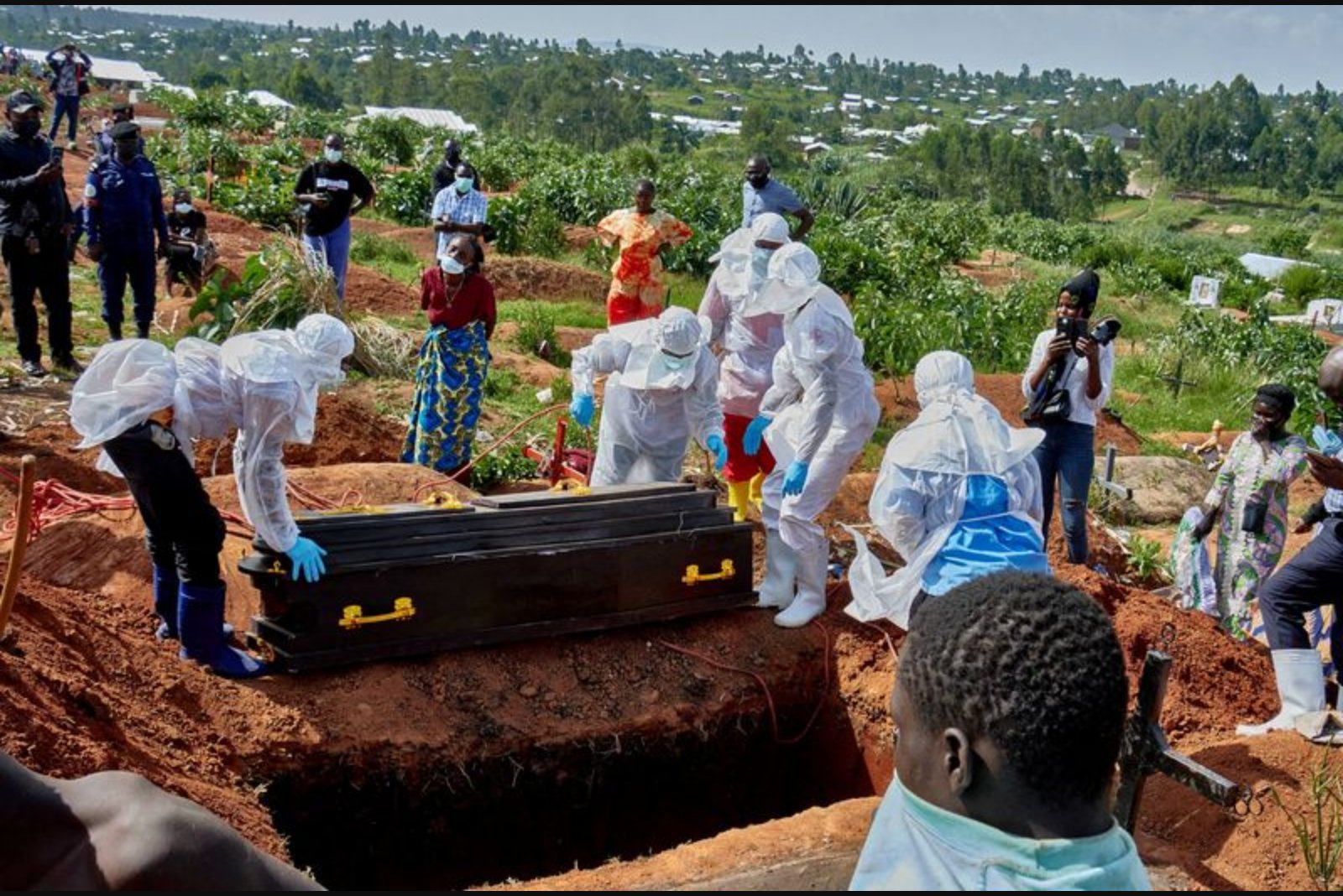
WHO Director-General Tedros Adhanom Ghebreyesus summed up the situation bluntly, posting that the outbreak is "outpacing the response." He and other officials point to attacks on health facilities as a major impediment to case tracking and contact tracing. In parts of eastern Congo, isolation tents have been burned and hospitals attacked as community members reclaim the bodies of relatives, apparently unaware of the risks posed by infectious corpses and sometimes acting in anger or fear.
Those disturbances complicate efforts in an area already beset by conflict and weak health infrastructure. Three experts consulted in the coordination process said that the violence and local instability are directly hampering efforts to locate cases and their contacts in the epidemic's epicenter.
Local operational obstacles
Field teams face a raft of basic logistical problems that have slowed detection and response. Shortages of essentials such as the correct diagnostic tests to detect Bundibugyo specifically - as opposed to other Ebola virus strains - delayed initial recognition of the outbreak. In addition to limited diagnostic capacity, there is a lack of personnel on the ground and persistent problems obtaining fuel for vehicles and other routine supplies.
Professor Salim Abdool Karim, an epidemiologist advising the Africa CDC, described the outbreak as moving at "breakneck speed" and noted that the province of Ituri presents especially difficult conditions for mounting a response. Despite the Democratic Republic of Congo's experience in responding to Ebola - this is the country's 17th recorded outbreak since 1976 - shortages of trained staff, tests and basic logistics remain significant obstacles to rapidly scaling containment efforts.
International funding and support constraints
Several health sources at the meeting said that cuts in international funding and the withdrawal of the United States from the WHO have reduced the global capacity to co-lead and resource outbreak responses as they have been in the past. Officials familiar with the response said that many of the organizations and mechanisms that used to act quickly to provide technical and logistical support are no longer present or have been reduced.
One U.S. official briefed on the response observed that problems which would have been resolved more rapidly in previous outbreaks are now taking longer because those former contributors are absent or operating at a smaller scale. Humanitarian groups also report staffing reductions: CARE's country director said his emergency response team in the area had been cut by a third.
A WHO Africa team presentation at the coordination meeting laid out the stark realities: no vaccine and no specific therapy exist for this strain; the virus circulated undetected for six weeks; cross-border transmission has been confirmed; and healthcare workers are dying. The presentation concluded that each day without a fully resourced response allows the outbreak to gain ground.
Operational priorities and appeals for reinforcements
Partners at the meeting agreed that expanding contact-finding efforts is the immediate top priority as both funding and emergency personnel filter into the region. Medical humanitarian organizations have called for reinforcements; Medecins Sans Frontieres has explicitly asked staff worldwide to apply to reinforce operations in Congo, and other groups are mobilizing where they can.
Dr. Alan Gonzalez, deputy director of operations for Medecins Sans Frontieres, framed the response as a return to basic public health measures: "We’re going back to the basics of Ebola outbreak responses when we didn’t have the means to contain it like we did before vaccines and therapeutics." That comparison underscores how the absence of effective countermeasures for Bundibugyo places greater emphasis on finding contacts, isolation and supportive care.
Fear, mistrust and the human dimension
A major non-technical barrier is fear within affected communities. Humanitarian leaders on the ground report that some cases go unreported or disappear from surveillance because people are afraid of seeking care or of the handling of bodies. Mamadou Kaba Barry, head of mission in Congo for the Alliance for International Medical Action, noted that people are frightened and some suspect cases are not being reported for that reason.
Barry and others caution that memories of past tragedies shape behavior during outbreaks. He recalled that during the West Africa epidemic a decade ago some people hid sick relatives or avoided reporting illness because they feared dying and their families being unable to recover their bodies. He said that even after years of experience, Ebola remains "always frightening."
What is at stake
Experts at the WHO-Africa meeting emphasized several linked vulnerabilities: the lack of a vaccine or targeted therapy for this strain; the period during which the virus circulated unnoticed; the confirmed spread across national borders; and the infection and deaths of healthcare workers. Taken together, those factors increase the urgency of locating and following up with contacts so symptomatic individuals can isolate and interrupt transmission chains.
Marion Koopmans, a Dutch virologist on the WHO emergency committee, described the scale and origin uncertainty of the outbreak as making it a "hell of a job" to identify all potential cases and contacts. Ebola is transmitted through direct contact with body fluids of symptomatic people, with contaminated materials, and with the bodies of those who died from the disease. Identifying contacts and monitoring them for 21 days is central to breaking transmission.
Conclusion
With multiple structural, logistical and social barriers converging, partners on the ground and global health agencies are racing to mobilize resources and personnel. The consensus emerging from coordination discussions is stark: without rapid scaling of contact tracing, supplies and community engagement, and while frontline health staff continue to be endangered, the outbreak risks continuing to expand in the short term.
Key Points
- Outbreak driven by the Bundibugyo strain has caused an estimated 220 suspected deaths and about 900 suspected cases; cases have crossed into Uganda (seven cases reported). - Sectors affected: public health, cross-border trade and regional healthcare systems.
- Only a small fraction of identified contacts have been located and monitored; WHO reported more than 2,000 contacts on a later update. - Sectors affected: humanitarian response, logistics and diagnostics supply chains.
- Local attacks on health facilities, shortages of tests and basic supplies, and reductions in international aid and staffing have slowed the response. - Sectors affected: international aid, non-governmental organizations, and health services procurement.
Risks and Uncertainties
- Insufficient contact tracing and undetected circulation raise the risk of continued spread and cross-border transmission. - Impacted sectors: regional healthcare systems and public health surveillance.
- Operational constraints including fuel, staffing and diagnostic shortages could delay containment and increase health system strain. - Impacted sectors: humanitarian logistics, medical supply chains and emergency response operations.
- Community fear and mistrust may lead to underreporting and concealment of cases, complicating outbreak control. - Impacted sectors: community health programs and infectious disease control.