
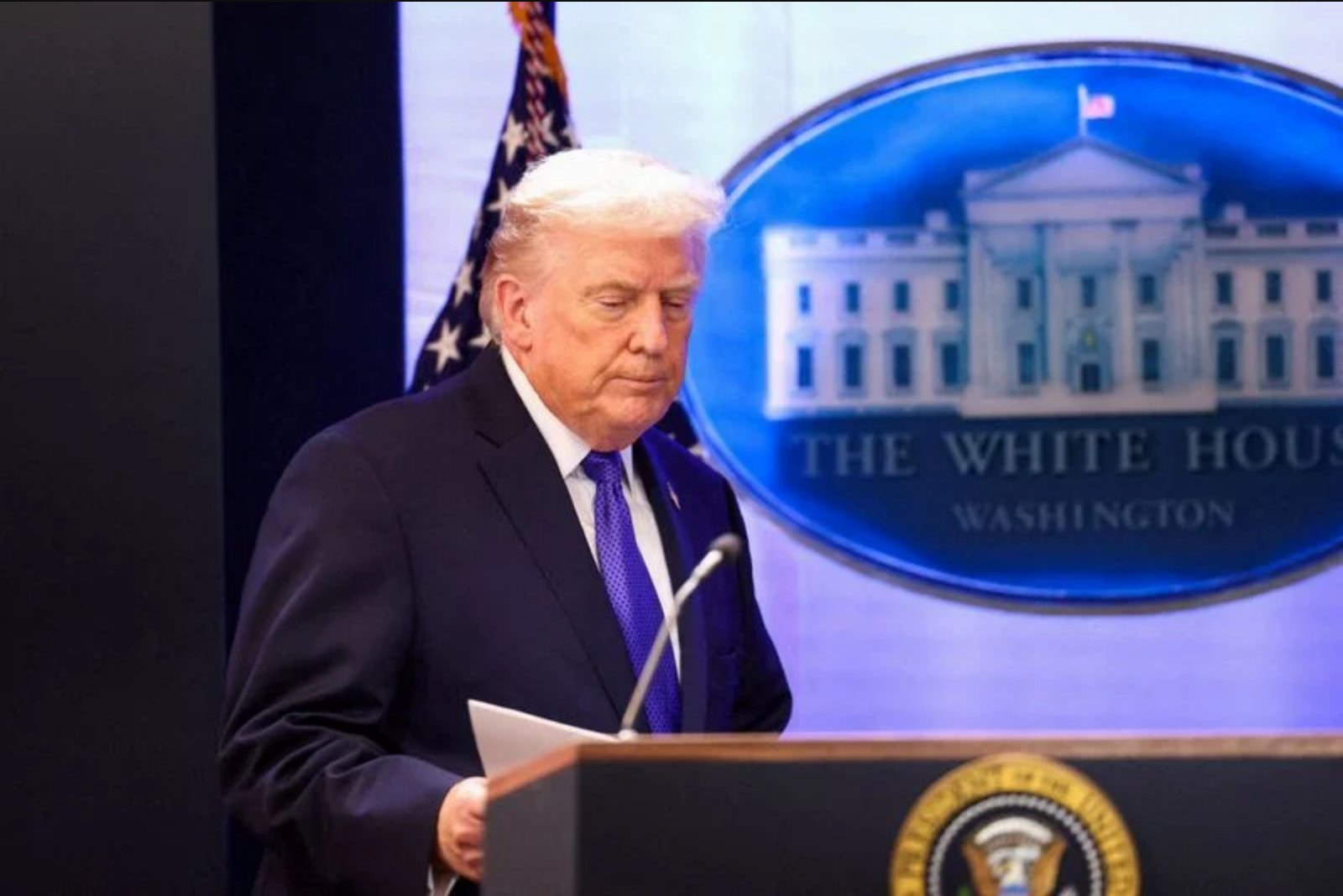
President Donald Trump’s latest trade measure, a proposed set of additional duties on imports from 60 countries accused by the United States of insufficiently tackling forced labour, has drawn broad criticism from experts, business organisations and some human rights groups. Critics argue the 10% or 12.5% tariffs announced by the U.S. Trade Representative are unlikely to address the complex, entrenched problem of modern slavery and could even produce unintended negative effects.
The proposed tariffs stem from a Section 301 unfair trade practices investigation that officials say seeks to underpin the emergency tariffs that the U.S. Supreme Court struck down in February. USTR’s plan targets countries it contends have failed to curb trade in goods made with forced labour. Many of the intended trading partners rejected that assertion.
Observers of trade policy and human rights enforcement said the measure risks conflating commercial leverage with an effective remedy for forced labour. Ram Ben Tzion, co-founder and CEO of the shipment-vetting platform Publican, framed the action as primarily a new rationale for tariffs rather than a targeted labour-rights intervention. He said, "The essence of this new measure has very little or anything to do with forced labour. It’s just a new justification for trade tariffs."
Those concerns come amid stark global statistics on modern slavery. The International Labour Organization’s most recent global estimates put the number of people in forced labour at 27.6 million, an increase of about 2.7 million since 2016. Nearly half of forced labour cases in the private economy are concentrated in export-related sectors such as manufacturing, construction, agriculture and fishing, and mining.
EU measures and U.S. scrutiny
The USTR report singled out the European Union for particular criticism, arguing that the EU’s approach creates a higher evidentiary bar and constrains enforcement. The EU’s Forced Labour Regulation, which is due to enter into force in December 2027, requires authorities to establish a substantiated concern before taking action and sets a stricter standard of proof than U.S. rules, according to the USTR document.
The European Commission dismissed the tariffs as unjustified and reiterated its commitment to the trade deal agreed with Washington last year, which capped the U.S. tariff rate on most EU goods at 15%. International advocacy group Walk Free added that no G20 country is doing enough to confront forced labour relative to its wealth, and noted that the United States ranks among the top 10 countries with the largest numbers of people living in modern slavery.
Business organisations also questioned the policy’s design. Andrew Wilson, Deputy Secretary-General at the International Chamber of Commerce, said the "arbitrary nature" of the tariffs was worrying. He argued that if the stated aim is to strengthen controls on modern slavery, the approach did not appear coherent. He also noted that once implemented, planned EU measures could be broader in market reach because they would apply to imports, products sold in the EU, and EU exports.
Legal and compliance specialists reached similar conclusions. Sebastian Ruenz, an ESG and supply chain specialist at law firm Taylor Wessing, contested the USTR’s depiction of EU measures as weak. He pointed to the EU ban’s global scope, which covers products made with forced labour regardless of country of origin, and said, "It will be structurally far more comprehensive than the U.S. law." He also noted that individual EU member states, such as Germany with its Supply Chain Due Diligence Act and France with a comparable law, have set national standards aimed at addressing forced labour.
Effectiveness and potential drawbacks
Even those who support import bans as a tool against products made with forced labour expressed skepticism about tariffs that are calibrated to trade volumes instead of to the severity or nature of abuses. Critics warned such a mechanism could fail to focus pressure where it is most needed.
Human Rights Watch’s Hélène de Rengerve highlighted that the most extreme, systemized forms of forced labour - including state-imposed systems in China’s Xinjiang region, the cotton sector in Turkmenistan, and pervasive exploitation in North Korea - are not necessarily the principal targets of the tariff proposal. She added that the USTR approach appears shaped by trade volumes and geopolitical considerations rather than strictly by the location of the worst abuses.
De Rengerve questioned whether the tariff scheme would actually incentivize improvements in labour conditions. "It is also not clear how will this be an incentive to actually improve the situation," she said. "It might even create more political resistance in some countries. I fear it might be counterproductive to the objective of fighting forced labour."
Those assessments underline the difficulty of using trade remedies as a substitute for targeted, multilateral enforcement and compliance measures. Critics emphasise that forced labour is embedded in a range of sectors that fuel global exports and that any effective response requires mechanisms that can detect abuses, assign responsibility across complex supply chains, and support remediation without producing perverse political or economic incentives.
For now, debate continues over whether the USTR proposal will change behaviour, escalate trade tensions, or redirect attention toward alternative regulatory frameworks such as the EU’s pending rules and national due diligence laws already adopted by some countries. Experts and industry voices remain cautious about the tariff route as a primary instrument for addressing modern slavery.