
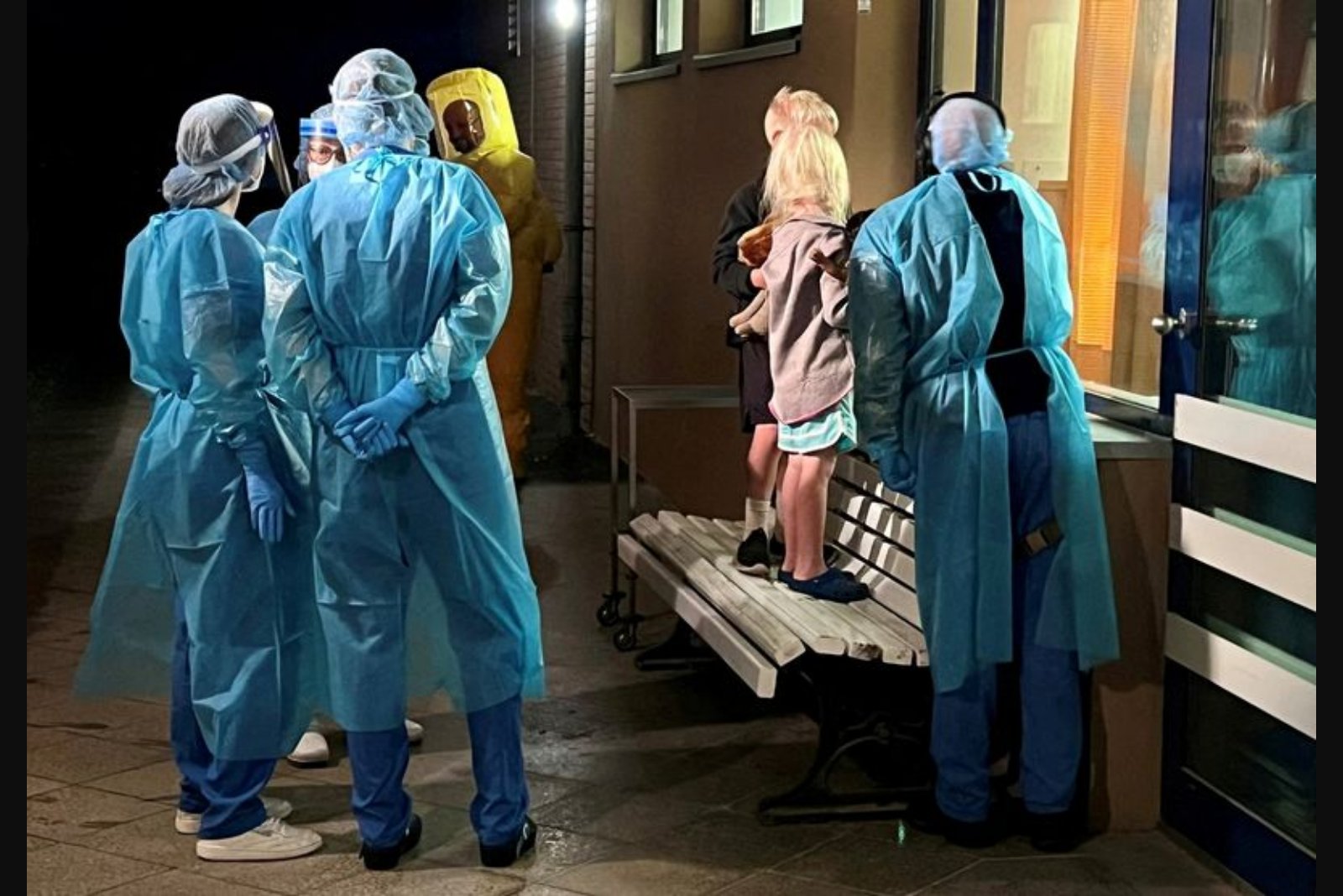
CHICAGO, May 22 - A U.S. missionary who tested positive for the Bundibugyo strain of Ebola and is receiving care at a hospital in Germany has been treated with a combination of experimental drugs aimed at easing disease symptoms and other therapies, U.S. health officials said. The patient has been publicly identified by the Serge Christian mission organization as Dr. Peter Stafford.
Officials from the Centers for Disease Control and Prevention declined to disclose which specific treatments the patient has been given, citing health privacy laws. They confirmed only that several therapeutic options were being used.
No approved vaccines or drugs for Bundibugyo
Health authorities emphasize that there are currently no vaccines or licensed drugs specifically approved to treat the Bundibugyo species of Ebola, which is the strain driving the current outbreak in the Democratic Republic of Congo. The outbreak has infected almost 750 people and killed 177, and the World Health Organization has designated the situation an emergency of international concern.
The WHO has noted that developing a vaccine specific to this outbreak could take as long as six to nine months, underscoring the need to evaluate use of experimental therapeutics as interim measures.
Obeldesivir identified as a promising antiviral option
The drug obeldesivir, an investigational antiviral pill developed by Gilead Sciences, was highlighted by the WHO as a potentially promising candidate for treating this outbreak strain. Obeldesivir has been tested extensively in preclinical work against several Ebola species and in clinical trials for a different viral disease, where it was generally safe in hundreds of participants.
Thomas Geisbert, an Ebola researcher at the University of Texas Medical Branch in Galveston who collaborated with Gilead on testing the drug, said the pill was evaluated in monkeys against Ebola Zaire and Ebola Sudan - two of the more commonly encountered human-infecting species - and a related virus called Marburg, but not specifically against Bundibugyo.
In those animal studies, obeldesivir fully prevented Ebola Sudan infection and provided between 80% and 100% protection against Marburg and Ebola Zaire, Geisbert said. He cautioned, however, that there are no data showing whether the pill is effective in people who already have symptoms, and it has not been tested in the current Bundibugyo outbreak strain.
Gilead spokesperson Ashleigh Koss said the company is in contact with global and regional health authorities and that preclinical data predict obeldesivir would be active against this strain. Geisbert suggested that such treatments could serve as a bridge to tamp down outbreaks while vaccines are developed. "I think that that’s something that potentially has some utility here," he said.
Antibody cocktail MBP134 as an alternate therapeutic approach
An alternative experimental therapy under consideration is an antibody cocktail referred to as MBP134. That product was developed with involvement from Geisbert and Dr. James Crowe of the Vanderbilt Vaccine Center and later licensed to Mapp Biopharmaceutical, a company based in San Diego that previously developed the ZMAPP antibody treatment during the 2014-2016 Ebola epidemic in West Africa.
Mapp is coordinating with the U.S. Biomedical Advanced Research and Development Authority, or BARDA, to make the MBP134 cocktail available for potential use in high-risk individuals, a U.S. official said. The cocktail contains two antibodies isolated from the blood of an Ebola survivor and was designed to target multiple Ebola species, including Ebola Sudan, Zaire and Bundibugyo.
Geisbert described monkey studies in which animals were infected with Bundibugyo and then, after seven days - once symptoms had developed - were treated with the antibody cocktail. "This is mimicking somebody that walks into a clinic," he said. In that experiment, the therapy protected five or six of the treated animals from lethal disease, which he characterized as convincing evidence of potential efficacy. He called the product a strong candidate for use against Bundibugyo.
Mapp said it is engaging with the WHO and other authorities as part of the response to the outbreak. The company’s president, Larry Zeitlin, said in an email that he could not disclose whether the therapy was being used to treat Americans in Europe.
Evidence limitations and next steps
Both obeldesivir and MBP134 have supportive preclinical profiles but notable gaps for the current outbreak: obeldesivir has not been tested specifically against Bundibugyo and lacks evidence for symptomatic human cases, while MBP134 has shown protection in non-human primates when administered after symptom onset but its clinical deployment and usage in this event have not been disclosed in detail.
Given those limitations, health authorities and product developers are weighing the potential benefits of deploying these therapies under close monitoring as part of containment efforts while vaccine development continues on a projected timeline of many months.