
Israeli military action in the northern Gaza Strip on Thursday killed a 13-year-old boy, Gaza health officials and medics said, after an Israeli drone reportedly dropped a grenade on the town of Beit Lahiya. Medics reported additional wounded in the same incident. The Israeli military did not immediately comment on the strike.
The lethal incident occurred amid reports from residents that Israeli forces have in recent days resumed a practice of issuing evacuation warnings before carrying out strikes - a pattern that had largely dropped off following the October ceasefire. Witnesses said they received at least three such warnings over the past two days, which targeted two private homes and a tent encampment. The orders, they said, arrived at night and forced dozens of families to flee in darkness.
On Tuesday, according to witnesses, the military ordered displaced families in a tent encampment in the densely populated Mawasi area of Khan Younis to leave before striking a tent there. Witnesses also said the military issued a similar warning in the Bureij camp in northern Gaza before bombing a house.
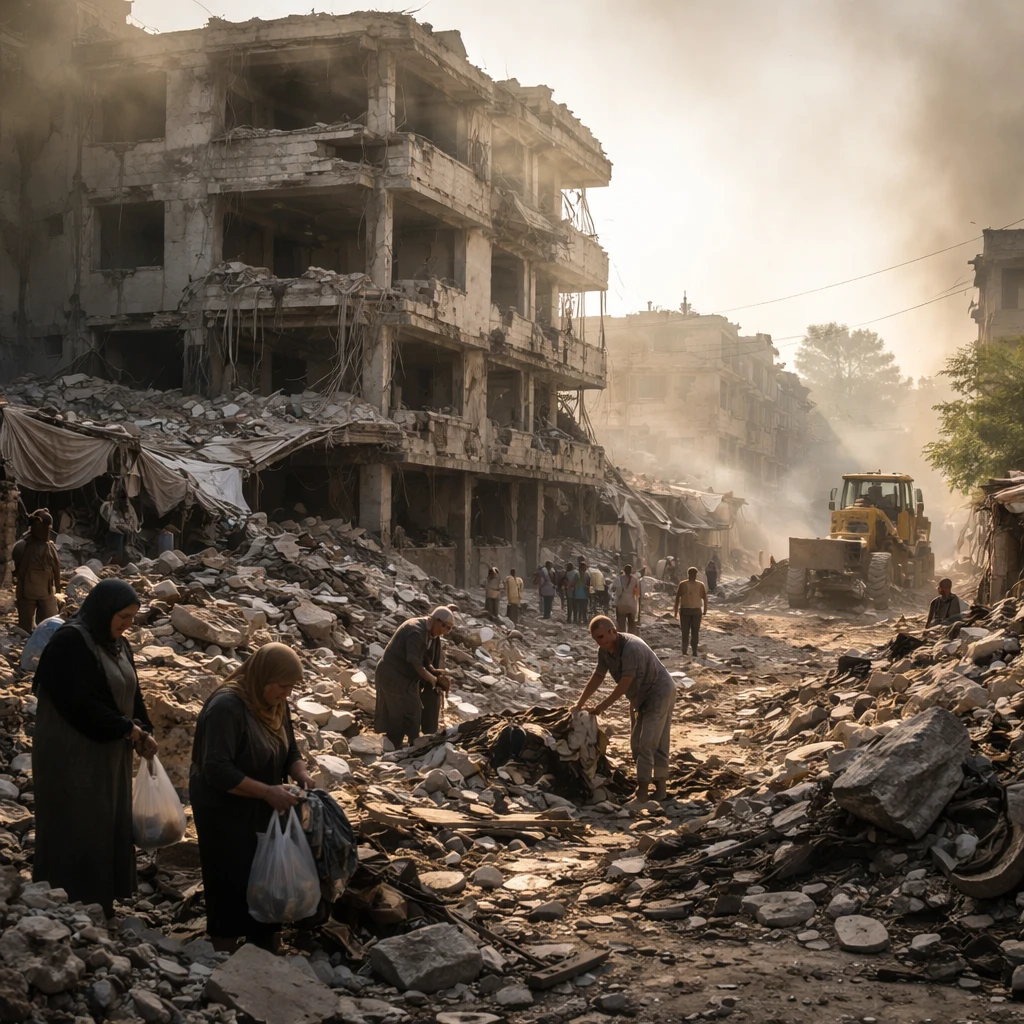
One resident, Ibrahim Ismail, 60, said the army instructed him and several families to evacuate their four-storey apartment building in central Gaza on Wednesday night and then bombed the structure. He said nearby homes sustained damage and two people were injured. On Thursday morning, residents returned to inspect their properties, sorting through wreckage to salvage whatever possessions and clothing they could. Others used a bulldozer to clear roads of rubble from houses that had been damaged or destroyed in the air strike.
"Look. You work for 30 years and, in five minutes, everything is gone. Don’t speak of a ceasefire or truce - it’s all lies. War is war," Ismail said, describing the sense of loss after the attack.
The October ceasefire, which was brokered by U.S. President Donald Trump, has not stopped Israeli strikes in Gaza, the reporting shows. Since the truce took effect, Gaza health officials report that some 880 Palestinians have been killed in Israeli strikes; those figures do not distinguish between combatants and civilians. The Israeli military reports that four Israeli soldiers were killed by militants during the same period. Hamas does not disclose casualty figures for its fighters.
Israeli authorities say that their post-ceasefire strikes are intended to prevent attacks or to stop people from approaching the armistice line with Hamas. The ceasefire left Israel in control of more than half of Gaza, while Hamas retained control of a narrow strip of territory along the coast. The two sides remain deadlocked in indirect talks focused on disarmament.
Israel’s military did not immediately respond to requests for comment about the evacuation orders that witnesses said were issued in recent days. In past statements, the military has said such warnings are meant to reduce civilian casualties when operations target militant groups. It has not provided an explanation for why it appears to have resumed issuing the orders in Gaza after they had largely subsided following the October truce.
Context and immediate effects
Residents described a cycle of warning, sudden displacement at night, and subsequent strikes that has left families scrambling to salvage belongings and repair damage. The resumption of pre-strike evacuation notices has renewed pressure on already displaced populations living in dense tent encampments and urban apartment blocks.
Humanitarian conditions
The combination of renewed evacuation orders, air strikes and the destruction of homes has intensified hardship for civilians who had been living under the limitations imposed by the post-ceasefire arrangements. Medical sources and health officials provided casualty counts and described the latest fatality and injuries; those tallies are part of the broader figures cited by Gaza health authorities since the truce.