
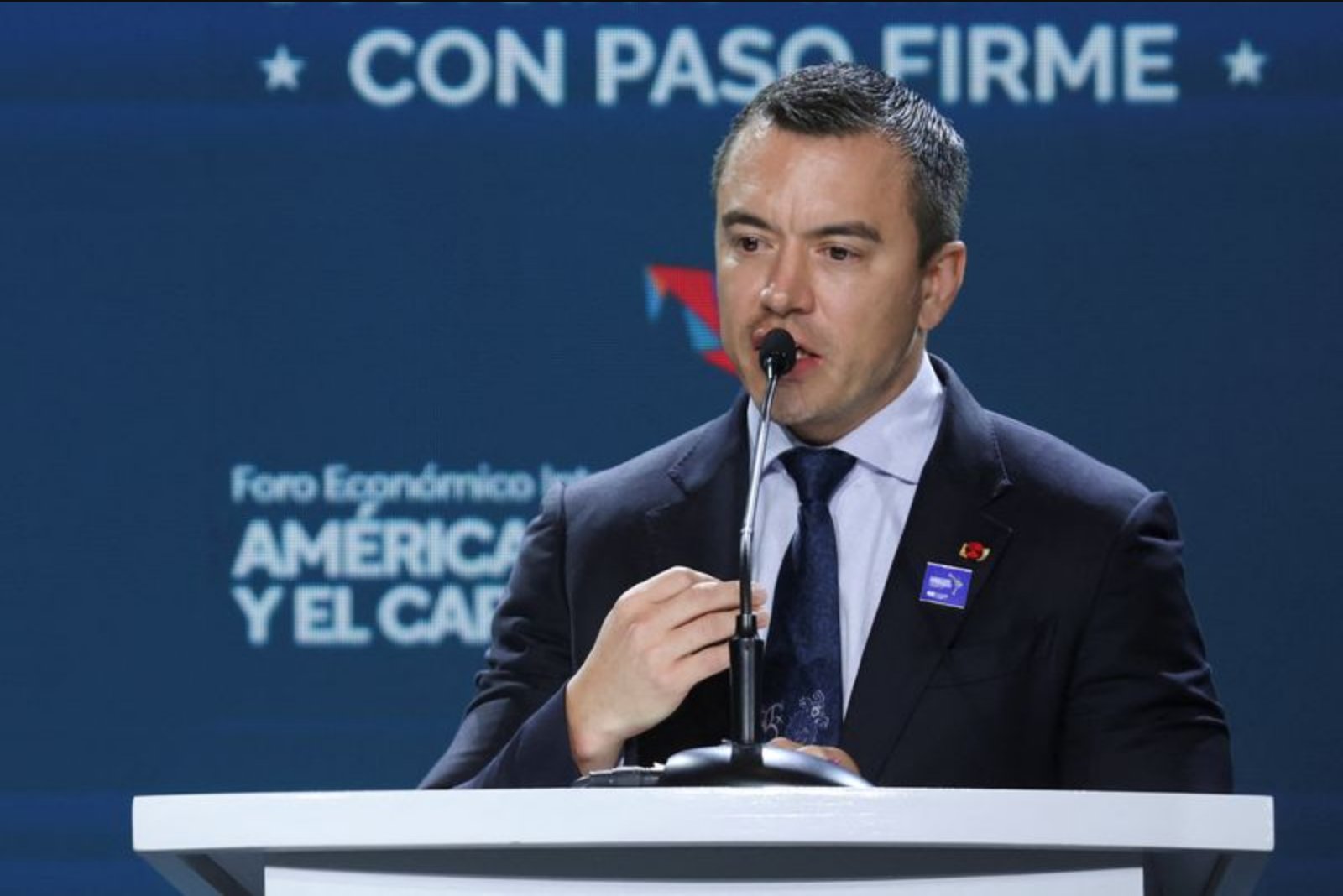
Colombia's foreign ministry on Saturday formally accused Ecuador of "deliberate interference" in the country's presidential vote after Ecuador's president disclosed an agreement reached in a call with one of Colombia's candidates to lift bilateral tariffs.
Ecuadorean President Daniel Noboa said on Friday that his government would remove the tariffs on June 1 after concluding discussions with right-wing Colombian presidential hopeful Abelardo De La Espriella. In a post on X, Noboa said the tariff removal would proceed after "confirming (De La Espreilla’s) willingness to promote a real and joint fight against narcoterrorism." He also said the two men had agreed on coordinating the handover of Ecuadorean criminals located in Colombia.
In response, Colombia's foreign ministry rejected what it described as "the misleading presentation of the decision to remove the tariffs as a measure of good faith by the Ecuadorean government," while adding that it would remove measures previously adopted to mitigate Ecuador's tariffs.
Noboa's office did not immediately reply to a request for comment on the Colombian ministry's statement.
The tariff dispute between the two Andean neighbours has been ongoing for months. Ecuador imposed duties alleging Colombia had failed to control drug trafficking along their 586-kilometre (364-mile) border - a claim that Colombian President Gustavo Petro has disputed.
The timing of Noboa's public announcement, coming days before Colombia's presidential election, prompted the diplomatic accusation. Abelardo De La Espriella, who is running as an independent, is among several candidates vying to replace the incumbent leadership. He will face contenders including President Petro's ally Ivan Cepeda and right-wing Senator Paloma Valencia in the vote on Sunday.
The exchange highlights the intersection of trade policy and political dynamics between neighbouring governments, with tariff measures and public statements taking on electoral significance in the run-up to the ballot.
Summary
Colombia's foreign ministry says Ecuador interfered in Colombia's presidential election after Ecuadorean President Daniel Noboa announced he would lift bilateral tariffs on June 1 following an agreement reached with Colombian presidential candidate Abelardo De La Espriella. Noboa said on X the move followed confirmation of De La Espreilla’s commitment to joint action against narcoterrorism and agreement on handing over Ecuadorean criminals in Colombia. Bogotá rejected Ecuador's presentation of the tariff removal as an act of good faith but said it would remove measures taken to mitigate Ecuador's tariffs. The two countries have been in a months-long trade dispute linked to drug trafficking along their 586-kilometre border, a claim President Gustavo Petro denies. De La Espriella faces Ivan Cepeda, Paloma Valencia and others in Sunday’s vote.