
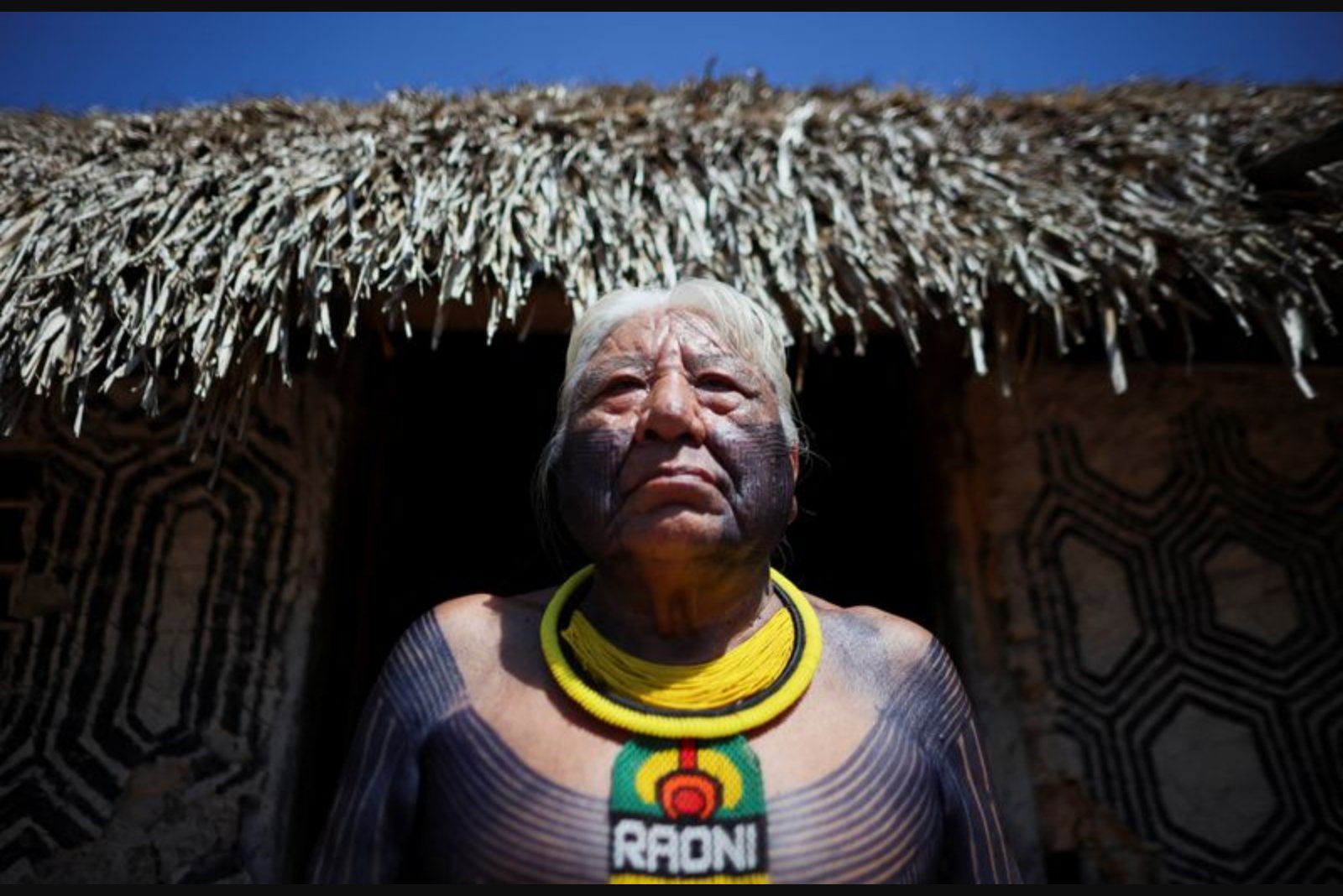
At 75, Chief Megaron Txucarramae has spent much of his life defending the rights and territories of the Kayapo people. He now faces a new duty: safeguarding the legacy of his uncle and mentor, Chief Raoni Metuktire, who at 94 has become a global emblem for rainforest protection.
Chief Raoni has been hospitalized several times in recent years, most recently returning home after seven days in intensive care for pneumonia. For decades, Raoni has represented Indigenous causes on the world stage, appearing beside presidents, popes and international celebrities, and drawing attention to the urgency of preserving the Amazon.
Both leaders guide Kayapo communities along the Xingu River, where the forest meets Brazil’s expansive grasslands. Chief Megaron recalls that the Kayapo first encountered non-Indigenous Brazilians in the 1950s when he was a child. Soon after, he began working alongside Raoni and now says he is prepared to carry forward that campaign for Indigenous rights and territorial protection.
"I have followed it closely," he said. "And I will continue it, continue his struggle." He made these remarks while in the village of Pykany during a trip organized by Greenpeace to monitor illegal mining on Kayapo land.
"They can't kill us with weapons, so they pass laws"
Chief Megaron’s declaration comes as the Amazon confronts increasing pressures. Almost a fifth of the rainforest has been cleared for crops, pasture and mining, and the region is experiencing intensified droughts and wildfires linked to climate change. For Megaron, the forest is not only the Kayapo’s home but a resource of global consequence.
"The best thing is to preserve the Amazon, to preserve what is ours, what belongs to everyone," he said. "It helps people breathe better, it holds back the winds, it keeps the heat from becoming too intense."
He said he will continue to press for Kayapo rights and for broader Indigenous representation in Brazil’s political institutions. Recent legislative activity in Brazil’s Congress has included a number of laws that critics say curb Indigenous rights, among them a measure that reduces protections for the lands of certain communities.
Chief Megaron voiced particular concern about the upcoming general elections in October, saying he fears a candidate hostile to Indigenous rights could prevail. He noted that Chief Raoni had supported President Luiz Inacio Lula da Silva at his 2023 inauguration, following an administration that had signaled it would stop new Indigenous land demarcations. This year, Senator Flavio Bolsonaro - the son of the former president - is running against Lula in the election.
"They can’t kill us with weapons, but they want to pass laws to exploit [our land], to destroy our culture, to put an end to our customs," he said. "The more Indigenous people there are in Congress, the better for us." In the 2022 elections, seven of the 594 lawmakers elected were Indigenous.
Beyond legal and political battles, Chief Megaron also emphasized the cultural challenge of keeping younger generations rooted in Indigenous identity. He said he aims to help his uncle stem the tide of young people leaving the forest and abandoning traditional customs.
"You can learn, you can reach university, but you must not stop being Indigenous," he said. "That is his struggle."
Chief Megaron’s immediate actions include monitoring and opposing illegal mining on Kayapo land and advocating publicly for the Amazon’s preservation, while urging greater Indigenous participation in lawmaking as a defense against policies that could weaken land protections.
The coming months - with elections, ongoing legislative changes and environmental pressures - will shape whether the Kayapo can retain the territorial and cultural gains the community has fought to secure.