
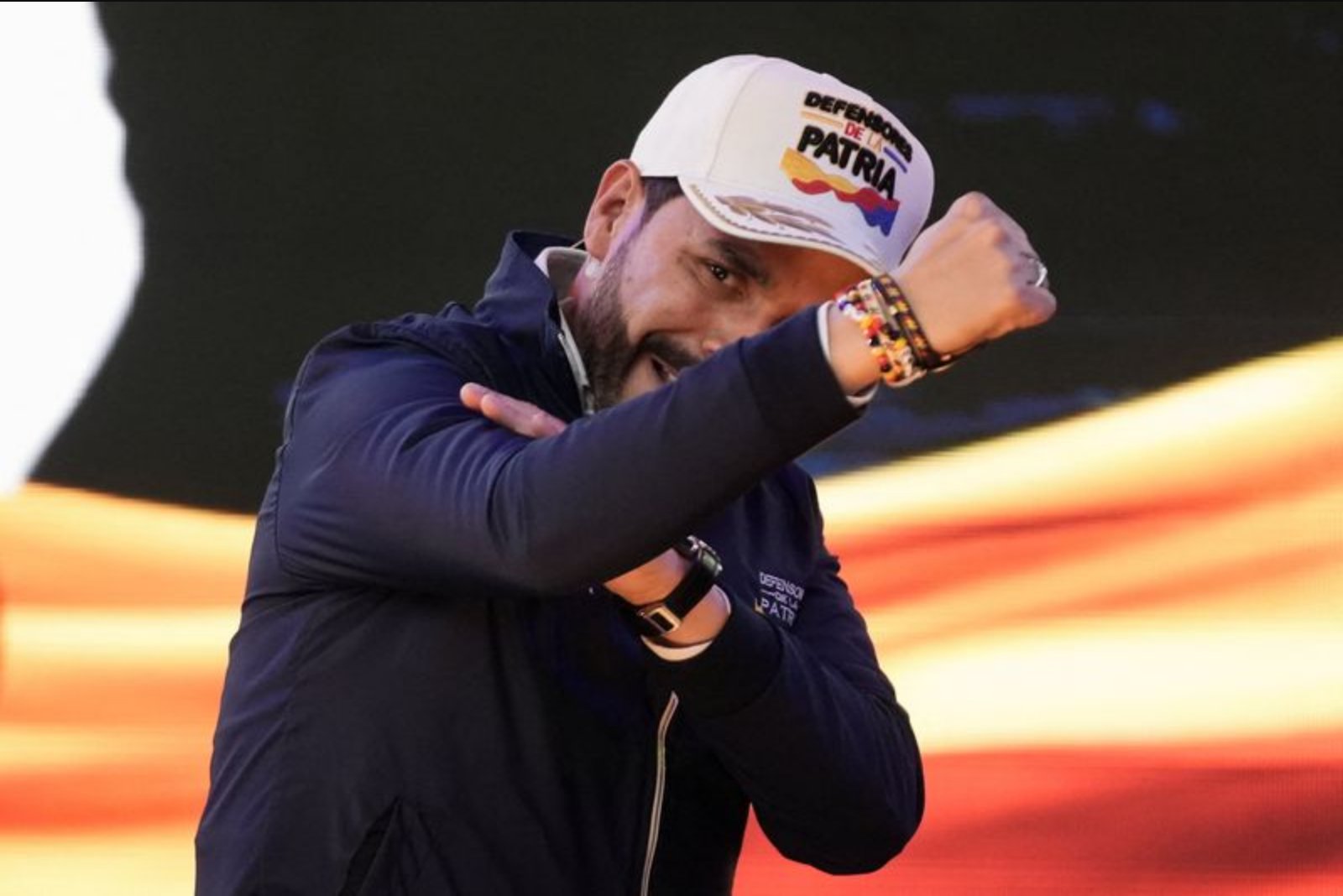
Abelardo De La Espriella, a lawyer and businessman without previous political office, is campaigning to become Colombia's next president on Sunday with a pronounced focus on restoring security and the economy through forceful measures. Known to supporters as "The Tiger," he has risen to second place in national polls, trailing the leftist candidate Ivan Cepeda.
De La Espriella has framed his candidacy as a corrective to what he calls failed peace initiatives. He attributes increases in drug trafficking and illegal gold mining to President Gustavo Petro's unsuccessful attempt to pursue talks with guerrillas and crime gangs, arguing those efforts opened the door to expanded criminal activity.
Positioning himself against the political establishment, he has identified conservative Senator Paloma Valencia as part of that establishment. In a February interview he said, "Colombia is going through its darkest hours. At the end of the day this is not a battle between Ivan Cepeda and me, it is a battle between totalitarianism and democracy." He added, "I will dare to do what needs to be done within the framework of the constitution and the law to save and rebuild Colombia...I am the tiger for that."
De La Espriella says he is financing his campaign himself; that assertion could not be independently verified. The candidate, 47, has styled himself with sunglasses, luxury watches and a neatly trimmed beard, attributes that have generated comparisons with El Salvador's President Nayib Bukele.
Those comparisons have been fueled by parallels in rhetorical style and public image, and by references to Bukele's tough security approach. Bukele has detained more than 90,000 people in a security crackdown that human rights groups have heavily criticized, even as the measures remain broadly popular with voters for reducing homicides. De La Espriella has said he does not emulate Bukele, but he salutes in a military-style at events and in advertising despite never having served in the armed forces.
On policy specifics, De La Espriella has promised to construct 10 mega-prisons. He has stated that in his government there would be no peace processes and warned, "Criminals who do not submit will be taken down, as permitted by law."
Biographically, De La Espriella grew up in the northern city of Monteria, is a fan of Colombia's folk vallenato music and has performed as a tenor. He is married with four children and maintains a range of business interests, including alcohol brands, a restaurant in Miami and investments in cattle ranching, construction and real estate.
In his legal practice, De La Espriella has represented clients including Alex Saab, who faces U.S. charges for alleged money laundering on behalf of the ousted Venezuelan President Nicolas Maduro, as well as individuals linked to corruption scandals and paramilitary groups. He has maintained that his lawyer-client relationships have not involved any wrongdoing.
Context and implications
De La Espriella's rapid ascent in the polls reflects voter interest in a security-first agenda and frustration with current approaches to crime and illegal mining. His business background and legal career, including high-profile clients, form part of the public narrative surrounding his candidacy.
How voters and markets respond to his law-and-order proposals - including the construction of mega-prisons and a stated end to peace processes with armed groups - will influence political debate in the coming days.