
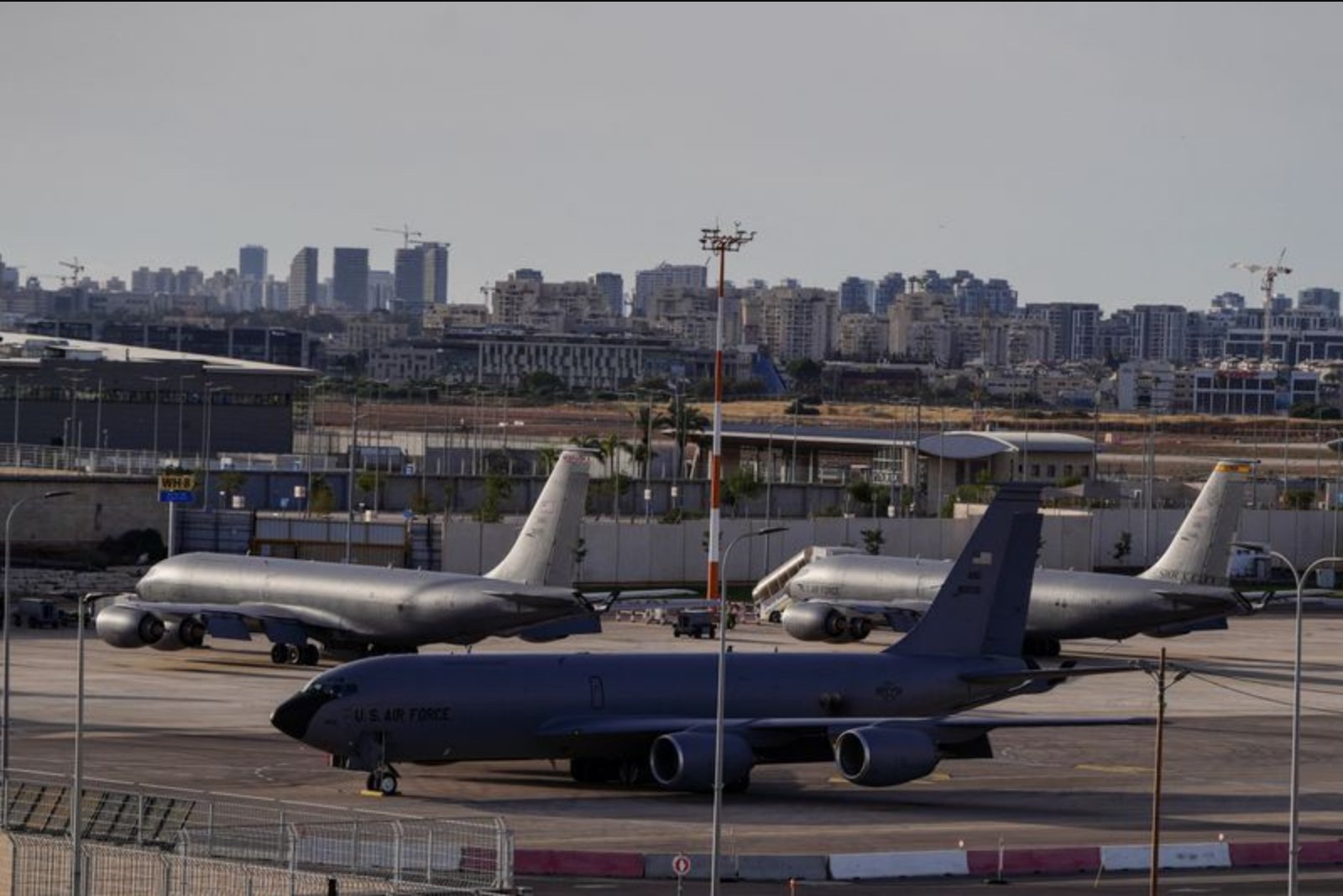
Ben-Gurion International Airport, Israel's principal international gateway near Tel Aviv, is operating at about one-third of its typical civilian capacity due to the presence of U.S. military refuelling aircraft, the director general of the Israel Airports Authority said on Thursday.
Sharon Kedmi told Kan's Reshet Bet radio station that roughly 70% of the airport's activity has been restricted because space and operational resources are being consumed by American military operations. "We are only utilizing one-third of the airport's operational capacity," he said. "We are at the limit of our capabilities. There will be flights that we will announce in the coming days that are being cancelled."
Kedmi warned that foreign carriers will not be able to resume normal operations in the near term and estimated that as many as 3 million passengers could have their flights cancelled if the situation persists. Dozens of U.S. tanker planes are currently based at Ben-Gurion, he said.
When asked for comment, the U.S. Embassy in Jerusalem referred Reuters to the U.S. State Department, which did not immediately respond.
The airports authority leader provided a preliminary financial toll for the disruption, saying the body had recorded losses of 700 million shekels over the past two months. He added that should the constraints continue, these losses "could turn into billions." Kedmi noted that the authority had expected 18 million passengers to transit the airport in the period in question, but that current projections now suggest the total will not exceed 15 million.
"We have no information when the U.S. military's activities at the airport will end. We are in a constant state of flux," Kedmi said, describing continued uncertainty over the duration of the military presence and its operational implications for civilian aviation.
Earlier this month, Israeli media quoted Civil Aviation Authority head Shmuel Zakay as saying that U.S. military aircraft at Ben-Gurion were crippling civilian flights, delaying the return of foreign airlines and contributing to higher airfares. Zakay was cited as telling Israel's Transportation Minister that "Ben-Gurion has turned into a military airfield with limited civilian activity," and that this situation was harming local carriers.
Media reports also said that, at the start of the Iran war, Israeli carriers moved aircraft abroad and that not all of those aircraft have since returned to Ben-Gurion.
Context and operational detail
The airport authority's comments indicate constrained gate and runway availability and reduced throughput for civilian flights as refuelling tankers occupy significant portions of the airport's capacity. The authority has begun notifying that some flights will be cancelled in the coming days as it confronts operational limits.
Financial and passenger forecasts
Kedmi quantified short-term financial damage at 700 million shekels in the last two months, with a warning that continued military use of airport infrastructure could push losses into the billions. Passenger flow expectations have been revised downward from a projected 18 million to an anticipated figure not exceeding 15 million.
Operational uncertainty
Officials cited no timeline for the cessation of U.S. military activities. The Israel Airports Authority described its operating environment as being in a "constant state of flux," underscoring the unpredictability facing airline scheduling, carrier returns, and the recovery of civilian airport throughput.
($1 = 2.8269 shekels)