
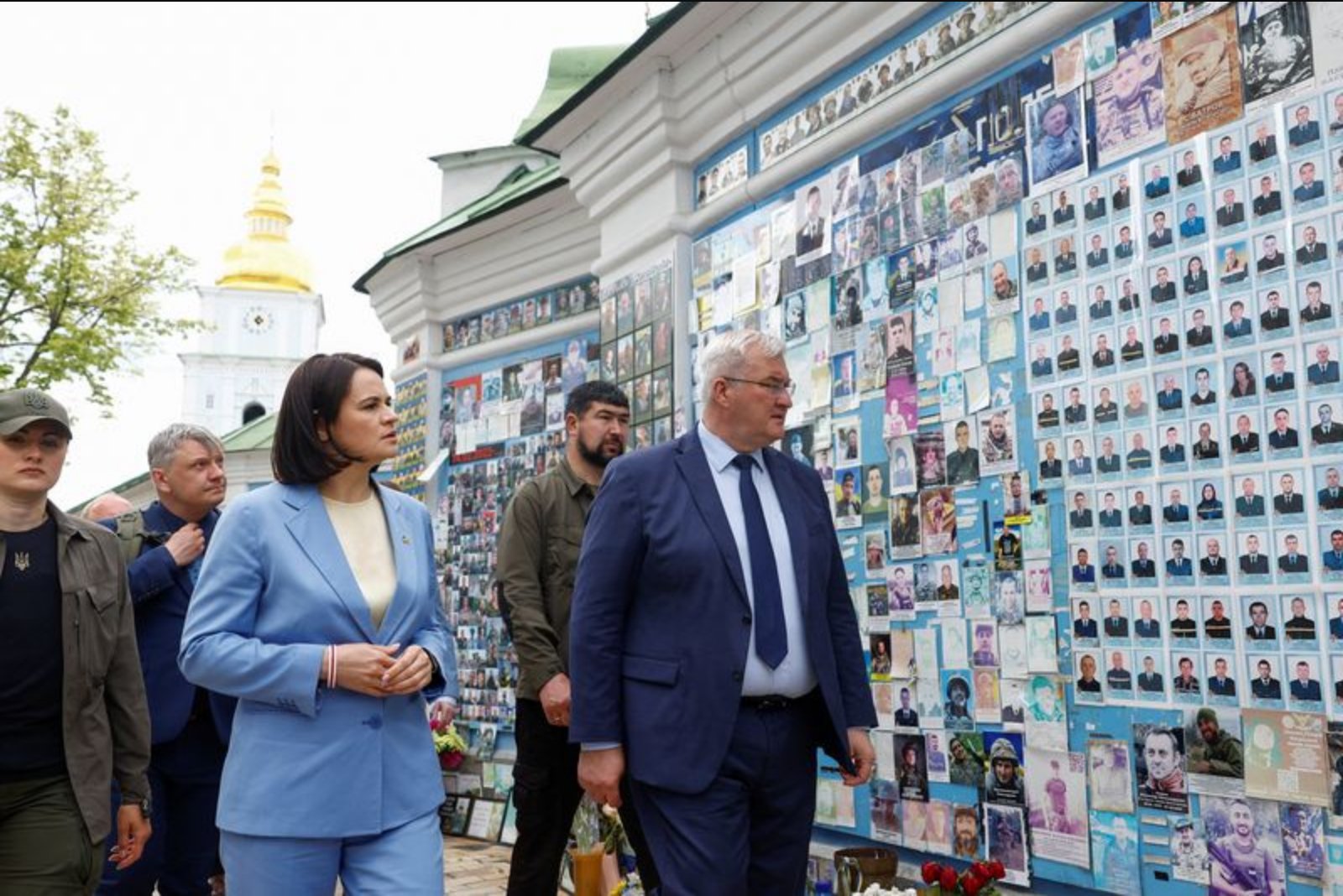
Sviatlana Tsikhanouskaya, the exiled leader of Belarusian opposition forces, traveled to Kyiv on Monday as Ukrainian officials intensified warnings that Russia may be seeking to pull Belarus into a deeper role in the fighting against Ukraine.
The visit came a day after one of the largest strikes on the Ukrainian capital in the war, an attack that killed four people and caused damage to historic sites. Russian authorities have threatened further heavy attacks on Kyiv, heightening concerns among Ukrainian leaders about potential new lines of offensive operations.
Tsikhanouskaya, a prominent opponent of Belarusian President Alexander Lukashenko - a close ally of Moscow - said only a democratic Belarus could contribute to regional stability and security. After a meeting with Ukraine’s Foreign Minister Andrii Sybiha, she described what she called her first "working visit" to Kyiv and warned about a shift in the tone coming from Minsk.
"Lukashenko’s rhetoric is shifting: we are preparing for war, of course, we want peace, but we are gearing up for war. And that, of course, is very alarming for people," she told reporters following the meeting.
Ukrainian President Volodymyr Zelenskiy has recently cautioned that Belarus could become more closely involved in Russia’s full-scale war, now into its fifth year. He has said Ukraine will strengthen its northern defences to prepare for any potential new Russian offensive - including operations originating from Belarusian territory.
For its part, Minsk has rejected the idea that it will be dragged into the war, while asserting it would act to defend itself alongside Russia if faced with aggression. Last week, President Lukashenko dismissed suggestions Minsk would be drawn into the conflict but said it would defend itself together with Russia in the event of an attack.
Belarus has been one of Moscow’s staunchest supporters during the conflict. Russian attack drones have used Belarusian airspace during operations against Ukraine, and Minsk has said it has deployed the Russian Oreshnik intermediate-range hypersonic ballistic missile system. Belarus and Russia also conducted nuclear drills last week, according to statements from Minsk.
When asked about a phone conversation between French President Emmanuel Macron and Lukashenko on Sunday, Tsikhanouskaya characterized the call as "a warning" sent by Europe. She paraphrased what she understood Europe’s message to Minsk to be: that any steps to escalate the situation would prompt a response from European states.
Relations between Minsk and the West have been strained since violent repression of protesters after the disputed 2020 election, an outcome Tsikhanouskaya and her supporters contend she won. Western sanctions have targeted Belarus over that crackdown and were subsequently tightened because of Minsk’s support for Russia’s war.
Ukraine’s Foreign Minister Sybiha reiterated that Kyiv would respond in kind to any Belarusian provocations. He also dismissed Lukashenko’s remarks that he was open to meeting President Zelenskiy "if the Ukrainian leader wanted to 'talk about something'," saying Kyiv already "had people to meet with."
Contextual note: Reporting on the visit highlighted Kyiv’s heightened alert on its northern flank and the diplomatic signals exchanged between European capitals and Minsk. Tsikhanouskaya framed the international message to Lukashenko as a deterrent against escalation.