
World May 30, 2026 04:56 AM

AUKUS Partners Announce Joint Development of Unmanned Undersea Vehicles

U.S., Britain and Australia to build multi-mission UUV payloads under AUKUS 'Pillar Two' initiative, officials say

By Avery Klein

SINGAPORE, May 30 - The United States, the United Kingdom and Australia are collaborating to develop unmanned undersea vehicles (UUVs) as part of the trilateral AUKUS security arrangement. U.S. Secretary of Defense Pete Hegseth described the project as a signature effort within AUKUS’ 'Pillar Two' to advance defence technologies including quantum computing, undersea capabilities, hypersonics, artificial intelligence and cyber. Britain’s Defence Secretary John Healey said the initiative aims to rapidly field advanced battlefield technologies and remedy a perceived shortfall in delivery from AUKUS to date. China has criticized the pact as dangerous and warned it could prompt a regional arms race.

AUKUS Partners Announce Joint Development of Unmanned Undersea Vehicles

Key Points

  • U.S., Britain and Australia are jointly developing unmanned undersea vehicles and associated payloads under AUKUS' "Pillar Two" technology initiative, affecting defence and advanced technology sectors.
  • Pillar Two explicitly targets a range of advanced capabilities including quantum computing, undersea systems, hypersonics, artificial intelligence and cyber, indicating cross-sector impacts in defence tech and maritime systems.
  • British and U.S. officials framed the effort as a deliverable to accelerate deployment of sensors and weapons systems for undersea drones, responding to prior criticisms that AUKUS had focused more on discussion than delivery.

Dateline: SINGAPORE, May 30 - The United States, Britain and Australia have begun cooperative work on unmanned undersea vehicles, officials said, marking a central effort in the AUKUS defence partnership’s technology agenda.

U.S. Secretary of Defense Pete Hegseth told reporters that the programme falls under what AUKUS refers to as "Pillar Two," a strand of the trilateral pact focused on developing advanced defence technologies. He said Pillar Two encompasses multiple areas of emerging capability, listing quantum computing, undersea systems, hypersonic technology, artificial intelligence and cyber technology as components.

Hegseth described the planned output as a "signature project" that will produce "a suite of highly adaptable multi-mission UUV payloads designed to support undersea operations and maintain our collective advantage in the maritime domain." The comment frames the work as centred on payloads for unmanned undersea vehicles rather than describing platform procurement or basing arrangements.

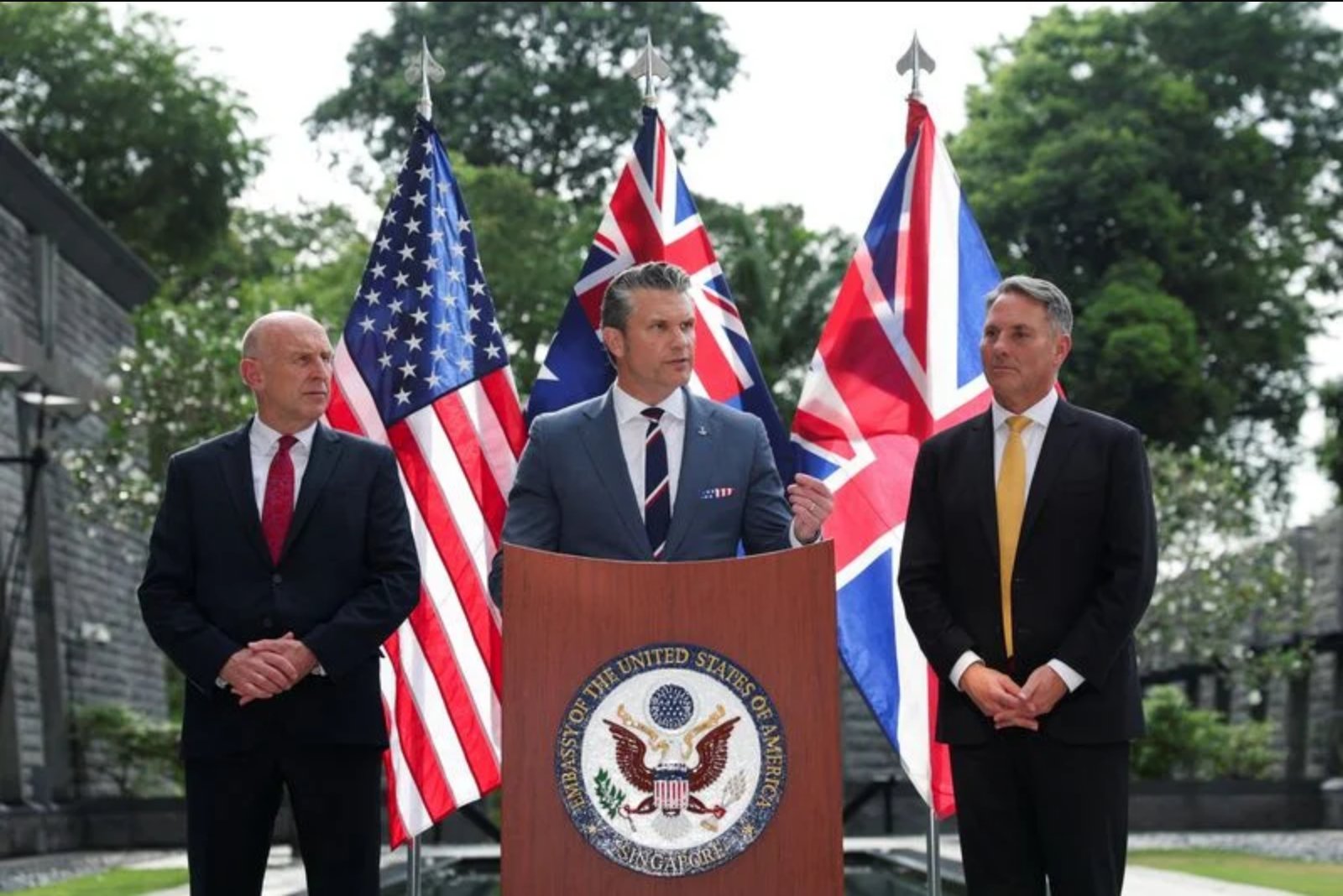
Speaking alongside Hegseth and Australia’s defence minister on the sidelines of the Shangri-La Dialogue in Singapore, Britain’s Defence Secretary John Healey said the programme will accelerate the deployment of advanced battlefield technologies. "This will rapidly give our forces the very most advanced battlefield technologies as together we produce a range of cutting-edge sensors and weapons systems for undersea drones," he said.

Healey also critiqued earlier progress under AUKUS, saying: "For too long in AUKUS, we talked too much and delivered too little." His remarks position the UUV payload work as a tangible deliverable intended to address that shortfall.

The three-way AUKUS security arrangement was formed in 2021. The initiative has been framed by its members as a way to enhance defence cooperation and technological collaboration in the Indo-Pacific region.

China has reacted negatively to the pact, calling AUKUS dangerous and warning that it could spur a regional arms race. That response was noted by officials discussing the announced UUV effort.


Note on scope: The statements quoted and program descriptions above reflect the officials' remarks as reported at the event; specifics on timelines, procurement quantities or operational basing were not provided in those comments.

Risks

  • China has labelled the AUKUS pact dangerous and warned it could prompt a regional arms race, presenting geopolitical and security risks for the Indo-Pacific - affecting defence and regional maritime stability.
  • Officials acknowledged a history of limited delivery under AUKUS with remarks that the partnership previously "talked too much and delivered too little," implying implementation and delivery risk for planned technologies and systems.
  • The public statements do not include timelines, procurement details or operational specifics, leaving uncertainty over program scope and market impacts for defense suppliers and technology vendors.

More from World

Zelenskiy Invites Putin to Direct Talks in Open Letter, Proposes Ceasefire During Negotiations Jun 4, 2026 Zelenskyy Calls for Direct Talks With Putin, Offering Ceasefire During Negotiations Jun 4, 2026 Putin Says Russia Will Prevail if Needed, But Offers Diplomacy Backed by Unspecified Compromises Jun 4, 2026 Steering Board Fails to Name Successor to Bosnia’s High Representative Jun 4, 2026 Why U.S.-Brokered Truces Have Not Halted Fighting Across the Middle East Jun 4, 2026