
Overview
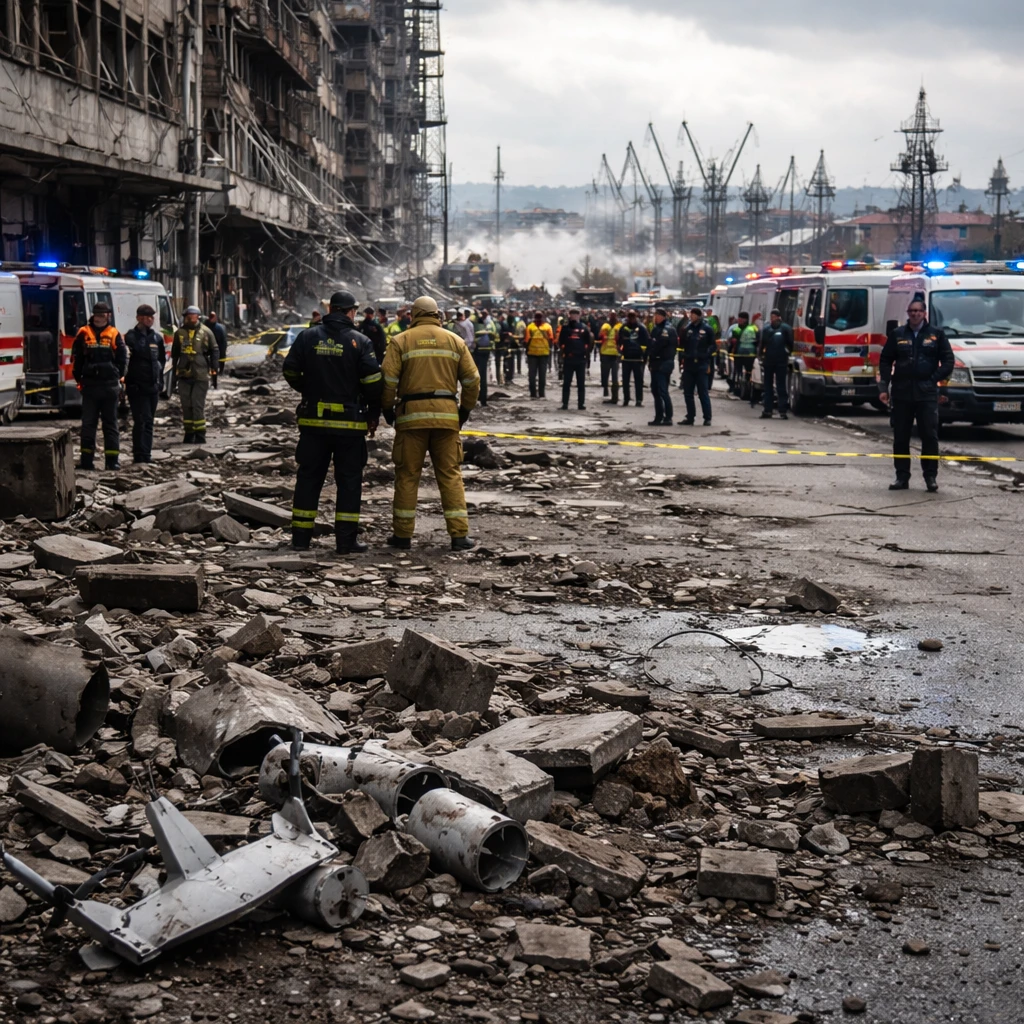
Kremlin-appointed officials in Crimea said early on Thursday that Ukrainian forces struck the peninsula’s two principal population centres, causing deaths, injuries and damage. Sergei Aksyonov, the Russia-appointed head of Crimea, wrote on Telegram that a strike hit a non-residential area of Simferopol, the administrative centre, resulting in three fatalities and seven injuries. In the Black Sea port city of Sevastopol, regional governor Mikhail Razvozhayev reported that air defences intercepted more than 20 Ukrainian drones; he reported no casualties but said debris from the intercepted drones had damaged buildings and that an air raid alert persisted for nearly five hours.
Local conditions and responses
Officials in Crimea have taken steps to address mounting fuel shortages, which they attribute to an intensifying Ukrainian campaign targeting oil industry assets, including facilities located well inside Russian territory. The regional leaders' actions come against the backdrop of repeated strikes on energy infrastructure that local authorities say are affecting fuel supplies.
Escalation along multiple fronts
The strikes in Crimea occurred a day after each side attacked the other's cities. Russian shelling in Kramatorsk, identified by Vadym Filashkin, governor of the Donetsk region, killed at least three civilians. In the neighbouring Dnipropetrovsk region, Governor Oleksandr Hanzha said Russian forces wounded eight people in the vicinity of the regional centre of Dnipro.
Ukrainian operations targeting Russian energy infrastructure included a strike on an oil terminal in St Petersburg. Ukrainian President Volodymyr Zelenskiy said these strikes enable Ukraine "to end this war on equal footing".
Along the border in Russia’s Bryansk region, Acting Regional Governor Yegor Kovalchuk reported that a Ukrainian drone had killed a crane operator employed by the local utility. Separately, Russia announced plans last month to carry out "systematic" strikes on targets in Kyiv in response to what it described as a drone attack against a dormitory in the Russian-occupied Luhansk region; Ukraine denies responsibility for that incident.
Diplomacy and broader tensions
U.S.-brokered negotiations intended to advance an end to the more-than four-year-long war have stalled, with Washington focused on other international crises. U.S. Secretary of State Marco Rubio told a Senate subcommittee that the risk of escalation in the conflict is "real" and that the risk is greater than it was two years ago.
Earlier in the week, Russian strikes on Kyiv and other cities resulted in 23 deaths, underscoring the intensity of recent exchanges that have produced casualties on both sides and damage to civilian infrastructure.
Context limits
The reporting relies on statements from Kremlin-appointed officials in Crimea and regional governors on both sides of the front. Where officials did not provide casualty counts or additional detail, the article reflects those limits rather than inferring further information.