
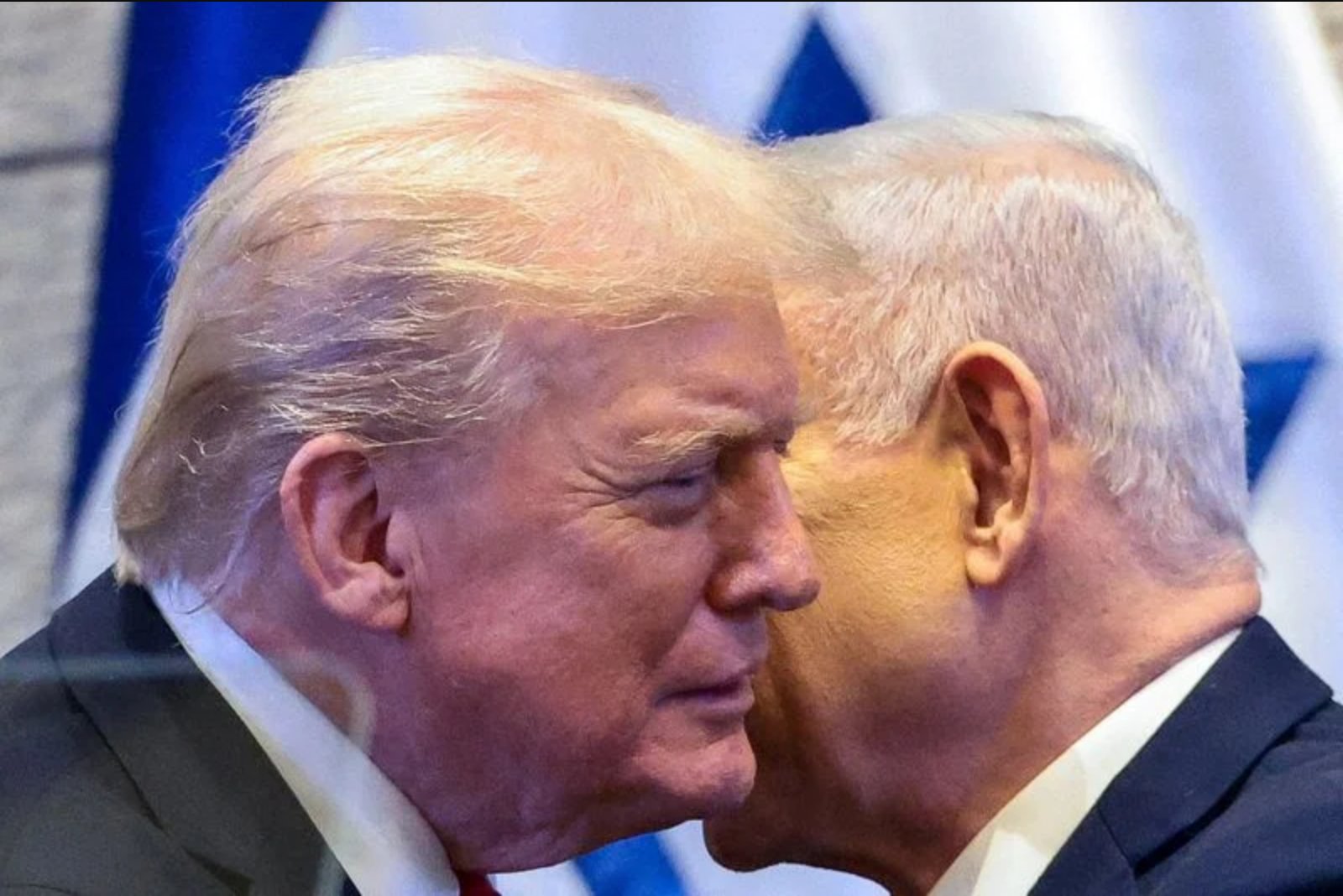
Background of the call and immediate fallout
A phone conversation this week between President Donald Trump and Prime Minister Benjamin Netanyahu, first reported by the U.S. website Axios and later confirmed by Trump, revealed intense friction between the two leaders. In the exchange, Trump used an expletive to describe Netanyahu, an account that was subsequently echoed by U.S. and Israeli officials. Israeli sources speaking on condition of anonymity described the conversation as one of the most heated Netanyahu has had with the U.S. president, and some Israeli officials said the leak has inflicted political damage on the prime minister as he heads into this year’s national election.
The episode has moved differences that are ordinarily managed discreetly into public view, prompting criticism from political opponents of the Israeli leader and raising questions about how the relationship with Washington will be portrayed to Israeli voters.
What the call was about
According to the reporting that first made the call public, the clash centered on Israeli threats to resume air strikes on Beirut’s southern suburbs. President Trump was quoted instructing Netanyahu not to target Beirut, arguing that continued Israeli attacks in Lebanon were undermining ongoing talks to end the war with Iran. The war, which began with joint U.S.-Israeli strikes, is described in reporting as deeply unpopular with many Americans.
Trump told Netanyahu, "Everybody hates you now. Everybody hates Israel because of this," a line that became central to the public narrative after the leak. The U.S. president later told the New York Post he was "a little bit perturbed" by what he called Netanyahu’s repeated attacks on Lebanon, while also saying the two had worked well together.
Israel’s response and political reverberations
Israeli officials said Netanyahu told Trump that any pause in Israeli action against Beirut would be conditional on Hezbollah stopping strikes against northern Israel. A senior Israeli official said the president was receptive to that position. After the call, Trump publicly stated that Israel and Hezbollah had agreed to stop shooting at one another, a characterization that opened Netanyahu to criticism from within Israel.
Opposition leader Yair Lapid accused Netanyahu of ceding Israeli sovereignty to the United States, calling the situation "a total protectorate." Other critics inside Netanyahu’s own government also expressed alarm at the perception that Israel had relinquished independent control over its operations.
At the same time, some officials and former aides defended the ongoing relationship, noting that the two leaders still appear aligned on most major policy items despite the candid exchanges. A U.S. official described the call as one of several in which Trump has been very direct, while insisting the two men remain close allies.
Public opinion and the broader strategic context
The wars with Iran and Hezbollah enjoy wide support within Israel, including among voters who otherwise oppose Netanyahu. Many in Israel favor continuing the fighting, a sentiment that contrasts with substantial opposition to the war among American voters, including members of the president’s conservative base. Tehran, as described in reporting, has made clear that any deal to halt hostilities must include a stop to Israeli attacks on Hezbollah in Lebanon.
Pollster Mitchell Barak was quoted expressing a sense of powerlessness in Israel, saying, "We are basically being forced to stop." That sentiment reflects a perception among some Israelis that decisions are being shaped externally as talks proceed through Pakistan, which is acting as an intermediary in the U.S.-Iran negotiations despite having no formal diplomatic ties with Israel.
Netanyahu’s political calculus
Benjamin Netanyahu has long presented himself to the Israeli public as especially effective at securing and maintaining U.S. backing. In recent years he has both clashed with and enjoyed significant cooperation from administrations of both U.S. political parties, and Israel remains described as Washington’s closest Middle East ally. Yet the public emergence of these tensions has complicated Netanyahu’s narrative.
Recent domestic polls have repeatedly shown Netanyahu’s coalition, the most right-wing in Israel’s history, would fail to win a majority at the next election. Key aides and analysts said Netanyahu is trying to accommodate the U.S. president because he expects he will need Trump’s support more as the election approaches, including for the possibility of a presidential visit to Israel. In prior months, reporting noted that Trump had been expected to visit Israel in April to receive a high civilian honor, and that his previous visit had been in October. Those expectations changed as the war dynamics unfolded.
Former advisers and politicians offered differing takes. Nadav Shtrauchler, a former Netanyahu adviser, said the prime minister was counting on Trump’s backing, and highlighted how the outcome of the wars with Iran and Hezbollah could have outsized effects on the election result. Shtrauchler warned that an abrupt end to the conflicts could be seen by many Israelis as the result of U.S. pressure - an outcome he described as a "huge problem" for Netanyahu politically.
Policy stakes and unresolved objectives
Netanyahu has articulated ambitious war aims: he has said the Iranian government should be toppled and its nuclear and missile capabilities destroyed, and he has insisted Hezbollah be disarmed in southern Lebanon. Reporting states that none of those objectives have been achieved so far.
Meanwhile, the U.S. has taken actions that some in Israel view as counter to Israeli interests, even as Washington and Israel have cooperated militarily. Examples noted in reporting include the U.S. decision to end strikes on Yemen’s Iran-backed Houthis, the lifting of sanctions on Syria’s President Ahmed al-Sharaa, and the president’s order to halt Israel’s 12-day war with Iran in June 2025. Those measures have contributed to a sense among some in Israel of tension between American policy choices and Israeli strategic preferences.
Perceptions of influence and sovereignty
The publicized call has sharpened debate in Israel over the degree to which U.S. influence affects Israeli military choices. Some Israelis are uncomfortable with what they see as the extent of American sway. In contrast, critics in the United States sometimes argue that Netanyahu has disproportionate influence over U.S. foreign policy. Figures close to the Israeli government urged a balance: Itamar Ben-Gvir, the national security minister, said leaders must sometimes know how to refuse even the U.S. president.
Netanyahu himself has offered effusive public praise of Trump, calling him "the greatest friend Israel has ever had in the White House." At the same time, Trump has publicly stressed Israel’s dependence on the United States and has not shied from using strong language when describing Israeli or Iranian actions in previous remarks.
Where this leaves the bilateral relationship
Officials on both sides sought to downplay the notion that the call represented a material shift in the U.S.-Israel relationship. A U.S. official and an Israeli source familiar with the bilateral ties described the conversations between Trump and Netanyahu as typically direct and insisted the overall alignment on major issues remained intact. Yet they acknowledged that the leak of the call, and Trump’s subsequent confirmation of its tenor, were politically unhelpful to Netanyahu ahead of an election in which he is projected by recent polls to underperform.
For Netanyahu, the episode underscores a central political vulnerability: his public image as the leader who can secure U.S. backing is now complicated by a widely publicized confrontation with the president himself. For the United States, the episode has exposed how candid and consequential conversations with a key regional ally can become political liabilities when they are made public.
Conclusion
The leaked exchange between Trump and Netanyahu has pushed a once-private tension into the open at a time of intense domestic political sensitivity in Israel. While some officials insist the core alliance remains steady, the disclosure has amplified domestic criticism, re-ignited debate over sovereignty and U.S. influence, and added a new variable to the political calculations ahead of Israel’s election. How this moment will be remembered by Israeli voters, and whether it changes the trajectory of domestic politics or the conduct of the ongoing conflicts, remains connected to developments already described by officials and pollsters - including continued talks to end the war and the standing military objectives both leaders have articulated.