
Stock Markets June 15, 2026 03:22 PM

Lockheed Martin Secures $514 Million Space Force Award for Two GPS IIIF Satellites

Contract expands company’s GPS IIIF fleet to 14 spacecraft as production continues on evolved LM2100 Combat Bus

By Priya Menon
Share
Twitter Reddit Facebook LinkedIn
LMT

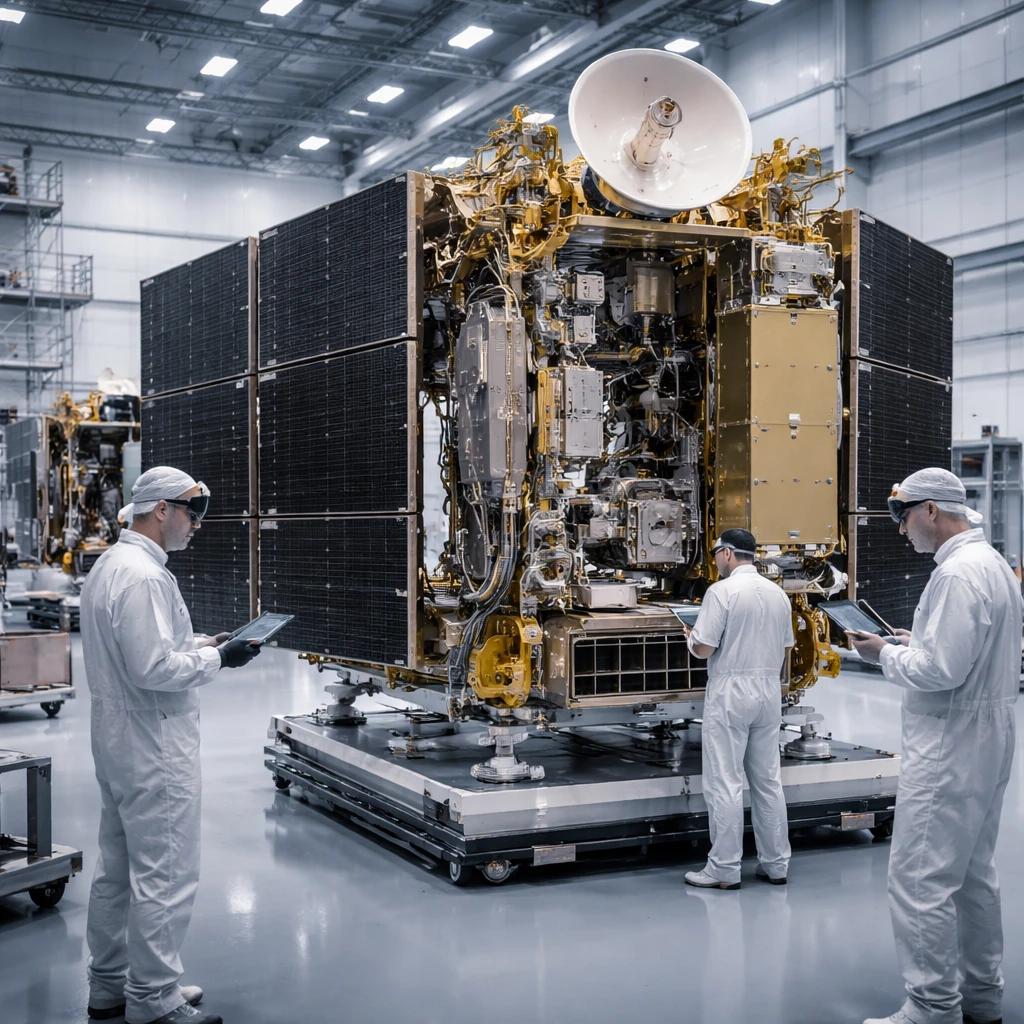
The U.S. Space Force has awarded Lockheed Martin a $514 million contract to produce GPS IIIF Space Vehicles 23 and 24, increasing the company’s GPS IIIF program commitment to 14 satellites. The satellites will bring enhanced anti-jamming protection, additional M-Code-enabled secure links, a digital navigation payload and updated spacecraft built on the LM2100 Combat Bus. Production work is underway at Denver-area facilities with several IIIF spacecraft at different manufacturing stages.

Lockheed Martin Secures $514 Million Space Force Award for Two GPS IIIF Satellites
LMT
Summarize with
ChatGPT Perplexity Claude Grok Gemini

Key Points

  • U.S. Space Force awarded Lockheed Martin $514 million to build GPS IIIF Space Vehicles 23 and 24, bringing the company’s IIIF commitment to 14 satellites - sectors impacted: aerospace, defense, and space manufacturing.
  • GPS IIIF satellites include Regional Military Protection that offers a 63-fold increase in anti-jamming capability, additional M-Code-enabled satellites for secure military connections, and a digital navigation payload - sectors impacted: defense and secure communications.
  • Production is progressing on the evolved LM2100 Combat Bus platform, with three IIIF satellites having completed core mate and others at various stages; fabrication is being advanced at Denver-area facilities using augmented reality and digital twins - sectors impacted: aerospace manufacturing and industrial technology.

Lockheed Martin announced that the U.S. Space Force has granted the company a $514 million contract to build two additional Global Positioning System IIIF Space Vehicles, designated SV23 and SV24. With this award, Lockheed Martin’s total GPS IIIF commitment rises to 14 spacecraft.

The GPS IIIF series is designed to provide positioning, navigation and timing services to both military and civilian users. These satellites include a Regional Military Protection capability that the company says increases anti-jamming performance by 63 times. The vehicles also add M-Code-enabled satellites intended to support secure connections for military users and incorporate a digital navigation payload.

Starting with SV13, the GPS IIIF spacecraft are based on the evolved LM2100 Combat Bus platform. That platform offers enhancements the company describes as increased cyber-hardening along with improved spacecraft power, propulsion and electronics.

On the production front, Lockheed Martin reports completion of the core mate milestone for three GPS IIIF satellites. Other IIIF units are in varying phases across the production line. Earlier in the year, all Lockheed Martin-made GPS III satellites had reached orbit, and GPS III SV09 and SV10 were noted as having launched on accelerated timelines.

Separately, Lockheed Martin recently received a $105 million contract to continue work on modernizing the GPS ground segment. The company is advancing GPS IIIF manufacturing at its Denver-area facilities and is applying augmented reality and digital twin technologies with the stated goal of accelerating build rates.

The awarded contract and concurrent ground-segment work underscore ongoing investment in both space hardware and supporting infrastructure as Lockheed Martin proceeds through multiple production phases for its GPS IIIF program.

Risks

  • Multiple IIIF satellites are in different phases of production, which creates uncertainty around build schedules and delivery timing - this affects aerospace manufacturing and defense program schedules.
  • Integration between newly produced satellites and modernized GPS ground-segment systems remains an ongoing task, introducing potential technical and programmatic risk for defense and space systems.
  • Efforts to accelerate build rates through augmented reality and digital twins imply reliance on technology-driven process improvements, which may present execution risk if those methods do not yield the expected pace-up benefits - impacting manufacturing operations and supply chain efficiency.

More from Stock Markets

Mexico equities tick higher as airport stocks lead S&P/BMV IPC gains Jun 15, 2026 Raytheon Secures $57.9 Million Repair Order for F/A-18 Weapon Assemblies Jun 15, 2026 Kikkoman Moves to Build First India Factory as Japanese Condiment Makers Expand Locally Jun 15, 2026 Centene to Offer Employee Buyouts as Obamacare Enrollment Falls Jun 15, 2026 Intellia Shares Jump After Phase 3 HAELO Results and Analyst Backing Jun 15, 2026