
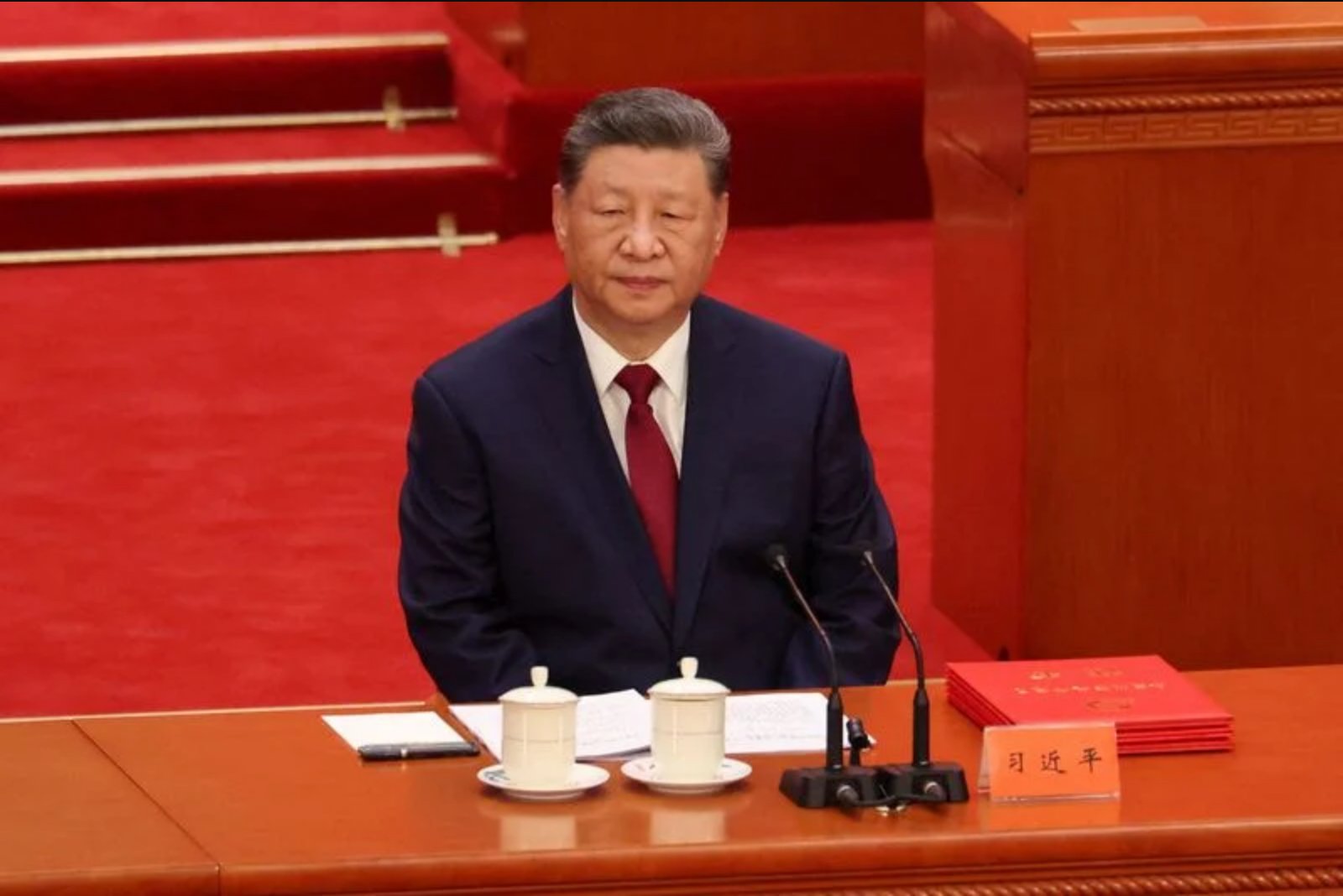
Chinese President Xi Jinping is slated to set out a comprehensive vision for China’s role in international AI governance when he attends the World Artificial Intelligence Conference (WAIC) in Shanghai, officials said. Xi’s presence at the July 17 to 20 forum - his first attendance at the annual event - signals Beijing’s elevation of artificial intelligence as a central economic priority and a strategic element in global competition.
At the same forum, Huawei will publicly debut its Atlas 950 SuperPoD, the company’s largest AI computing system to date. The Atlas 950 SuperPoD is a large-scale system designed for both training and inference of advanced AI models. It links thousands of Huawei Ascend AI processors via high-speed interconnects so they function together as a single cluster. The public release of this system during WAIC is one of the clearest demonstrations yet of efforts within China to assemble expansive AI clusters without relying on Nvidia’s most advanced chips.
Developments at the show also reflect progress by Chinese AI firms in adapting models to run on domestic hardware. DeepSeek’s latest V4 model has been adjusted to operate fully on clusters built from Huawei’s Ascend chips, highlighting industry efforts to create an AI ecosystem that depends less on U.S. technology. Domestic media have reported that other Chinese chipmakers, including Biren and MetaX, plan to introduce their own "supernode" computing clusters at the conference.
AI governance on the agenda
The forum arrives as Washington and Beijing prepare for their first government-level AI talks under the current U.S. administration, turning WAIC into an early test of how China intends to push for influence over global AI rules. Participants at a recent United Nations AI dialogue presented contrasting approaches: the United States argued against broad regulation that it said could curb innovation, while China positioned its low-cost, open-source AI models as a public good aimed at reducing global AI inequality.
Against this backdrop, WAIC is being treated by Chinese officials and some analysts as more than a technology exhibition. It has become a diplomatic platform where Beijing seeks to present AI as both a national priority and a tool of external engagement. In a January speech, Xi compared AI to an "epoch-making, major technological transformation following the steam engine," and Chinese policy has explicitly aimed at diffusing AI across the economy and attaining self-sufficiency in frontier technologies.
Last year, China proposed establishing a World AI Cooperation Organisation - abbreviated as WAICO - but to date no country has formally joined. The WAIC schedule coincides with a High-Level Meeting on Global AI Governance in Shanghai, where organisers say progress on WAICO and the implementation of the Global AI Governance Initiative are expected to be discussed.
Open-source push and international attendance
Beijing is also expected to push China’s open-source AI models at WAIC as a lower-cost alternative to Western commercial offerings, arguing that such models can expand access to AI technologies. "The development of AI must never move toward a technological monopoly that walls itself in, but should always be anchored to the fundamental goal of serving humanity," read a People’s Daily commentary this week.
The conference’s attendee list mixes domestic technology leaders with senior international figures. Alongside Chinese tech companies, international participants scheduled to appear include the United Nations Secretary-General, Antonio Guterres; Kazakhstan’s President Kassym-Jomart Tokayev; and Thailand’s Prime Minister Anutin Charnvirakul. Nine recipients of Turing Awards and Nobel distinctions - among them deep learning figures Yoshua Bengio and Richard Sutton - are also due to attend. Conference coverage notes that there is limited representation from major U.S. tech firms.
Officials and analysts will be watching both the substance of Xi’s remarks and the demonstrations on the show floor. Chinese outlets report additional product launches at the forum, including AI agent smartphones from Nubia - a unit of ZTE - and from AI startup StepFun. These product announcements join the larger thrust of the conference: showcasing both hardware and software developments that aim to underpin a domestic AI industry.
Context for regional engagement
China’s outreach at WAIC appears to target partners in regions such as Southeast Asia, where Beijing has pursued capacity-building initiatives in AI. Some diplomats say China portrays itself as an advocate for developing countries that it says risk being left behind in the AI race. The conference will therefore test both technical advances and China’s ability to translate those advances into diplomatic influence over standards and cooperative frameworks.
Health-of-industry indicators available at the forum - from major cluster launches to model adaptations and cross-border dialogues - will be scrutinised by market participants and policymakers alike as evidence of how the technology and its governance might evolve in the months ahead.