
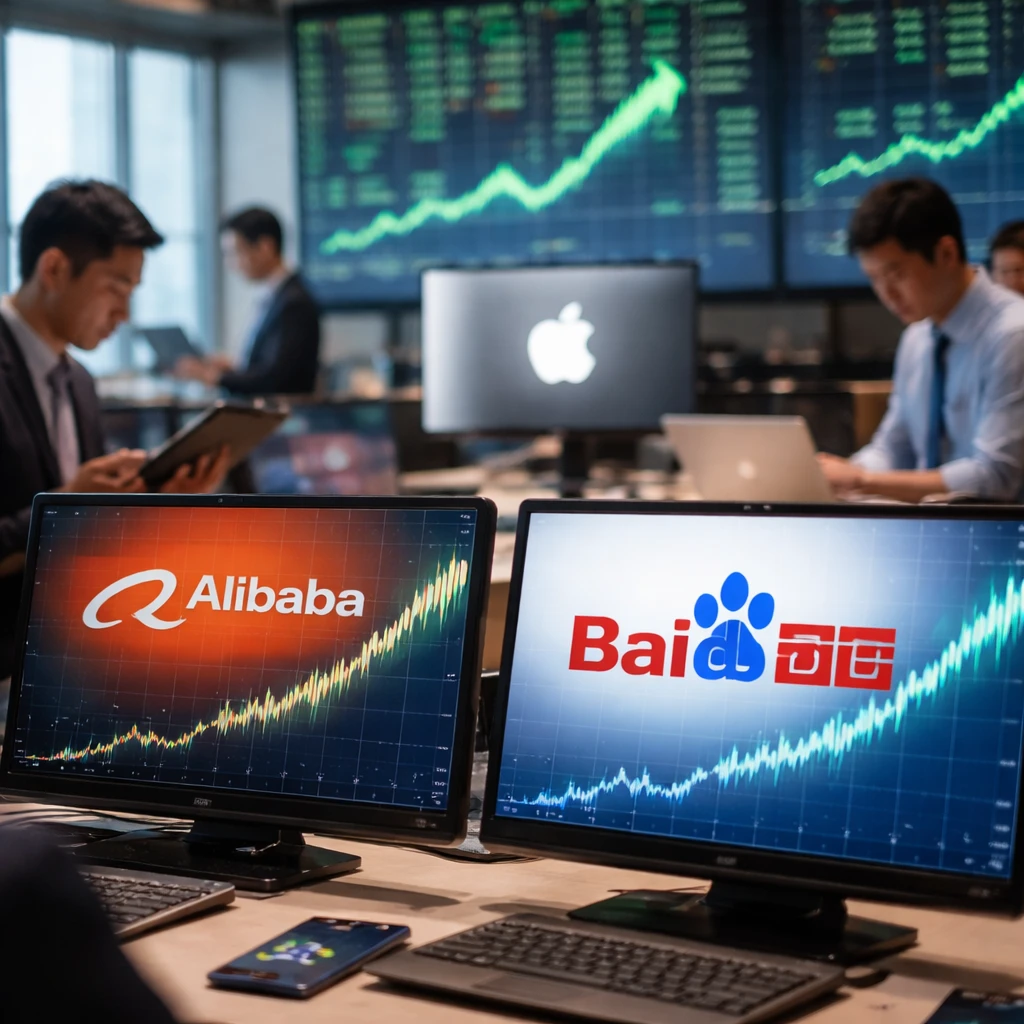
Shares of Alibaba Group (HK:9988) and Baidu (HK:9888) rose on Thursday after China’s cyberspace regulator granted approval for Apple to introduce its Apple Intelligence services in the Chinese market. By 05:14 GMT, Hong Kong-listed Alibaba shares had climbed nearly 5%, while Baidu's stock increased about 4%.
The regulator's sign-off permits Apple to roll out its on-device generative AI features on iPhones within China, a jurisdiction where such services must obtain formal clearance before public release. The approval covers Apple’s locally tailored AI functionality - commonly referred to as Apple Intelligence - and clears a key regulatory hurdle for the company.
According to a person familiar with the matter, Apple’s AI features in China will incorporate capabilities from Alibaba’s Qwen large language model as well as AI technologies developed by Baidu. Alibaba has independently confirmed that Qwen will be used to power Apple Intelligence experiences across iOS, iPadOS, macOS and visionOS for users in China.
Market participants interpreted the news as beneficial for China-listed internet names tied to AI development, with immediate share-price gains for the companies whose technologies will be integrated into Apple's China-specific offering. The rollout also has the potential to alter competitive dynamics in the Chinese smartphone and services markets; the absence of comparable AI features had previously left Apple at a disadvantage relative to domestic rivals such as Huawei and Xiaomi.
From a sector perspective, the approval is directly relevant to internet platforms and firms providing large language models and AI infrastructure. It also speaks to regulatory oversight of generative AI services in China - a prerequisite for any foreign or domestic vendor seeking to offer these capabilities to Chinese consumers.
Summary
China’s cyberspace regulator approved Apple’s on-device generative AI for use on iPhones, enabling Apple Intelligence to launch in the country. The AI features will incorporate Alibaba’s Qwen model and Baidu’s AI technologies, and Alibaba confirmed Qwen will power Apple Intelligence across multiple Apple operating systems for users in China. The decision drove near-term gains in the Hong Kong-listed shares of Alibaba and Baidu.
Key points
- Alibaba (HK:9988) and Baidu (HK:9888) saw share gains after China approved Apple’s on-device generative AI for iPhones.
- Apple Intelligence in China will integrate capabilities from Alibaba’s Qwen large language model and Baidu’s AI technologies; Alibaba confirmed Qwen will power Apple Intelligence across iOS, iPadOS, macOS and visionOS for Chinese users.
- The approval is meaningful for technology and internet sectors that build and supply AI models and services, and it addresses a prior feature gap that left Apple less competitive against domestic smartphone makers.
Risks and uncertainties
- Regulatory dependency - Generative AI features require formal approval in China, creating ongoing regulatory risk for any rollout of AI capabilities in the market.
- Partner reliance - Apple’s China AI features will incorporate third-party models and technologies, meaning the quality and availability of partner LLMs and AI systems are material to the offering.
- Competitive pressure - The competitive landscape among smartphone and services providers in China remains dynamic; Apple’s position could shift depending on how domestic rivals respond.