
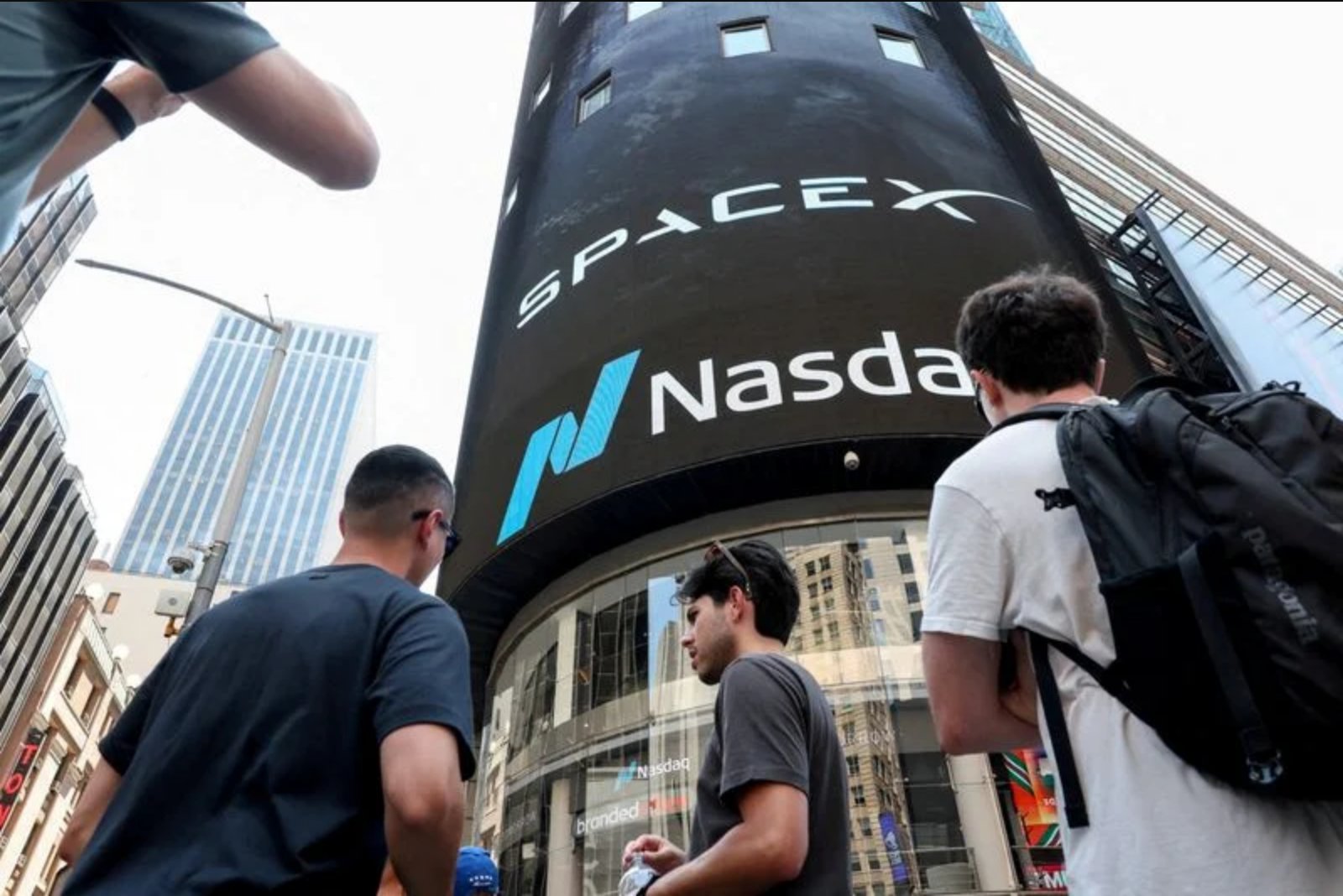
SpaceX's stock recently traded under its IPO price, a move that raises concern for investors ahead of a scheduled unwinding of significant lockup restrictions that could expand the number of shares available on the Nasdaq. On Wednesday the share price hit a low of $132.15 before ending the session at $135.27, marking a 33% decline from the record close reached in the days after the company's public offering raised $75 billion on June 11.
Even after that retreat, the company retains a market capitalization of roughly $1.8 trillion. The initial public offering was the largest in U.S. history and listed less than 5% of the company's total shares for public trading. That scarcity of supply helped push the firm's first-day valuation to $2.1 trillion.
Investors and market strategists are focused on a coming sequence of lockup expirations that could add a substantial volume of shares to the market. In the first tranche, rank-and-file employees and some early investors will be permitted to sell 911.5 million shares on the second trading day after the company files its debut quarterly report. The company has not announced the date of that quarterly filing, but analysts expect the report in early August. The shares eligible under this initial release are estimated to be worth about $123 billion, which is larger than the roughly $86 billion worth of shares currently available for trading on the Nasdaq.
An additional 455.8 million shares would become eligible for sale if SpaceX's stock stays above $175.50 for at least five of the 10 consecutive trading days leading up to the quarterly report. Taken together, the releases scheduled through December 8 would lift tradability to about 40% of the company's shares, while the remaining 60%, including the stake held by the company's founder, will remain locked until mid-2027.
Market participants note that the stock is still richly priced on a revenue basis even after the recent decline. Following the selloff, the company is valued at 49 times expected revenue - a multiple that places it among the most expensive names on Wall Street by that metric. For context within Musk-backed equities, Tesla recently traded at a revenue multiple of 15.
Supporters of the company argue that premium valuations are justified by the combination of SpaceX's profitable Starlink internet service, its government rocket launch business, and the founder's ability to command investor loyalty despite the firm's near-term accounting results - SpaceX reported a net loss of nearly $5 billion last year. Analyst sentiment remains heavily tilted toward the buy side: of 32 analysts covering the stock, 27 recommend buying, one recommends selling, and four are neutral, according to LSEG data.
Historical patterns among other high-profile U.S. IPOs provide additional context for the current stock behavior. A Reuters analysis of 50 prominent U.S. initial public offerings since 2010 found that companies whose shares fell below their IPO price in the first two months often underperformed those whose shares did not, even though most of the examined firms ultimately recorded gains. In that set, 21 of the 50 companies dipped below their IPO price within the first two months; those 21 had a median increase of 61% from their debuts, compared with a median gain of 112% for the remaining 29.
Market participants are weighing the potential ramifications of a large increase in float against the factors that some analysts say underpin SpaceX's premium: recurring revenue from Starlink, the government launch pipeline, and investor affinity for the founder. Some investors are approaching current prices with caution - willing to participate from a trading perspective but not to aggressively overweight positions given the imminent lockup expirations.
With the first sizable release tied to the company's quarterly report and other conditional releases hinging on stock-performance thresholds, the coming weeks may determine whether the stock stabilizes at current levels or encounters further downward pressure as additional shares become tradable. For now, the combination of a recent selloff, a high revenue multiple, and the prospect of a substantial increase in tradable shares is keeping both traders and longer-term investors on alert.