
Stock Markets July 16, 2026 01:00 AM

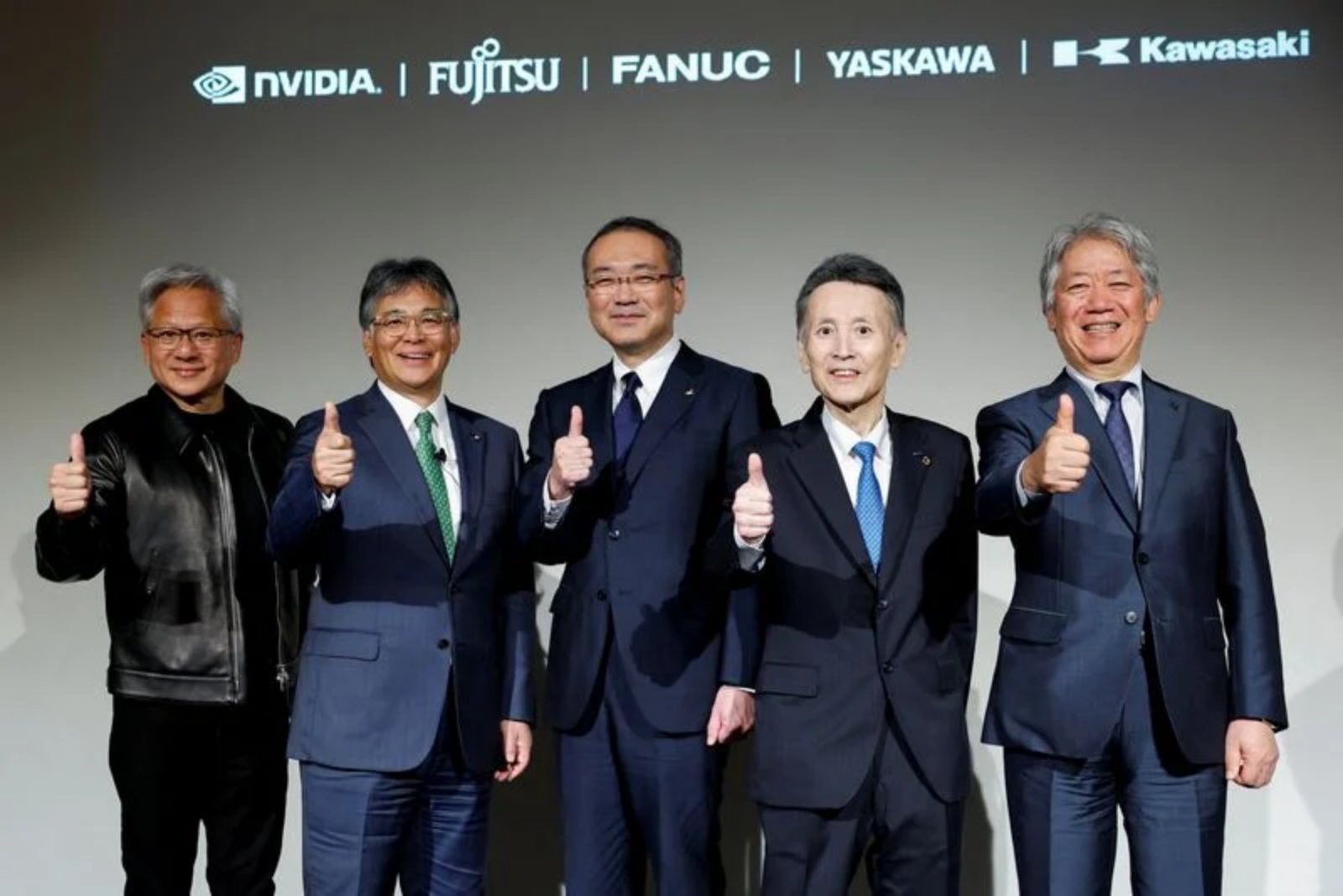
Nvidia joins forces with Fanuc and Yaskawa Electric to push robotics and AI development in Japan

Jensen Huang praises AI's role in making robots more adaptable as investor focus on AI-driven chip demand intensifies

By Hana Yamamoto
Share
Twitter Reddit Facebook LinkedIn
NVDA ASML TSM

Nvidia announced partnerships with Japanese firms including Fanuc and Yaskawa Electric to accelerate robotics and artificial intelligence development. CEO Jensen Huang said AI will make robots smarter, more adaptable and more accessible. His visit to Tokyo generated notable public interest and included meetings with executives from major chip supply-chain companies. Investors remain attentive to the strength of the AI investment cycle as equipment maker ASML raised its sales outlook and TSMC is set to report another record quarter.

Nvidia joins forces with Fanuc and Yaskawa Electric to push robotics and AI development in Japan
NVDA ASML TSM
Summarize with
ChatGPT Perplexity Claude Grok Gemini

Key Points

  • Nvidia announced partnerships with Japanese robotics firms including Fanuc and Yaskawa Electric to advance robotics and AI development - impacts robotics and industrial automation sectors.
  • Nvidia CEO Jensen Huang said AI will make robots "smart, easily adaptable and accessible," highlighting a push toward more capable robotic systems - relevant to manufacturers and integrators.
  • Investor attention on the AI investment cycle is heightened as ASML raised its sales forecast and pledged capacity expansion, and TSMC is expected to report a fifth consecutive quarter of record earnings - affecting semiconductors and chipmaking equipment markets.

Summary: Nvidia said it is collaborating with Japanese companies, among them Fanuc and Yaskawa Electric, to advance robotics and AI technology. Speaking at a media event in Tokyo, Nvidia CEO Jensen Huang said AI will enable robots to become "smart, easily adaptable and accessible." His public appearances in the city drew attention from onlookers and included meetings with executives from prominent Japanese chip supply-chain firms. Market participants are watching whether the AI investment cycle remains robust, following sales guidance upgrades and capacity plans from chipmaking equipment suppliers and expectations of further record results from a leading contract chipmaker.

Nvidia confirmed on Thursday that it has entered partnerships with several Japanese companies - specifically naming Fanuc and Yaskawa Electric - aimed at stepping up the integration of artificial intelligence into robotic systems. At a Tokyo media event, Huang articulated the company view on the role of AI in robotics, saying: "With AI, robots will become smart, easily adaptable and accessible."

The CEO's itinerary in Japan included attendance at an event hosted by gaming company Sega Sammy in the Akihabara electronics district and a later dinner at a traditional izakaya pub. Huang's presence drew crowds and attention, reflecting the level of public interest in the tech executive's visits to the region.

Outside the Sega event, a 57-year-old Taiwanese tourist, Chang Hui-Yu, described his impression, saying, "I think he’s the most influential man on Earth." Another onlooker, 37-year-old Brian Yang, who is Taiwanese and lives in Tokyo, said: "It was my first time seeing Jensen Huang in person and I was so excited." Photographs from the evening showed Huang alongside executives from leading Japanese supply-chain companies, including the CEOs of chipmaker Kioxia and equipment maker Tokyo Electron.

Meanwhile, investors are assessing the momentum behind AI-related spending across the semiconductor ecosystem. The article notes that chipmaking equipment maker ASML on Wednesday raised its sales forecast and announced plans to expand capacity. In addition, TSMC, described as the world’s leading contract chipmaker, is expected to report a fifth consecutive quarter of record earnings on Thursday, a trend attributed in the article to the ongoing AI boom.

The developments link Nvidia's collaboration announcements and public engagements in Tokyo with broader market signals from suppliers and manufacturers that serve the AI hardware stack. The article presents these items without offering projections beyond the reported statements and investor reactions.

Risks

  • Uncertainty over the durability of the AI investment cycle - investors are weighing whether current momentum in spending on AI-related hardware will persist, which could impact semiconductor and equipment makers.
  • Potential mismatch between public interest in executive visits and concrete commercial outcomes - public attention does not by itself guarantee business results for partners across the chip supply chain.
  • Capacity and supply-chain responses remain a variable - while ASML has pledged capacity expansion, the article does not provide details on timing or sufficiency, leaving execution risk for the chipmaking equipment and contract manufacturing sectors.

More from Stock Markets

Sodexo looks to U.S. expansion and tighter execution to restore growth Jul 16, 2026 Europe’s Weaker Airlines Face a Potential Shakeup as Gulf Conflict Lifts Fuel Costs Jul 16, 2026 Taiwan market climbs as energy and materials stocks lead gains Jul 16, 2026 Publicis Lifts 2026 Organic Growth Target After Solid Q2 Performance Driven by U.S. and Europe Jul 16, 2026 Sodexo unveils 'Shift & Grow 2030' plan aiming for 5% organic growth and margin recovery Jul 16, 2026