
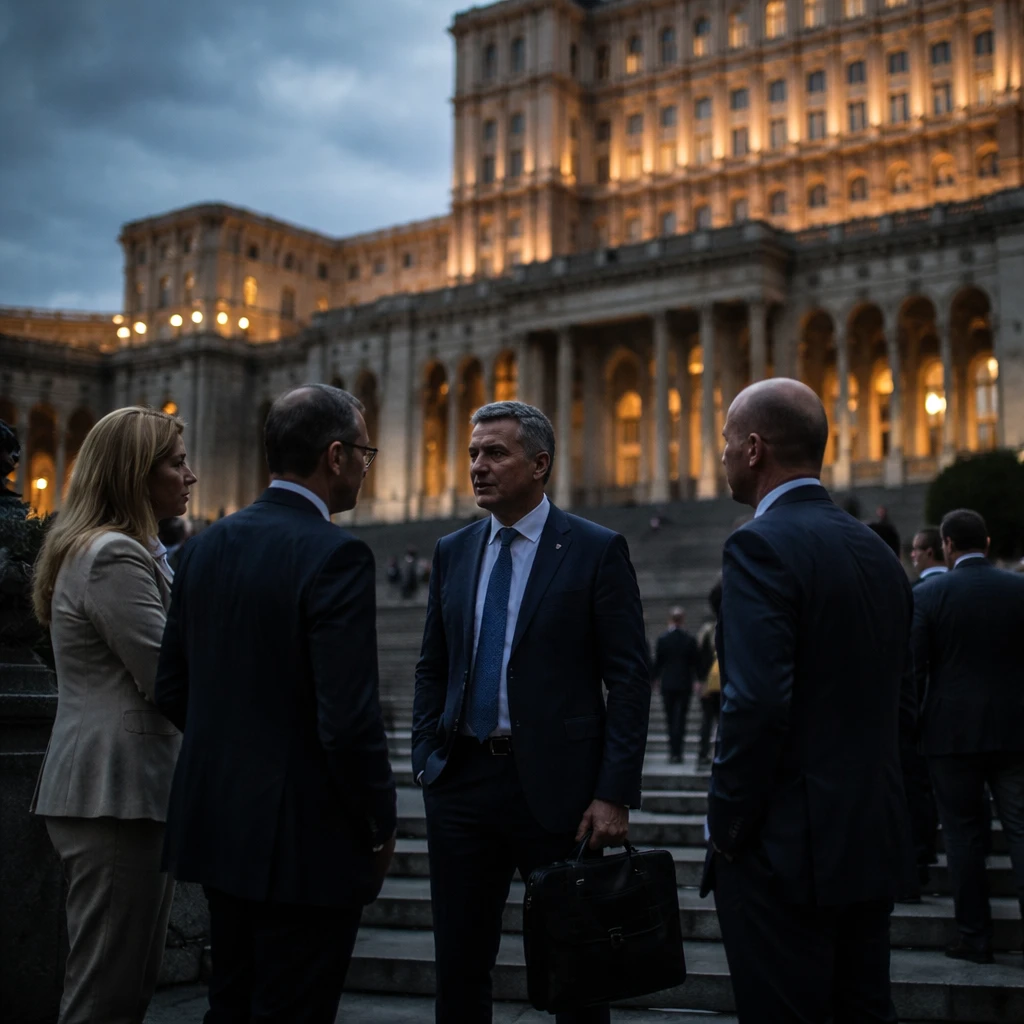
Adrian Vestea, the prime minister-designate chosen by President Nicusor Dan earlier this week, asked parliament late on Sunday to grant his new cabinet a vote of confidence. The nomination, made without prior consultation with his own Liberal Party, was presented by analysts as an assertive attempt to reconstruct a pro-European government capable of pursuing reform and continuing efforts to reduce Romania's status as the EU member with the largest budget deficit.
Vestea is counting on support from the country's largest party, the hard-right Alliance for Uniting Romanians (AUR), but faces a fraught pathway to approval. His cabinet is considered unlikely to win parliamentary approval without votes from AUR or other non-traditional supporters, given that the Liberals formally rejected his bid and moved to expel him from the party.
The political backdrop to Vestea's nomination remains volatile. A coalition that had been described as pro-European and led by Prime Minister Ilie Bolojan, leader of the Liberal Party, collapsed in early May. That government fell after the largest partner in parliament, the Social Democrats (PSD), joined forces with the far-right opposition to pass a no-confidence motion.
Following Vestea's nomination, the Liberals reiterated on Sunday that they will not again form a governing alliance with the Social Democrats. The party also voted to expel Vestea and any member who supports or joins his proposed government. That stance was echoed by the Liberals' junior partners - the centre-right Save Romania Union and the ethnic Hungarian UDMR party - reducing the likelihood of a smooth confirmation.
Despite being excluded by the Liberals, Vestea's cabinet does include a prominent PSD presence. The Social Democrats decided to back the proposed government, which comprises nine PSD ministers and the government's secretary general. That alignment leaves the government reliant on additional votes from defectors, independents or the far-right AUR.
AUR is currently the largest party in parliament and surveys indicate it dwarfs other parties in public opinion. AUR vice president and senator Petrisor Peiu commented on Facebook on Monday that the nomination has placed President Dan and PSD in a difficult position, arguing the proposed government may not pass: "Nicusor Dan and PSD have placed themselves in the difficult situation of proposing a government that cannot pass through parliament," he wrote, adding that the best solution would be an early election. He asked rhetorically, "Why would AUR self-destruct to save PSD?"
Observers warn that the extended political impasse could jeopardize Romania's capacity to access billions of euros in EU funding and to maintain its sovereign rating at investment grade. Romania's next scheduled parliamentary election is not until 2028, and the country has never held an early national election.
Clear summary
Prime minister-designate Adrian Vestea requested a parliamentary confidence vote after being named by President Nicusor Dan without consulting the Liberal Party. The Liberals rejected him and expelled potential supporters, while PSD has agreed to back the cabinet. Passage appears unlikely without votes from defectors, independents or the far-right AUR, raising concerns about EU funding access and Romania's sovereign rating.