
Economy June 12, 2026 07:24 AM

Jakarta Moves Toward Country’s First Municipal Bond to Plug Budget Gap

City officials engage multilaterals and private financiers as transfers are cut and infrastructure needs persist

By Derek Hwang
Share
Twitter Reddit Facebook LinkedIn

Jakarta intends to issue Indonesia's first municipal bond within a year as the city seeks new revenue sources following substantial cuts to central government transfers. City officials are consulting the Asian Development Bank and the World Bank on structuring the securities, with proceeds earmarked for infrastructure projects currently under development. No target size for the issuance has been disclosed.

Jakarta Moves Toward Country’s First Municipal Bond to Plug Budget Gap
Summarize with
ChatGPT Perplexity Claude Grok Gemini

Key Points

  • Jakarta intends to issue Indonesia’s first municipal bond within a year to broaden revenue sources.
  • City officials are discussing the issuance with the Asian Development Bank and World Bank; proceeds could fund ongoing infrastructure projects.
  • A reduction in central transfers of around 15 trillion rupiah, about 16% of the initial budget, has accelerated the search for alternative financing, including private-sector deals and a Jakarta wealth fund.

Jakarta plans to issue Indonesia's first municipal bond within the next year as the provincial administration looks to broaden its funding base in response to reduced central transfers, Governor Pramono Anung Wibowo said on Friday.

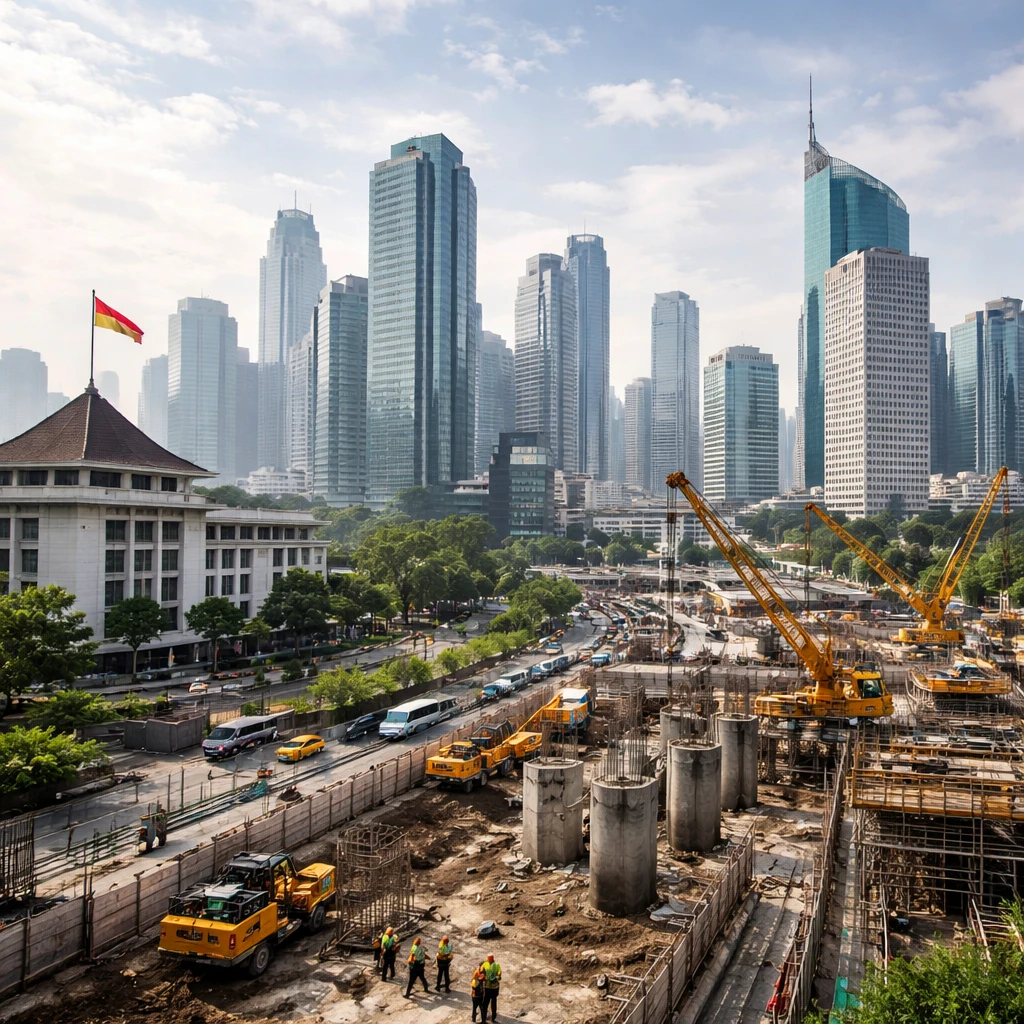
The city government is in talks with the Asian Development Bank and the World Bank to prepare the securities, according to Pramono. He indicated that proceeds from the planned bond could be used to finance a range of infrastructure projects that are presently in development, but did not specify a funding target.

Officials have floated the idea of a municipal bond for more than a decade, yet the proposal has gained renewed urgency after the national government of President Prabowo Subianto redirected local budgets toward several nationwide programs, including free meals and support for village cooperatives. Those shifts coincided with a reduction in budget transfers to Jakarta for this year of around 15 trillion rupiah, equating to approximately $839.3 million and about 16% of the city’s initial budget.

Faced with the cuts, Jakarta's administration has sought alternative financing mechanisms to sustain public services and planned projects. Local regulators are engaging private companies for financing arrangements, and the city is working on establishing a Jakarta wealth fund modeled on the Indonesia Investment Authority, the country's sovereign wealth fund, Pramono said.

The push toward municipal borrowing and new funding vehicles comes as Jakarta's population scale has changed. The city overtook Tokyo last year as the world’s most populous city, a demographic shift that informs service and infrastructure demands.

Key near-term steps include continued consultations with development lenders and progress on institutional arrangements such as the proposed wealth fund. Details on the bond’s size, tenor, or use-of-proceeds framework remain unspecified at this stage.


Summary

  • Jakarta aims to issue the nation's first municipal bond within a year to diversify revenues after budget cuts.
  • The city is consulting the Asian Development Bank and World Bank; bond proceeds could support infrastructure projects in development.
  • Budget transfers were reduced by around 15 trillion rupiah, about 16% of the initial budget; the administration is pursuing private financing and a Jakarta wealth fund modeled on the sovereign wealth fund.

Risks

  • No specific funding target or bond structure has been disclosed, leaving uncertainty about the potential scale and market reception of the issuance - impacts municipal finance and bond markets.
  • Reliance on alternative financing and a new wealth fund carries execution and implementation risk, which could delay funding for infrastructure projects - impacts infrastructure and construction sectors.
  • Redirected national budget priorities and reduced transfers may constrain Jakarta’s short-term fiscal flexibility while institutional arrangements are being established - impacts public services and local government finance.

More from Economy

IMF to Free Nearly $700 Million to Ukraine Despite Missed Tax Measure Jun 12, 2026 Poland’s MPC Sees Rate Cut as More Probable Than a Hike in 2026 Jun 12, 2026 Morgan Stanley Says Fed Policy Risks Are Shifting Toward Firmer Inflation Jun 12, 2026 Bank of England to Keep Bank Rate at 3.75% in June; Poll Shows Mixed Views on Later Moves Jun 12, 2026 U.S. Equity Funds See First Weekly Outflow in Three Weeks as Rate Concerns Weigh Jun 12, 2026