
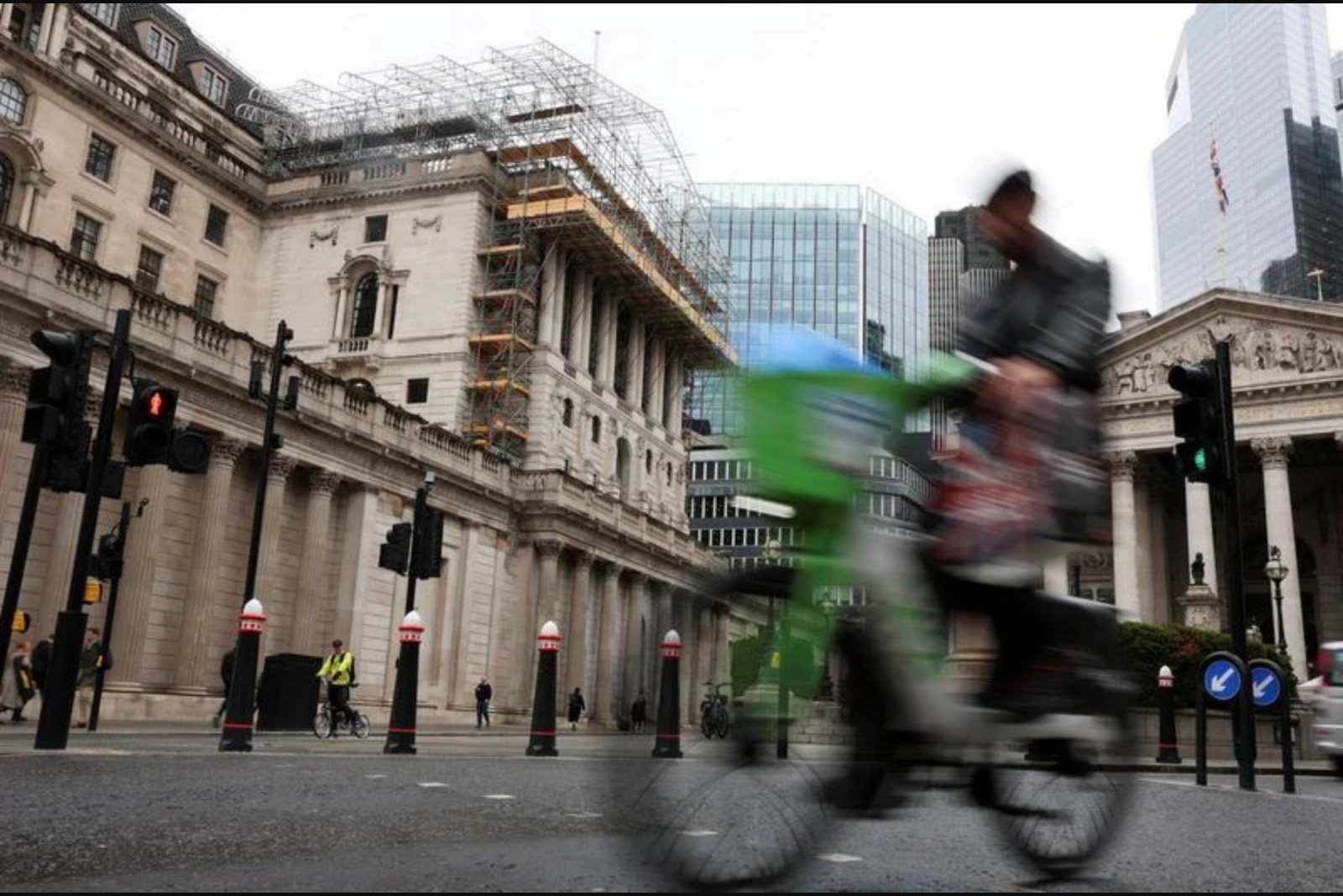
London - Economists polled by Reuters are unanimous that the Bank of England will keep its key rate at 3.75% at the central bank's June 18 meeting. All 65 respondents in the June 5-12 survey expected no immediate move, while views diverge on prospects for the remainder of the year.
The poll's median forecast projects Bank Rate will remain at 3.75% through the end of the year. Still, nearly 40% of those surveyed predicted at least one rate hike later in the year, and only six economists signalled they expect a 25 basis point cut by year-end.
Market participants and wholesale forecasters cited energy-related price pressures and supply disruptions as an important source of upside risk to inflation and therefore to future policy decisions. Sanjay Raja of Deutsche Bank emphasised a cautious stance: "We stick to our call for no change in Bank Rate this year. But the odds of a rate rise are increasing, in our view. The duration of the energy shock is becoming non-negligible," he said. "And the spillover of price pressures is also becoming uncomfortable. Should energy prices remain stuck at current levels, we see risks skewed to some tightening of Bank Rate."
BoE policymakers have voiced similar concerns. Governor Andrew Bailey has stressed the importance of returning inflation to target and of assuring households of the central bank's ability to do so. Fellow policymaker Megan Greene recently said she saw a growing rationale for raising interest rates if the Iran war continues to push up prices across the economy.
Monetary policy moves overseas have echoed the same broad sensitivity to energy and price pressures. The European Central Bank moved its benchmark deposit rate up by 25 basis points to 2.25% on Thursday, a step that had been widely anticipated.
Inflation and price pressures
The poll indicated that British inflation is expected to peak at 3.6% toward the end of this year, a level approaching twice the BoE's 2% target. Forecasts in the survey show inflation averaging 3.3% across 2026 and easing to 2.6% in 2027.
Those elevated readings are tied in the poll to the fallout from the U.S.-Israeli war with Iran, which has driven energy costs higher and disrupted shipping through the Strait of Hormuz, a key maritime route. At the same time, the survey noted some tentative signs of easing geopolitical risk after a comment from U.S. President Donald Trump suggesting a deal could be signed as soon as this weekend, a development that market participants said could temper some near-term volatility.
James Smith at ING outlined a scenario in which the disruption persists through the northern hemisphere summer: "Our base case is the disruption continues through June and July and that means oil prices peak back above $100 a barrel, maybe up to $120," he said. "In terms of growth, a lot is because of the strength we have had over the first few months of the year that 'flatter' the annual number."
Growth and activity
Survey respondents nudged up their projection for U.K. growth this year to 1.0%, from 0.8% in a May poll. The poll also showed growth at 1.1% in 2027 and projected an expansion of 1.5% in 2028.
Other institutions have similarly revised forecasts upward. The Organisation for Economic Co-operation and Development raised its 2026 forecast for Britain to 0.9% from 0.7% in the immediate aftermath of the Middle East conflict breaking out, according to the poll.
However, recent domestic data show strains: firms in the services sector reported a small fall in activity in May as the cost pressures from the Iran war weighed on operations, according to a key survey. Official statistics released earlier on Friday showed the economy contracted 0.1% in April - the first monthly decline since August.
Implications
The Reuters poll paints a picture of near-term policy stability combined with meaningful uncertainty. While the central forecast is for rates to remain on hold through year-end, a sizable minority of economists see a path for further tightening if energy-driven inflation persists. The interplay of geopolitical developments, energy prices, and domestic activity will be central to how policymakers weigh future moves.