
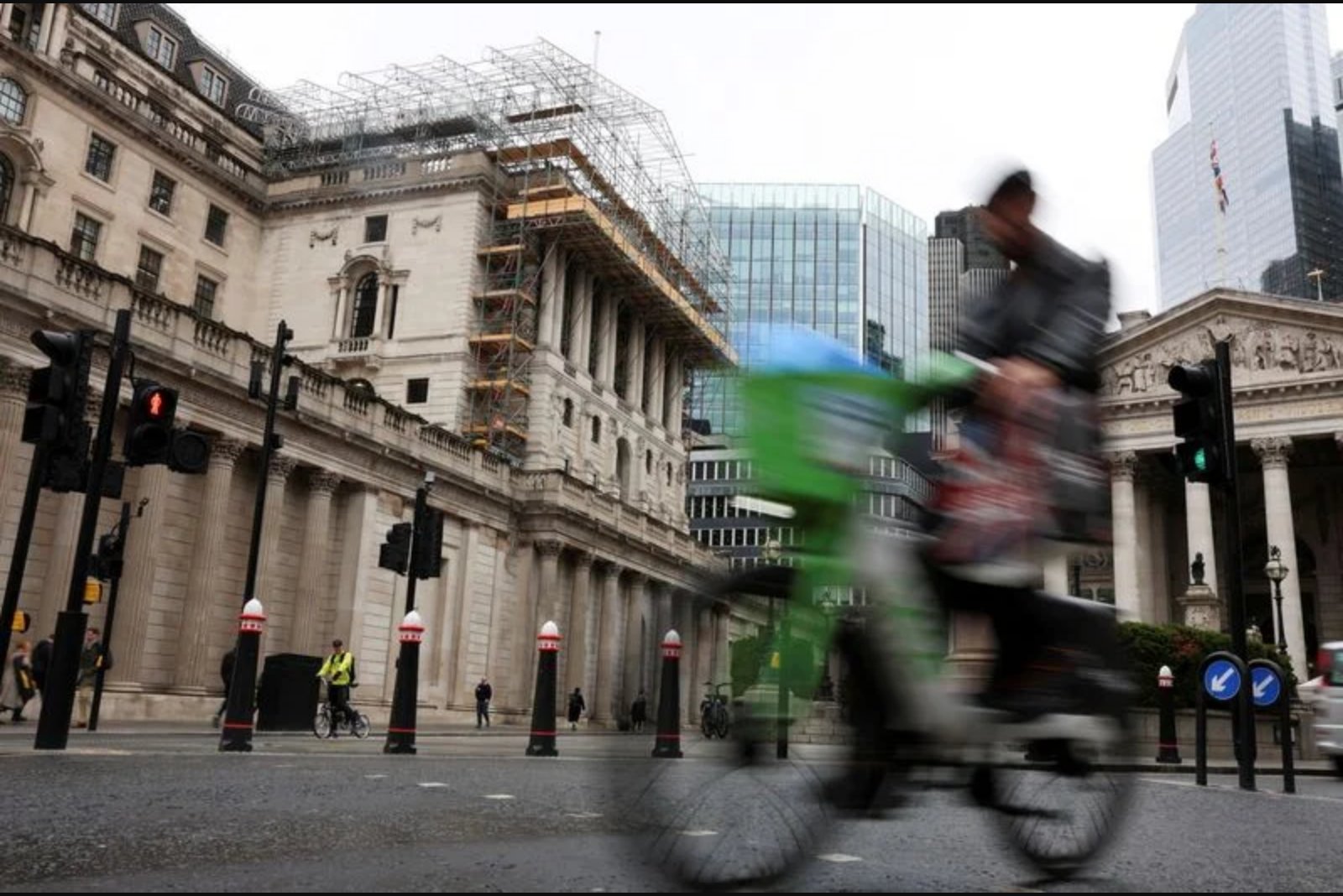
Markets anticipate that the Bank of England will keep its policy rate unchanged at 3.75% when it announces its decision on Thursday, leaving the central bank room to monitor whether a recent rise in energy prices tied to the Iran war translates into sustained inflationary pressure.
Governor Andrew Bailey has framed the Bank's stance as one of deliberate evaluation. He argued that by abandoning earlier plans to cut rates this year the BoE has, in effect, already moved toward tighter policy. "We have already tightened policy considerably in response to the shock relative to what had been expected by markets. And that is already affecting the economy," Bailey told fellow central bankers at a conference in Reykjavik last month.
The BoE's stance contrasts with the European Central Bank, which increased interest rates last week - its first rise in nearly three years. The difference in approach reflects the BoE's view that pausing now allows policymakers to see whether recent shocks have persistent effects.
Economic backdrop
Recent UK data provide a mixed picture. Official figures released last week showed the economy contracted by 0.1% in April after a 0.3% expansion in the first quarter. At the same time, the Confederation of British Industry forecast that unemployment would reach 5.5%, an 11-year high.
Against this backdrop the Bank judges that even if inflation rises to just over 3.5% later in the year - a scenario it regards as possible - such a move is likely to squeeze household finances and elevate inflation concerns but is less likely to trigger a self-reinforcing cycle of wage and price increases.
"This is a kind of situation where higher inflation expectations will be harder to translate into faster wage growth, just given the kind of weakness we are seeing in the economy and the labour market," said Debapratim De, chief UK economist at Deloitte.
Market pricing and expectations
Financial markets have adjusted their expectations for BoE action over recent weeks. On Friday, when U.S. President Donald Trump said again that a deal with Iran to halt the war was close, markets still did not fully price in a BoE rate rise until November. Earlier in the conflict, pricing suggested as many as four rate hikes might occur this year.
Survey measures of household inflation expectations have shown some easing. Monthly household inflation expectations measured by YouGov for U.S. bank Citi have fallen twice since hitting a three-year high in March. By contrast, the BoE's own quarterly survey of longer-term inflation expectations rose to 4.0%, its highest reading since at least 2009.
Differences within the Monetary Policy Committee
Not all members of the BoE's Monetary Policy Committee are inclined to delay further moves. Chief Economist Huw Pill voted for a rate increase in April, having already judged policy to be too loose prior to the recent conflict. Pill has voiced concern about a dysfunctional labour market in which large wage increases could still materialize even as unemployment rises.
One or two other members of the nine-person committee may join Pill in backing a quarter-point hike this month. Most prominently, Megan Greene indicated earlier this month that a rise could be warranted "over the next few weeks" to reassure markets and the public that the central bank is taking the inflation threat seriously. Greene pointed to the broad nature of price increases seen in Purchasing Managers' Index surveys for the services sector and among typically more energy-intensive manufacturers.
"The risk of acting, even if inflation proves to be less persistent, is less severe than the risk of failing to act," she said.
Inflation history and drivers
British inflation has been at or below the Bank's 2% target for only a few months over the past five years - a record that has been weaker than that of the European Central Bank or the U.S. Federal Reserve. A succession of supply-side shocks has contributed: post-COVID supply chain disruption was followed by an escalation of oil and gas prices after Russia's full-scale invasion of Ukraine. Domestic policy elements, including regulated energy and water bills, have also helped keep headline inflation above target despite some government measures.
Henry Cook, senior economist at Japanese bank MUFG, said the BoE may not need to raise rates immediately but is likely to have to act sooner rather than later. "We do think there is a risk that they end up dithering a bit too much," he said. "Playing for time is potentially not the best strategy here."
Implications for markets and sectors
- Households may face tighter budgets if inflation edges up to the levels the BoE fears, particularly where energy bills are concerned.
- Labour markets and services-sector businesses may see pressures from inflation expectations, though current economic weakness could constrain wage growth.
- Manufacturers that are energy intensive could be especially sensitive to any sustained rise in energy costs driven by geopolitical developments.
As policymakers weigh these conflicting signals, the BoE's decision to hold steady reflects a judgment that more evidence is needed before committing to further tightening. Yet dissenting voices within the committee underscore that a move to raise rates remains a real possibility in the near term if inflation risks firm up.